What Opener Horsepower Really Means
Horsepower is the first number on every garage door opener box, and it is the number homeowners trust the most. It is also the most misunderstood. A bigger number does not make the door open faster, it does not make the opener last longer by itself, and on many modern openers it is not even a true horsepower measurement. What it tells you is roughly how much lifting force the motor has in reserve.
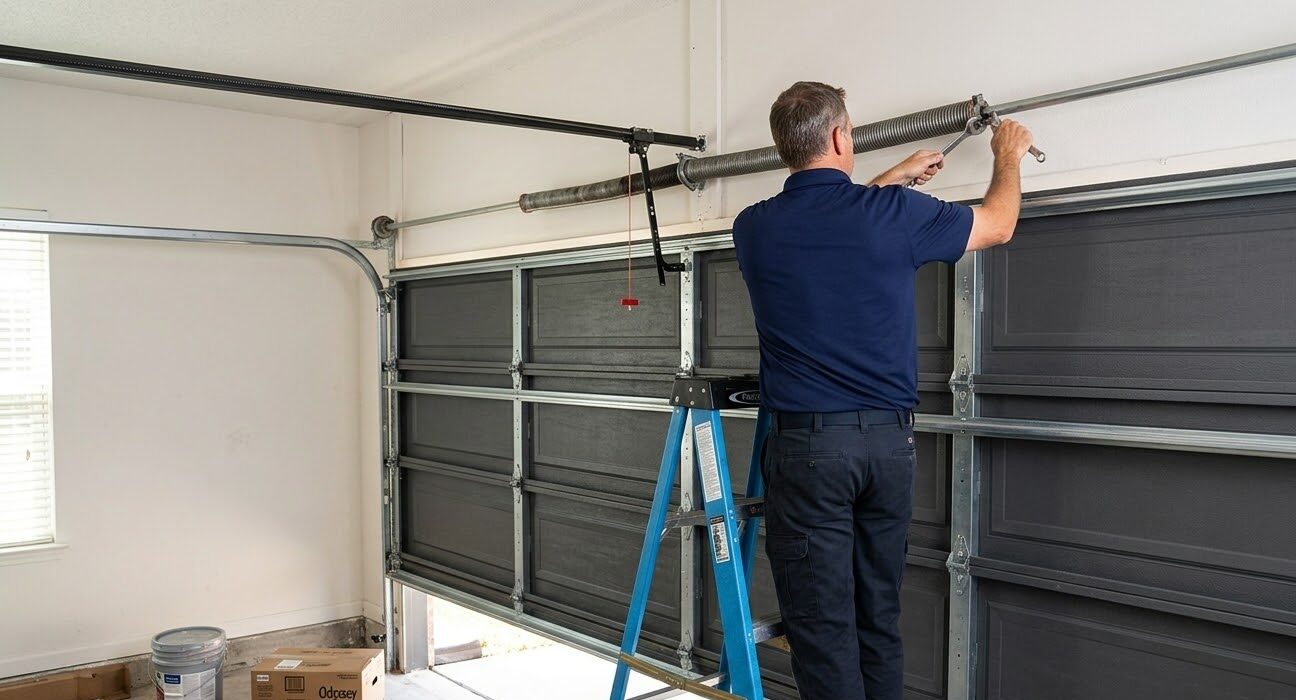
That reserve matters, but less than most people think, because the opener is not supposed to lift the door. The torsion or extension springs do the heavy lifting. On a properly balanced door, the opener only has to start the door moving, guide it up and down and hold it in place. Horsepower is the safety margin on top of that job, for the days when the door is heavier, the springs are tired or the track has some drag.
This guide explains what 1/2, 3/4 and 1-1/4 HP mean on current openers, how to match the rating to your door and why Florida doors often need more margin than the national rule of thumb suggests. If you want brand and model picks, our best garage door opener buyer's guide covers specific models.
AC Horsepower vs DC "HP Equivalent" and HPc
Older openers and many budget chain drives use AC motors, which are rated in conventional horsepower. Most newer belt drives, wall-mount openers and models with battery backup use DC motors. DC motors are not measured the same way, so manufacturers publish an equivalent or comparable rating instead.
- AC motors: Rated in standard horsepower, usually 1/3, 1/2 or 3/4 HP. They run at one speed and tend to be louder at start and stop.
- DC motors: Rated as an "HP equivalent" or a comparable class, often printed as 3/4 HP or 1-1/4 HP. They support soft start and stop, variable speed and battery backup, which is why they dominate the current lineups.
- Genie HPc: Genie says plainly that DC motors cannot be directly compared to AC horsepower, so it created the HPc rating. An HPc number means the opener meets or beats Genie's lifting-force specification for that horsepower class. Genie also notes that HPc does not denote equivalency; it is a basis for comparing openers.
- Chamberlain and LiftMaster: These brands also publish DC models in horsepower-equivalent classes such as 1/2, 3/4 and 1-1/4 HP. Retailers sometimes list the same model under two different ratings, which is a good reason to read the lift capacity on the spec sheet rather than the big number on the box.
The practical takeaway is simple. Use horsepower to put an opener in a class, then confirm the maximum door weight and height the manufacturer lists for that specific model.
1/2 HP vs 3/4 HP vs 1-1/4 HP at a Glance
| Rating class | Typical fit | Where it struggles |
|---|---|---|
| 1/2 HP (or equivalent) | Standard single doors and lighter, uninsulated double doors that are well balanced | Heavy insulated doors, wood or carriage doors, doors with wind reinforcement, worn springs |
| 3/4 HP (or equivalent) | Most double doors, insulated steel doors and doors with hurricane struts in Florida | Very oversized or very heavy custom doors |
| 1-1/4 HP and higher (DC equivalent) | Oversized, very heavy or custom doors, wood and carriage styles, high-cycle households | Rarely a bad fit, but often more than a standard door needs |
| Wall-mount (jackshaft) DC | Heavy or tall doors and garages where the ceiling is needed for storage | Requires the right torsion setup and side-room clearance |
Manufacturer and retailer specs give a sense of scale. A 3/4 HPc Genie chain drive is listed for residential sectional doors up to 7 feet high and 500 pounds. The LiftMaster 98022 wall-mount opener is published for doors up to 14 feet high or 850 pounds. Those numbers, not the horsepower label, tell you whether a model fits your door.
How to Match Horsepower to Your Door
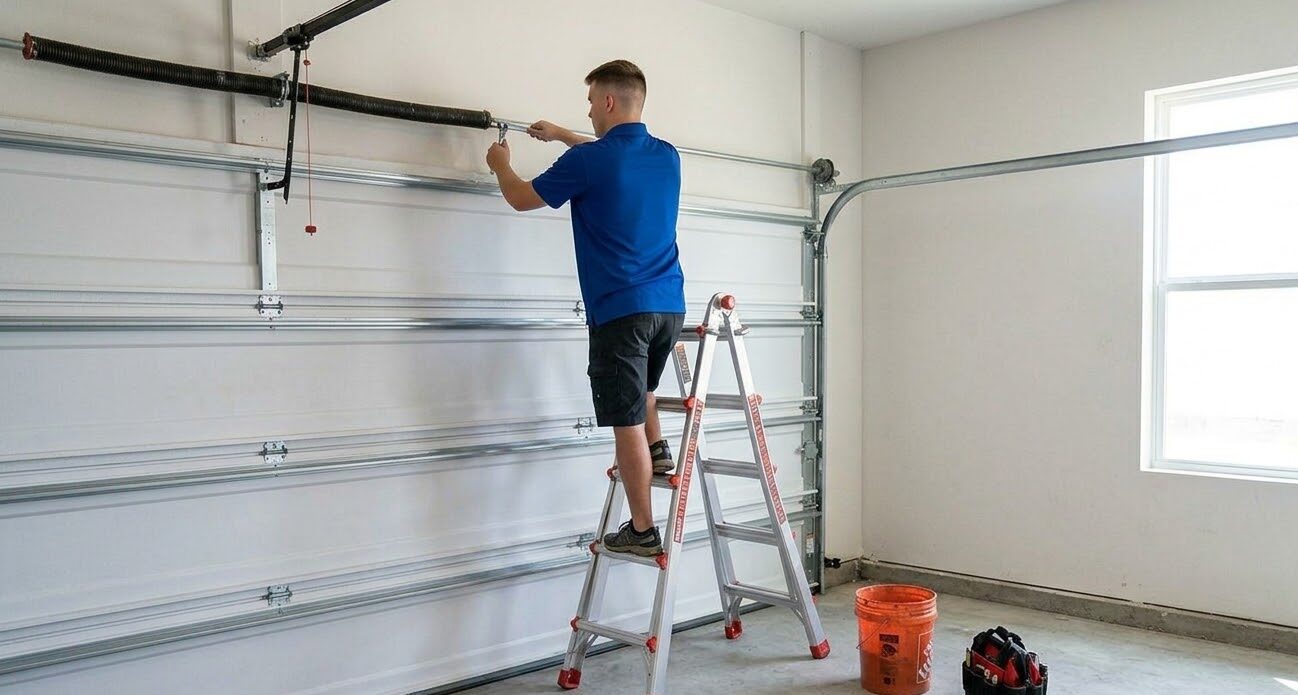
A good installer works through the door before choosing the opener. You can do a rough version of the same check yourself.
- Size: Measure width and height. Single doors are usually 8 or 9 feet wide, doubles are usually 16 feet wide, and 8-foot-tall doors carry more weight than standard 7-foot doors.
- Material and insulation: Uninsulated single-layer steel is the lightest common door. Insulated two- and three-layer steel doors are heavier. Wood, wood composite and carriage-style doors are heavier still.
- Wind reinforcement: Florida doors often carry horizontal struts and heavier hardware to meet wind-load requirements. Impact-rated doors with glass add more weight. A double door with full reinforcement can weigh far more than the same size door sold in a northern state.
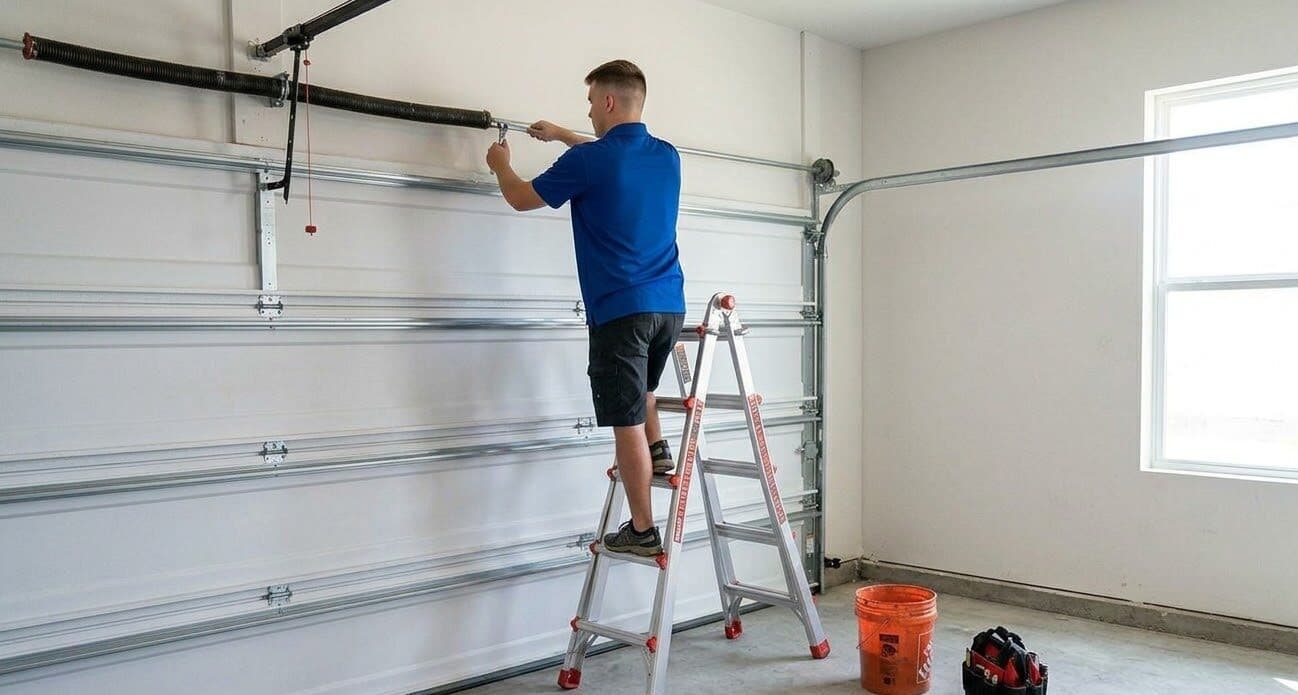
- Balance: Close the door, pull the emergency release, lift the door to about waist height and let go carefully. A balanced door stays roughly in place. If it drops or rises on its own, the springs need adjustment before any opener is installed.
- Use: A household that runs the door many times a day, or uses the garage as the main entry, benefits from more motor margin and a DC motor with soft start and stop.
Our rule of thumb for Polk County homes is straightforward. A balanced, uninsulated single door can run on a 1/2 HP class opener. Most insulated or wind-reinforced double doors belong in the 3/4 HP class. Heavy, oversized, wood or carriage doors deserve a 1-1/4 HP class DC opener or a wall-mount opener with a published lift rating that covers the door.
Why Florida Doors Often Need More Margin
Most national guides were written for doors in cooler climates. A few Florida conditions change the math.
- Wind-load hardware: Florida Building Code wind requirements lead to stronger doors with more struts and heavier hardware, especially on double doors. That weight is supposed to be carried by correctly sized springs, but it also raises the load during start-up and when springs wear.
- Heat and humidity: Lubricants thin out and rollers wear faster in hot garages, and a garage interior in a Florida summer can get very hot. Extra drag on the tracks shows up as extra load on the motor.
- Storm season: During outages and after storms, a door may need to run on battery backup or may have picked up drag from debris or a bent section. Some margin keeps the opener working when conditions are not ideal.
- Hurricane upgrades: Homeowners who add bracing or upgrade to an impact-rated door sometimes keep the old opener. A 1/2 HP opener that was fine on the original light door may be undersized afterward. Our hurricane reinforcement service checks the opener as part of the upgrade.
If you are weighing battery backup, our article on whether Florida requires a battery backup garage opener explains the rules and when it is worth it.
Springs Lift the Door, Not the Opener
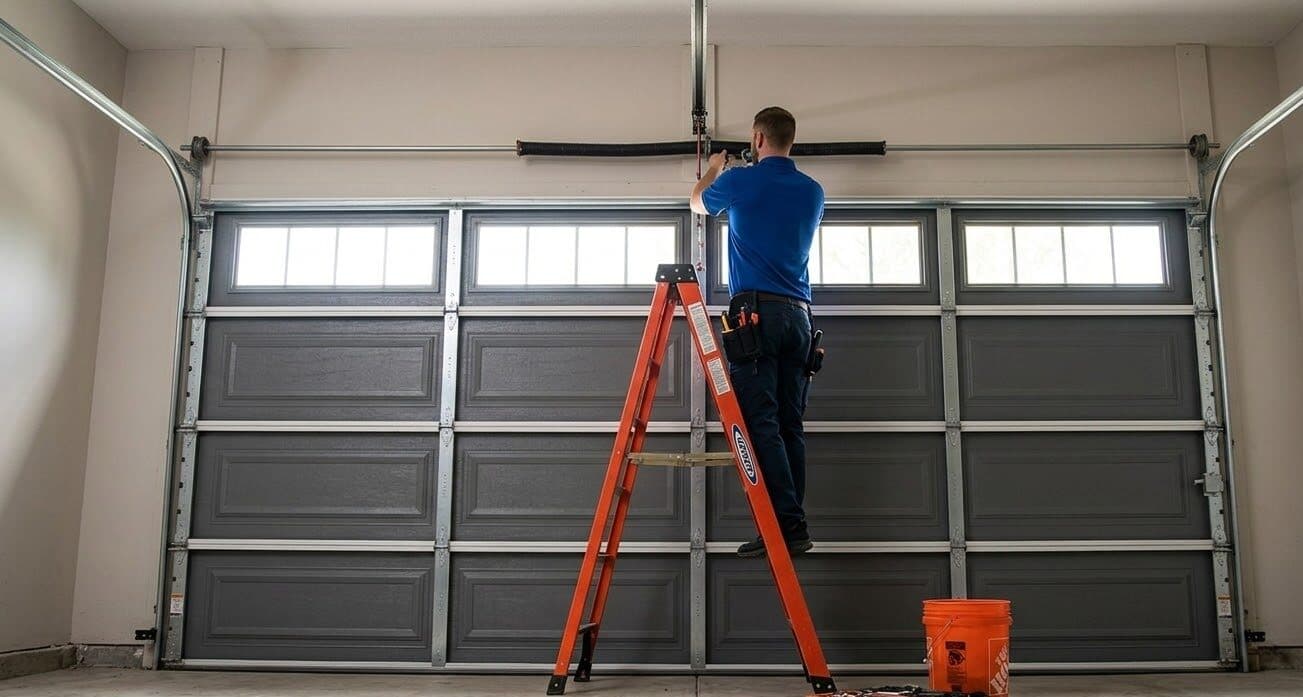
This is the single most important point in any horsepower discussion. A garage door can weigh well over a hundred pounds, and on a double insulated or reinforced door, several hundred. The springs are wound to counter that weight so the door feels light. The opener moves a door that, when balanced, should feel like only a small fraction of its real weight.
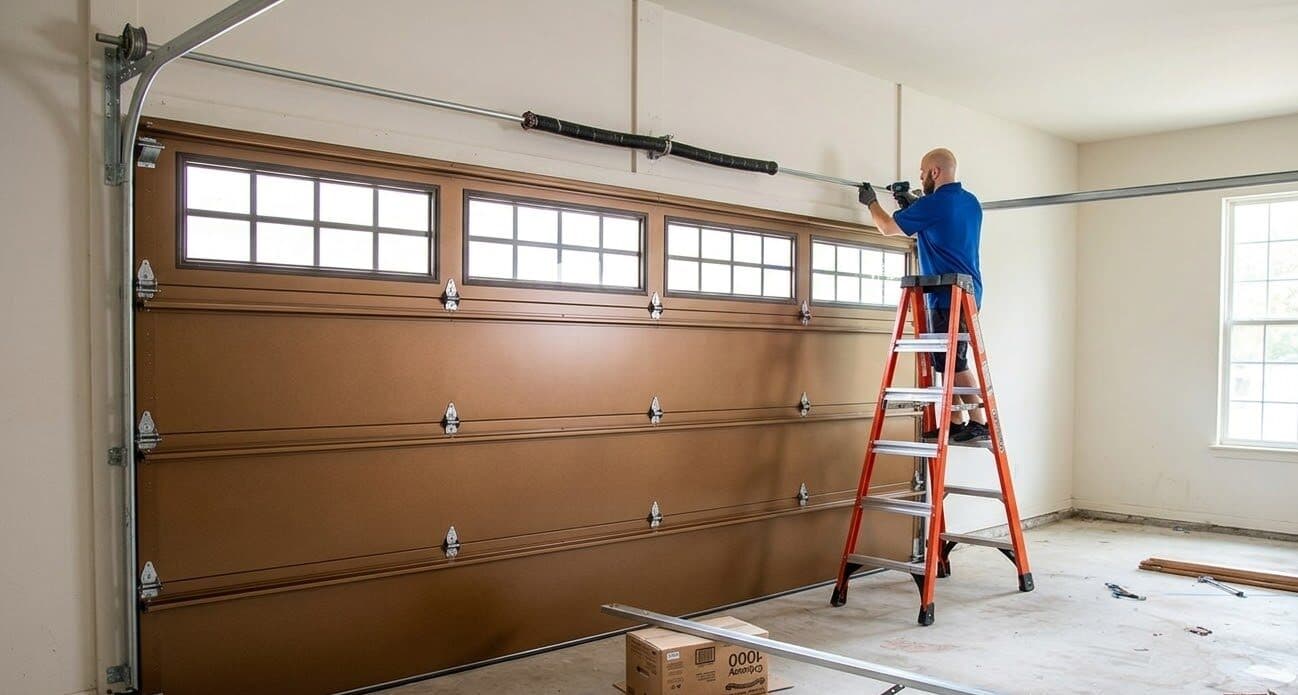
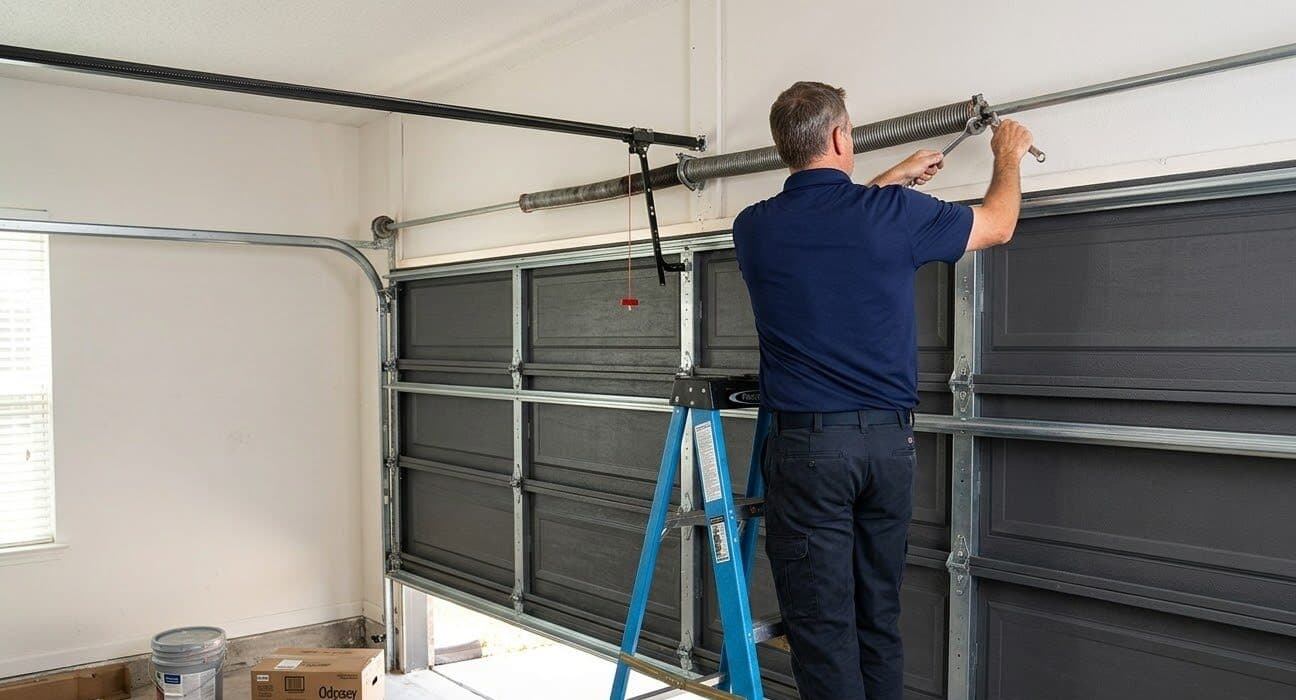
When springs weaken or break, the opener suddenly has to carry far more than it was designed for. That is when you hear the motor strain, see the door stop and reverse, or find stripped gears and a burned-out logic board. A bigger opener does not fix that problem; it hides it for a while and puts extra stress on the rail, the trolley and the door sections. Before buying a more powerful opener, get the springs checked. Our garage door spring replacement and balance adjustment services handle exactly this.
Signs Your Opener Is Undersized or Overworked
- The motor hums or strains at the start: The opener is working hard to get the door moving, often because the door is heavy, unbalanced or binding.
- The door stops or reverses partway: Force settings are being exceeded. This can be a door problem, a sensor problem or an undersized motor.
- Stripped gears or a worn drive: Plastic drive gears in some chain and belt openers wear out sooner under constant high load.
- Slow or uneven travel: The door hesitates at the same point each time, which often points to a track or roller problem the motor is fighting.
- Frequent resets after outages: Repeated electronic faults can be a sign the opener is near the end of its life or overloaded.
Do not respond to these signs by turning up the force setting. Force settings exist so the door reverses when it meets resistance. Since 1993, federal rules have required automatic reversing and external entrapment protection, such as photo eyes, on residential openers. Raising the force to make a struggling opener close is a safety risk. Our garage door opener repair team diagnoses the real cause first.
Does More Horsepower Cost More?
Usually, but not by as much as people expect. Within a brand, stepping from a 1/2 HP class to a 3/4 HP class model typically costs less than stepping from chain to belt drive or adding a camera and battery backup. The features often drive the price more than the motor rating. Installed opener costs in Polk County generally fall in the same ranges covered in our buyer's guide, and a proper installation includes checking door balance, setting travel and force limits and testing safety reversal.
The better question is what you are paying for. If your door is a standard single, a premium 1-1/4 HP class motor is money that buys no real benefit. If your door is a heavy insulated double with wind struts in Lakeland or Winter Haven, stepping up to the 3/4 HP class or a wall-mount opener is cheap insurance.
Get the Right Opener for Your Door in Polk County
Rocket Garage Door Services sizes openers to the door, not to the box. Our garage door opener installation service starts with a balance and spring check, then recommends the horsepower class and drive type that fit your door and how you use it. Homeowners can also book opener installation in Lakeland or opener installation in Winter Haven.
Call (863) 624-3191 for a free estimate. We will weigh up your door, your springs and your garage, and recommend the opener that fits instead of the biggest one on the truck.