

Garage Door Hinge Replacement
Worn or broken garage door hinges? Professional hinge replacement in Polk County, FL. Restore smooth operation. Call Rocket at (863) 624-3191.
Call (863) 624-3191Garage door hinge replacement is one of those repairs that’s easy to overlook until the symptoms become impossible to ignore. Hinges connect your garage door panels to each other and hold the rollers that guide the door along its tracks. When hinges wear out, crack, or break, you’ll hear grinding and squeaking, feel vibration through the door, and eventually see visible gaps between panels. In Polk County, garage door hinge replacement is a common repair because Florida’s heat and humidity accelerate wear on the metal components.
 (863) 624-3191GET IMMEDIATE SERVICE!
Garage Door Hinge Replacement in Polk County, FL
Most homeowners don't think about hinges until something goes wrong, and that's understandable. Hinges are tucked between the panels and hard to inspect without getting close. But they're working hard on every cycle: flexing, pivoting, and supporting the rollers through thousands of opens and closes. A standard residential door has 9 to 12 hinges, and each one carries a share of the door's weight as it moves along the tracks.
Rocket Garage Door Services replaces garage door hinges throughout Polk County, from Winter Haven and Lakeland to Bartow, Haines City, and every community in between. We stock the most common hinge sizes and types on every service truck for same-day repairs.
How Garage Door Hinges Work and Why They Fail
Hinges serve two functions. The flat portion bolts to the face of the door panel, and the barrel portion holds the roller stem. The barrel allows the roller to rotate freely while the flat plate transfers the door's weight through the roller and into the track. Different positions on the door use different hinge numbers (stamped on the hinge), and each number corresponds to a specific offset angle designed for that position.
Hinges fail primarily from metal fatigue. Every time the door opens and closes, the hinges flex at the pivot point between the panels. After thousands of cycles, micro-cracks develop in the metal at the flex point. These cracks grow until the hinge weakens enough to deform or snap. Standard-gauge hinges on builder-grade doors are especially vulnerable because they're made from thinner steel to cut manufacturing costs.
Corrosion is the second major failure mode. In Polk County, where garage interiors stay humid for most of the year, hinge surfaces develop rust that weakens the metal. The corrosion is worst at the barrel where the roller stem sits, because moisture gets trapped in that joint and has nowhere to evaporate. A corroded barrel can seize the roller, which defeats the entire purpose of the hinge-roller assembly.
Worn hinges also cause noise. As the barrel hole elongates from years of use, the roller develops play (wobble) in the hinge. That wobble translates into vibration and rattling during door operation. If your door has gotten noticeably louder over the past year and lubrication doesn't help, worn hinges are a likely cause.
Signs Your Hinges Need Replacement
Visible gaps between panels at the hinge points are the clearest indicator. When a hinge weakens, it can't hold the panels together tightly. You'll see daylight between sections, especially when the door is in the horizontal (open) position. This gap also allows cold or hot air to pass through, reducing any insulation benefit your door provides.
Cracks in the hinge metal are a serious warning. Inspect each hinge by looking at the area where the flat plate meets the barrel. If you see any crack, even a hairline one, that hinge should be replaced before it fails completely. A broken hinge can allow a panel to separate from the one above it, which is both a safety hazard and an expensive repair if the panel warps from the uneven support.
Binding or jerking during door travel often points to hinge problems. When hinges corrode or deform, the rollers they hold don't ride smoothly in the track. The door catches at certain points, especially during the transition between vertical and curved track sections. You might also notice that the door seems heavier to lift manually, because friction from worn hinge-roller assemblies adds resistance.
Excessive roller wobble is another sign. Grab a roller and try to wiggle it side to side. A small amount of play is normal, but if the roller moves significantly, the hinge barrel has elongated and needs replacement.
Hinge Types and Matching the Right One to Your Door
Garage door hinges are numbered from 1 to 5 (sometimes higher on tall doors), and each number is designed for a specific panel joint position. The number refers to the offset angle of the barrel relative to the flat plate. Hinge #1 goes between the bottom panel and the second panel. Hinge #2 goes between the second and third panels, and so on. End hinges (also called jamb hinges) mount at the sides of each panel and don't hold rollers but do connect panels at the edges.
Using the wrong hinge number causes tracking problems. If you install a #1 hinge where a #3 should go, the roller sits at the wrong distance from the panel face, which changes how the door rides in the track at that position. The door may bind, the roller may rub the track wall, or the panel gap may be uneven. Always match the hinge number to the position when replacing.
Heavy-duty commercial-gauge hinges are available for homeowners who want extra durability. These are made from thicker steel and have reinforced barrel assemblies. They cost a few dollars more per hinge but last significantly longer, especially on heavy insulated doors where standard hinges tend to fatigue faster due to the increased panel weight.
(863) 624-3191GET IMMEDIATE SERVICE!
The Hinge Replacement Process
Replacing hinges is straightforward but requires the door to be properly supported during the work. We position the door so the hinge we're replacing is accessible, then clamp the door in place so it can't move. The old hinge is unbolted from both panels, the roller is transferred to the new hinge (or replaced if it's also worn), and the new hinge is bolted into position.
The bottom brackets on each side of the door are a different situation entirely. These brackets are connected to the lift cables and are under extreme spring tension. They should never be removed or loosened by anyone other than a trained technician. If the bottom bracket hinges need replacement, the spring tension must be released first, which is a process that requires winding bars and proper technique.
After replacing all worn hinges, we test the door through several cycles to verify smooth operation. We check that all panels sit flush against each other, that the rollers ride cleanly in the tracks, and that there's no binding or vibration. We also tighten all remaining hinge bolts, because vibration from worn hinges often loosens the hardware on adjacent hinges too.
How Hinges and Rollers Work Together
Hinges and rollers are a matched system. A worn hinge causes premature roller failure because the wobble and misalignment put stress on the roller that it wasn't designed to handle. Similarly, a seized or damaged roller transfers stress back into the hinge, accelerating the hinge's fatigue cycle. When we find worn hinges, we always inspect the rollers at those positions and recommend replacing both if needed.
Upgrading to nylon rollers during a hinge replacement is a smart move. Since the hinges are already being removed and reinstalled, there's no additional labor to swap the rollers at the same time. The combined upgrade of new hinges and nylon rollers transforms how the door sounds and operates, often making a 15-year-old door feel and sound almost new.
The noise reduction from this combined upgrade is substantial. Old steel rollers in worn hinges are the number one source of garage door noise. New hinges eliminate the rattle from barrel play, and nylon rollers eliminate the steel-on-steel grinding from the tracks. Homeowners are consistently surprised at how much quieter their door becomes after this service.
Schedule Hinge Replacement with Rocket Garage Door Services
Rocket Garage Door Services replaces garage door hinges throughout Polk County. We carry standard and heavy-duty hinges in all common sizes and numbers on every service truck, so most replacements are completed in a single visit. Our service area covers Winter Haven, Lakeland, Bartow, Haines City, Lake Wales, Auburndale, and every other community in the county.
Worn hinges are one of those problems that get gradually worse. The noise increases, the gaps widen, the rollers wear faster, and the opener works harder. Catching it early keeps the repair simple and affordable. Waiting until hinges break or panels separate turns it into a larger job.
Call (863) 624-3191 for a free inspection and estimate. We'll check every hinge on your door and let you know which ones need replacement, with transparent pricing and no pressure to replace parts that are still in good condition.

Main cities we serve
Click any city for local pricing and service details.
Related services we offer
Garage Door Repair in Polk County, FL
Fast garage door repair in Winter Haven and Polk County, FL. Broken springs, cables, openers, and panels fixed
Learn MoreGarage Door Spring Replacement
Garage door spring replacement in Winter Haven and Polk County, FL. Torsion and extension springs replaced sam
Learn MoreGarage Door Opener Repair
Garage door opener not working? Same-day opener repair in Polk County, FL. All brands serviced. Diagnostic and
Learn MoreGarage Door Opener Installation
Garage door opener installation in Polk County, FL. LiftMaster, Chamberlain, and smart openers. Professional s
Learn MoreGarage Door Installation in Polk County, FL
Free estimates on new garage door installation or replacement in Winter Haven & Polk County, FL. Insulated, hu
Learn MoreEmergency Garage Door Repair
Emergency garage door repair in Winter Haven and Polk County, FL. Available 7 days a week for urgent repairs.
Learn MoreFrequently Asked Questions
How much does garage door hinge replacement cost?
+
How do I know which hinge number I need?
+
Can worn hinges damage other garage door parts?
+
Should I replace hinges and rollers at the same time?
+
Are the bottom hinges different from the rest?
+
Articles and guides for homeowners
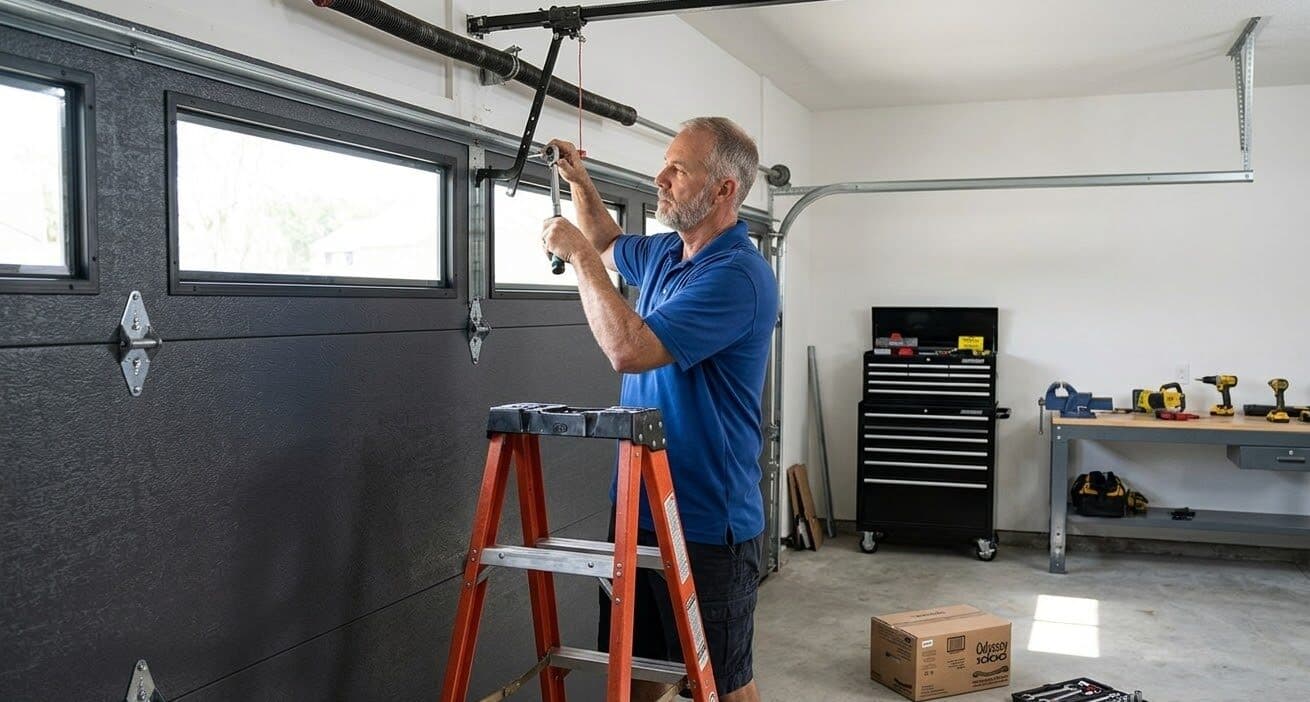
Torsion vs Extension Garage Springs: Which One? 2026
<p style="font-size: 17px; line-height: 1.7;">Garage doors use one of two spring systems. Torsion springs twist on a shaft above the door, and extension springs stretch along the side tracks. You can tell which one you have in a few seconds from inside the garage. Here is how each works, how they fail, which is better for your door and when converting from extension to torsion makes sense.</p>
Read Article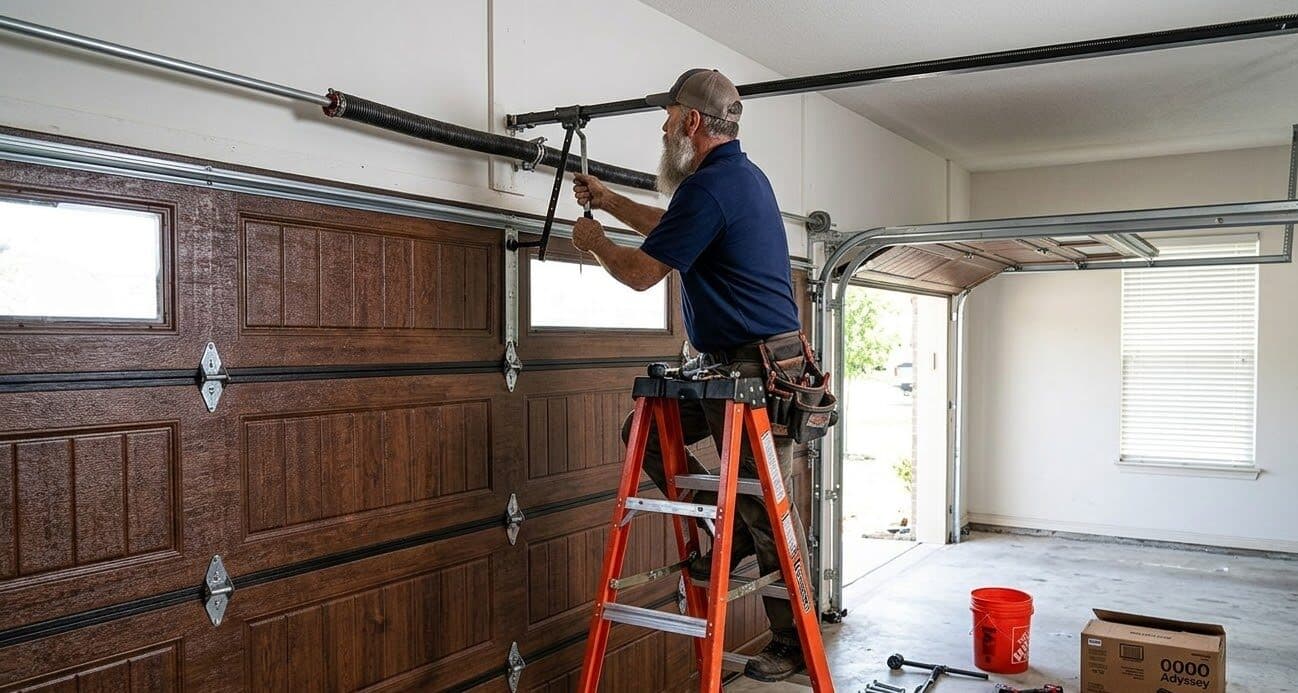
How Long Do Garage Door Springs Last? (FL Heat)
<p style="font-size: 17px; line-height: 1.7;">Garage door springs wear out by cycles, not years. A standard 10,000 cycle spring lasts about 7 years at four open and close cycles a day, while a 25,000 cycle spring lasts about 17. In Florida, rust from humidity is what most often cuts that short. Here is how to estimate your own spring life and make it last.</p>
Read ArticleGarage Door Spring Replacement Cost Florida 2026
<p style="font-size: 17px; line-height: 1.7;">A broken garage door spring in Florida typically costs about $150 to $355 to replace on a standard single-spring job in 2026, and a pair of torsion springs on a two-car door usually runs more. Here is what drives the price, why replacing both springs usually saves money, what a fair quote includes and which quoting patterns to watch for.</p>
Read ArticleNeed a Garage Door Fixed?
Same-day service. Lifetime warranty on springs. Transparent pricing. Call now or book service online.