
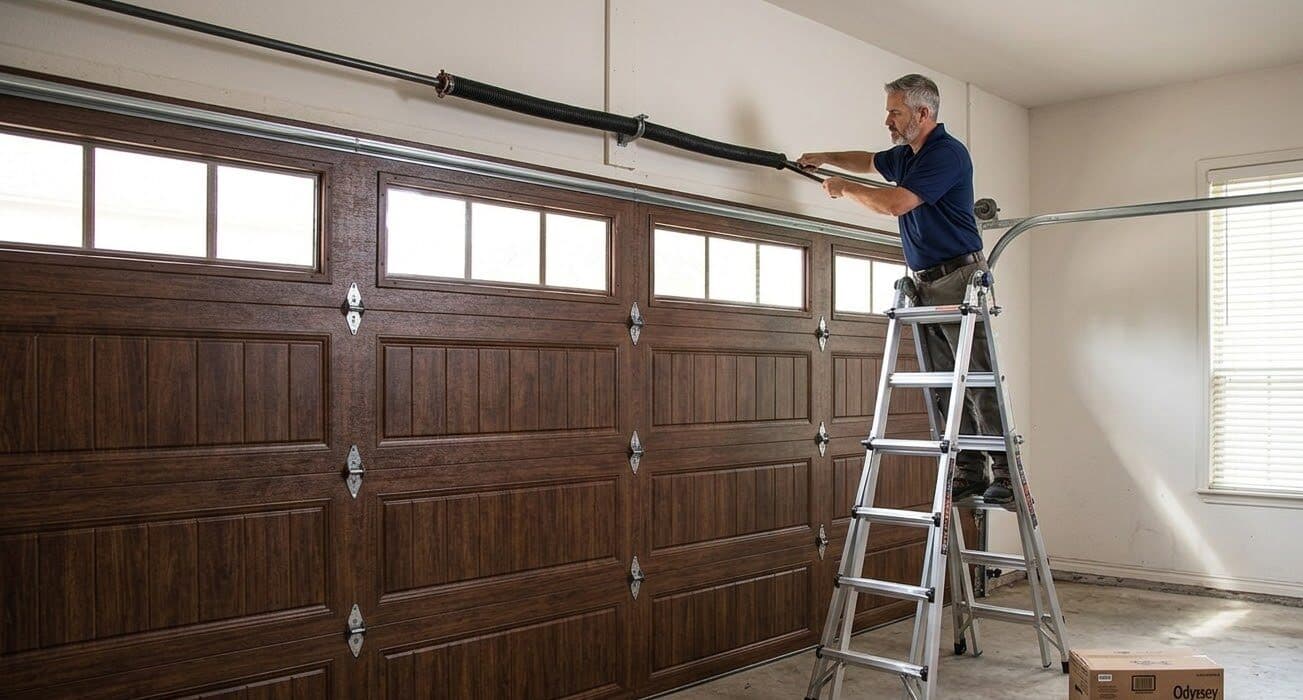
Opener Repair in Lakeland, FL
Garage door opener repair in Lakeland, FL. Logic board, capacitor, gear, and sensor fixes same day. Call Rocket at (863) 624-3191.
Call (863) 624-3191Garage door opener repair in Lakeland, FL follows a pattern that our technicians see nowhere else. The combination of Central Florida’s lightning corridor, year-round humidity averaging 74%, and garage interior temperatures that routinely exceed 130 degrees creates a hostile environment for the electronics, motors, and mechanical components inside your opener. And Lakeland, as the largest city in Polk County with over 112,000 residents, generates more opener repair calls per week than any other city in our service area.
 (863) 624-3191GET IMMEDIATE SERVICE!
Garage Door Opener Failures Unique to Lakeland's Environment
The failures break into three categories. Electrical failures from lightning and power surges account for roughly 40% of our Lakeland opener repair calls. Mechanical failures from heat-stressed gears, worn drive components, and corroded hardware make up another 40%. And sensor or control issues, including misaligned safety eyes, dead remotes, and faulty wall buttons, cover the remaining 20%. Each type requires different diagnostic skills and different parts, which is why we stock the most common components for all major brands on every truck.
What makes Lakeland different from other Florida cities is the intensity. Lakeland sits in one of the highest lightning-density zones on the planet. The city records more cloud-to-ground strikes per square mile during summer months than nearly any other populated area in the United States. That electrical activity is the single biggest threat to your garage door opener.
Circuit Board Damage from Lakeland's Afternoon Storms
The circuit board, sometimes called the logic board or control board, is the brain of your garage door opener. It processes signals from remotes and wall buttons, controls motor speed and direction, manages safety sensor input, and stores your programming. And it is the component most vulnerable to Lakeland's electrical storms.
A direct lightning strike to your home or a nearby strike that induces a surge through your wiring can destroy a circuit board instantly. But even smaller surges that happen during routine thunderstorms degrade the board's components over time. Capacitors swell, transistors weaken, and solder joints crack from repeated minor surges. You might not notice the damage right away. The opener starts acting strange, intermittently refusing to respond to remotes or pausing mid-cycle for no apparent reason. Then one day it just stops.
We carry replacement circuit boards for LiftMaster, Chamberlain, Genie, and Craftsman on our trucks because these four brands cover about 85% of the openers installed in Lakeland homes. A board swap takes 30 to 60 minutes. We remove the old board, install the new one, reprogram the remotes and keypad codes, reset the travel limits and force settings, and test everything. Your opener works like new because everything else, the motor, gears, chain or belt, is usually fine.
After replacing the board, we always recommend adding a surge protector at the outlet. A quality unit rated for 2,000 joules or more costs $30 to $50 and can prevent the next $200 board replacement. For Lakeland homeowners who have already lost a board to lightning, a whole-home surge protector at the breaker panel is an even better investment. Your HVAC, appliances, and electronics all benefit from the same protection.
Stripped Gears and Motor Wear in Lakeland's Heat
Inside most chain drive and belt drive openers, a small nylon gear meshes with a metal worm gear connected to the motor shaft. The nylon gear is designed to be the weak link. It strips before the motor burns out, protecting the more expensive component. But in Lakeland, that nylon gear has a harder life than the manufacturer intended.
Nylon softens as temperature rises. At 130 degrees inside a Lakeland garage, the gear loses some of its rigidity. Under load, the teeth flex more than they should, and each cycle shaves off a tiny bit of material. Over thousands of cycles in the heat, the teeth round off until they can no longer grip the worm gear. You hear the motor running but the door does not move, or it moves partway and slips back down.
Gear replacement is one of our most common Lakeland repairs. We remove the motor assembly, replace the stripped nylon gear (and usually the metal worm gear at the same time since it is exposed and inexpensive), reassemble, and lubricate. The whole job takes about an hour. Cost is typically $125 to $225, far less than replacing the entire opener.
Motor wear is a separate issue. Electric motors generate heat during operation. Add the ambient heat of a Lakeland garage, and the motor runs hotter than its design temperature rating. Over time, the winding insulation breaks down, bearings dry out, and the motor draws more current to produce the same output. You might notice the door moving slower, the motor running longer per cycle, or a burning smell. At that point, the motor is reaching end of life. We can sometimes replace just the motor, but if the opener is older than 12 to 15 years, replacement is usually the smarter financial choice.
(863) 624-3191GET IMMEDIATE SERVICE!
Humidity Damage to Wiring and Internal Components
Lakeland's humidity does not just affect the outside of your opener. Moisture works its way into the housing, settles on circuit boards, corrodes wire terminals, and creates conditions for electrical shorts. Morning dew point temperatures in Lakeland frequently exceed 70 degrees, which means condensation forms on any surface that is cooler than the air. In a garage that cooled overnight and then heats up rapidly in the morning, condensation appears on metal components including the opener housing and internal parts.
Corroded wire terminals are a sneaky problem. The wires that connect the wall button, safety sensors, and power supply to the circuit board use screw or push-in terminals. Over time, a thin layer of corrosion builds up on the contact surfaces. The connection becomes intermittent. The opener works sometimes and not other times. Pressing the wall button harder does nothing because the issue is inside the terminal, not in the button itself.
We clean and tighten all wire terminals during every opener repair visit in Lakeland. It is a 5-minute step that prevents callbacks. For homes with chronic humidity problems, we recommend applying dielectric grease to the terminals after cleaning. The grease seals out moisture and prevents future corrosion without interfering with the electrical connection.
Rust on the chain, rail, or trolley is another humidity-driven issue. A rusty chain creates more friction, which makes the motor work harder and wears out gears faster. We lubricate the entire drive system during repair visits. Silicone spray on the rail and white lithium grease on the chain reduce friction, quiet the operation, and protect against future rust. This kind of preventive maintenance during a repair call extends the life of every component in the system.
Safety Sensor Troubleshooting for Lakeland Garages
The photoelectric safety sensors mounted 6 inches above the floor on each side of the garage door opening are required by federal law on all residential openers installed since 1993. They prevent the door from closing on a person, pet, or object by reversing the door when the infrared beam is broken. But in Lakeland, these sensors cause more homeowner frustration than almost any other component.
Sun glare is the number one sensor issue in Lakeland. When direct afternoon sunlight hits the receiving sensor lens, it overwhelms the infrared signal from the sending sensor. The opener thinks the beam is broken and refuses to close the door. This is maddening because it happens at the same time every day, usually between 3 PM and 6 PM, and the rest of the time the door works perfectly. We fix this by repositioning the sensors, installing a small shade hood over the receiving sensor, or in some cases adding a cardboard tube around the sensor eye to block sunlight from the side.
Spider webs across the sensor beam are the second most common cause of phantom reversals in Lakeland. Florida spiders love building webs in garage door tracks and across sensor openings. The web breaks the infrared beam the same way a person would. Regular web clearing helps, but for persistent spider problems, we install small wire guards around the sensors that prevent web attachment without blocking the beam.
Vibration-induced misalignment is the third issue. Every time the door opens and closes, the vibration travels through the tracks and into the sensor mounting brackets. Over hundreds of cycles, the sensors drift out of alignment. One sensor points slightly away from the other, the beam misses, and the door won't close. We use locking nuts and thread-lock compound on sensor brackets in Lakeland to minimize drift. If the concrete floor has settled unevenly, we may need to adjust the mounting height to compensate.
When Repair Makes Sense vs. When Replacement Is Smarter
Not every opener problem justifies repair. And not every aging opener needs replacement. Here is how we help Lakeland homeowners make that decision with clear numbers instead of sales pressure.
Repair makes sense when the opener is under 10 years old and the failure is a single component: a stripped gear, a fried circuit board, a dead remote receiver, or a sensor issue. These repairs cost $75 to $300 and restore full function. The motor, drive system, and housing still have years of life in them. Replacing the whole unit would waste money.
Replacement makes sense when the opener is 15 years or older, has had multiple repairs, and lacks modern safety and convenience features. A 2010-era opener has no battery backup, no WiFi, basic security codes that can be scanned, and sensors that are harder to source replacement parts for. Spending $250 on a repair extends the life of an obsolete unit for maybe 2 more years. Spending $500 to $800 on a new opener gives you 15 years of reliable operation with modern features, better surge protection, and a full warranty.
The gray area is openers in the 10 to 15 year range. Here we look at the total picture. How many repairs has it had? Is the motor showing signs of wear (slow operation, overheating)? Does the owner want smart features or battery backup? If the repair cost exceeds 50% of a new unit's price, replacement usually wins. We lay out both options with prices and let Lakeland homeowners decide what fits their budget and timeline.
Neighborhoods We Service and Common Issues by Area
Different Lakeland neighborhoods have different opener problems, and it comes down to the age and type of housing stock in each area.
South Lakeland and Highland City have a large number of homes built in the 1970s through 1990s. Original Sears Craftsman and Genie openers are still running in some of these homes, 25 to 30 years old. Parts are increasingly difficult to find. When these units fail, replacement is almost always the right call because the cost of sourcing obsolete parts exceeds the value of the repair.
Kathleen and north Lakeland have newer construction with builder-grade openers. Chamberlain and LiftMaster units from the 2010s are the most common. Gear failures and surge damage are the typical issues. Parts are readily available and repairs are straightforward.
Downtown and Lake Morton area have unique challenges. Older homes often have non-standard garage door sizes and configurations. Some still use outdated single-piece doors with side-mount openers that modern replacement units do not fit. We assess these homes carefully to determine whether a standard opener retrofit is possible or whether a custom mounting solution is needed.
Grasslands, Oakbridge, and Cleveland Heights are established communities where openers installed at original construction are reaching the 15 to 20 year mark. We see a wave of failures across these neighborhoods as the builder-grade openers age out simultaneously. The most common call is a gear failure or motor burnout on a chain drive unit that has been running in 130-degree heat for 15 years straight.

Other cities near Lakeland
Based in Winter Haven, covering every major city in Polk County. Click any city for local service details.
Other garage door services we offer
Garage Door Opener Repair
Garage door opener not working? Same-day opener repair in Polk County, FL. All brands serviced. Diagnostic and
Learn MoreGarage Door Repair in Polk County, FL
Fast garage door repair in Winter Haven and Polk County, FL. Broken springs, cables, openers, and panels fixed
Learn MoreGarage Door Spring Replacement
Garage door spring replacement in Winter Haven and Polk County, FL. Torsion and extension springs replaced sam
Learn MoreGarage Door Opener Installation
Garage door opener installation in Polk County, FL. LiftMaster, Chamberlain, and smart openers. Professional s
Learn MoreGarage Door Installation in Polk County, FL
New garage door installation in Winter Haven and Polk County, FL. Insulated, hurricane-rated, and custom doors
Learn MoreEmergency Garage Door Repair
Emergency garage door repair in Winter Haven and Polk County, FL. Available 7 days a week for urgent repairs.
Learn MoreOther garage door services in Lakeland
Emergency Garage Door Services in Lakeland, FL
Stuck door, broken spring, or storm damage in Lakeland? We answer 24/7 and handle most repairs the same night.
Learn MoreGarage Door Installation in Lakeland, FL
New garage door installation in Lakeland, FL. Steel, insulated, and custom doors with storm-rated options. Cal
Learn MoreOpener Installation in Lakeland, FL
Garage door opener installation in Lakeland, FL. Belt, chain, and direct-drive systems with battery backup. Ca
Learn MoreGarage Door Repair in Lakeland, FL
Garage door repair in Lakeland, FL. Broken springs, off-track doors, cables, and rollers fixed same day. Call
Learn MoreSpring Replacement in Lakeland, FL
Torsion and extension spring replacement in Lakeland, FL. High-cycle springs sized to your door weight. Call R
Learn MoreFrequently Asked Questions
Why did my garage door opener stop working after a Lakeland thunderstorm?
+
How do I know if my opener needs repair or replacement in Lakeland?
+
My garage door opener works but makes grinding noises. What is wrong?
+
Why do my garage door safety sensors keep going out of alignment in Lakeland?
+
How much does garage door opener repair cost in Lakeland?
+
Articles and guides for homeowners
Reset Garage Door After a Power Outage (Florida)
<p style="font-size: 17px; line-height: 1.7;">When the power comes back after a Florida storm, the garage door opener does not always come back with it. Usually the trolley is still disconnected from the release cord, the travel limits got confused, a surge hit the logic board or sensors, or the battery backup is drained. Here is how to check the door safely first, reconnect the opener, reset limits and remotes, spot surge damage, and get the battery backup ready for the next outage.</p>
Read Article
How to Program Your Garage Door Opener to Your Car in 2026
<p style="font-size: 17px; line-height: 1.7;">The garage button in your car usually learns your remote on the first try and still does not open the door. That is because every rolling code opener needs a second step: pressing the Learn button on the motor and sending the car signal within about 30 seconds. Here is the full HomeLink sequence in the order it has to happen, how to read the indicator light, the repeater fix for Security+ 2.0 openers and older cars, how to erase HomeLink before you sell a vehicle, and the Florida heat and storm issues that make you repeat it more often than you should.</p>
Read Article
MyQ WiFi Setup Guide: Connect Your Opener in 2026
<p>Most myQ setups that stall never get past the network step, and the reason is almost never the opener. It is a router quietly steering an appliance radio onto a 5 GHz band it cannot see, or a homeowner following instructions written for different hardware. Here is how to tell which of the three myQ paths you are actually on, the setup steps for each, why the door sensor is the part that fails, and the current answer on Apple Home and Home Assistant.</p>
Read ArticleNeed a Garage Door Fixed?
Same-day service. Lifetime warranty on springs. Transparent pricing. Call now or book service online.