Why Garage Door Maintenance Matters More in Florida
Then there are the storms. The 2004 hurricane season (Charley, Frances, and Jeanne all hit Polk County within six weeks) showed exactly what happens when garage door maintenance gets neglected. Doors with rusted tracks, weak springs, and deteriorated seals failed at much higher rates than well-maintained ones. Regular maintenance helps your door survive daily use and gives it a better chance during severe weather.
A garage door cycles about 1,500 times per year in a typical household (roughly 4 times per day). Every cycle puts wear on springs, cables, rollers, hinges, and the opener. Catching small problems early through regular maintenance prevents expensive emergency repairs later. Here’s what to check and when.
Monthly Visual Inspection: What to Look For
Once a month, take 5 minutes to look over your garage door system. You don’t need any tools for this. Start with the cables on both sides of the door. Look for fraying (individual strands separating from the main cable), kinks, or rust. If you see fraying, schedule a replacement before the cable snaps completely.
Check the tracks on both sides for bends, dents, or debris. The tracks should be straight and parallel. Look for gaps between the rollers and the track. If the rollers are wobbling or sitting loosely in the track channel, they’re wearing out.
Inspect the rollers themselves. Nylon rollers should spin freely without visible cracks or chips. Steel rollers should spin without grinding or catching. Look at the hinges connecting each panel. If you see rust, cracks, or elongated holes where the hinge bolts through the panel, those hinges need attention.
Finally, check the weatherstripping along the bottom of the door and the seals around the sides and top. Florida heat degrades rubber and vinyl seals faster than cooler climates. Cracked, brittle, or missing seals let in water, bugs, and hot air. Bottom seals are inexpensive and easy to replace yourself.
The Balance Test: How to Check If Your Springs Are Wearing Out
Your garage door springs do the heavy lifting (literally). When they start to weaken, the opener works harder to compensate, which wears out the motor, gears, and drive system faster. A simple balance test tells you if your springs are still holding their tension.
Here’s how to do it. Close the door completely. Pull the emergency release cord (red handle) to disconnect the door from the opener. Now lift the door manually to about waist height (roughly halfway up) and let go.
If the springs are in good shape, the door should stay in place, hovering at whatever height you set it. It might drift an inch or two, and that’s normal. If the door slides down more than a few inches or falls quickly, the springs are losing tension and need adjustment or replacement. If the door shoots upward, the springs have too much tension.
Do this test every 3 to 4 months. In Polk County’s heat, spring steel fatigues faster, so catching a weak spring early prevents a full break (and the emergency repair bill that comes with it). After the test, pull the release cord toward the motor and press your wall button to re-engage the opener.
Lubrication: What to Use and What to Avoid
Proper lubrication reduces friction, prevents rust, and keeps your garage door operating quietly. But using the wrong product does more harm than good. Here’s what to use and where to apply it.
Use a silicone-based spray or white lithium grease. Both are designed for garage door components and won’t attract dirt or gum up in Florida’s heat. You can find either at any hardware store for under $10.
Apply lubricant to: the torsion springs (spray along the full length of each coil), all metal hinges (at the pivot point), the metal rollers and their bearings (the small shaft where the roller meets the stem), and the lock mechanism if your door has one. Spray lightly, just enough to coat the surface. Wipe off any excess.
Do NOT use WD-40. This is the most common mistake homeowners make. WD-40 is a solvent and water displacer, not a lubricant. It actually strips away existing lubrication and leaves parts dry after the carrier evaporates. It also attracts dust and grit in Polk County’s humid air, creating an abrasive paste on moving parts. Also, never lubricate nylon rollers. They’re designed to operate without lubrication, and spraying them with oil can cause them to swell or degrade. Only lubricate the bearing inside the roller stem.
Safety Reversal Test: Make Sure Your Door Passes
Federal law has required automatic reversal systems on garage door openers since 1993. Your door should reverse direction if it contacts an obstruction while closing. Testing this takes 30 seconds and could prevent a serious injury.
Place a 2×4 piece of lumber flat on the ground in the center of the doorway. Press the button to close the door. When the door contacts the 2×4, it should immediately reverse and go back up. If it doesn’t, the opener’s force settings need adjustment (consult your opener’s manual for the force adjustment screws, usually on the back or side of the motor unit).
Next, test the photo-eye sensors. With the door open, press the close button and then wave your foot through the beam between the two sensors (located about 6 inches off the ground). The door should stop and reverse. If it doesn’t, clean the sensor lenses with a soft cloth and check that both are properly aligned (both indicator lights should be steady, not blinking).
Run these tests every month. If either test fails after you’ve cleaned and adjusted the sensors, call a professional. Opener safety systems protect your family, pets, and anything else that might be under the door when it’s closing.
When to Call a Professional Instead of DIY
Many garage door maintenance tasks are perfectly safe for homeowners: visual inspections, lubrication, weatherstrip replacement, safety testing, and keeping tracks clean. But certain jobs should always go to a trained technician.
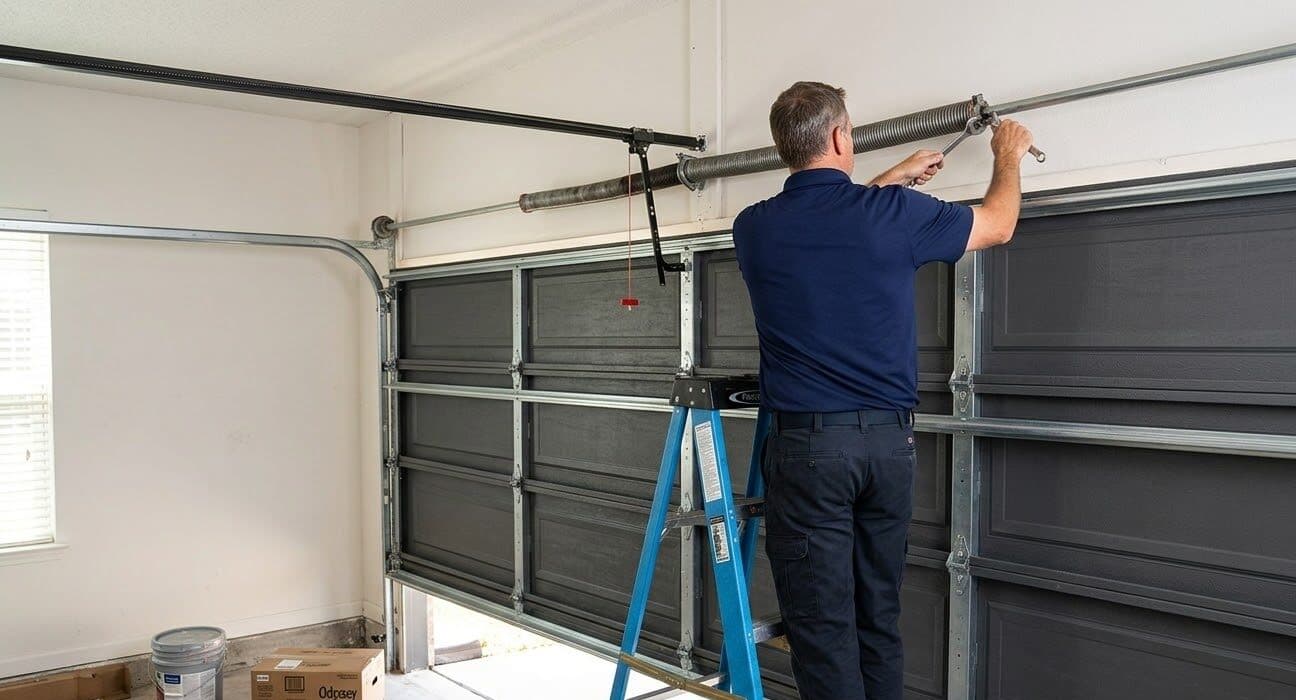
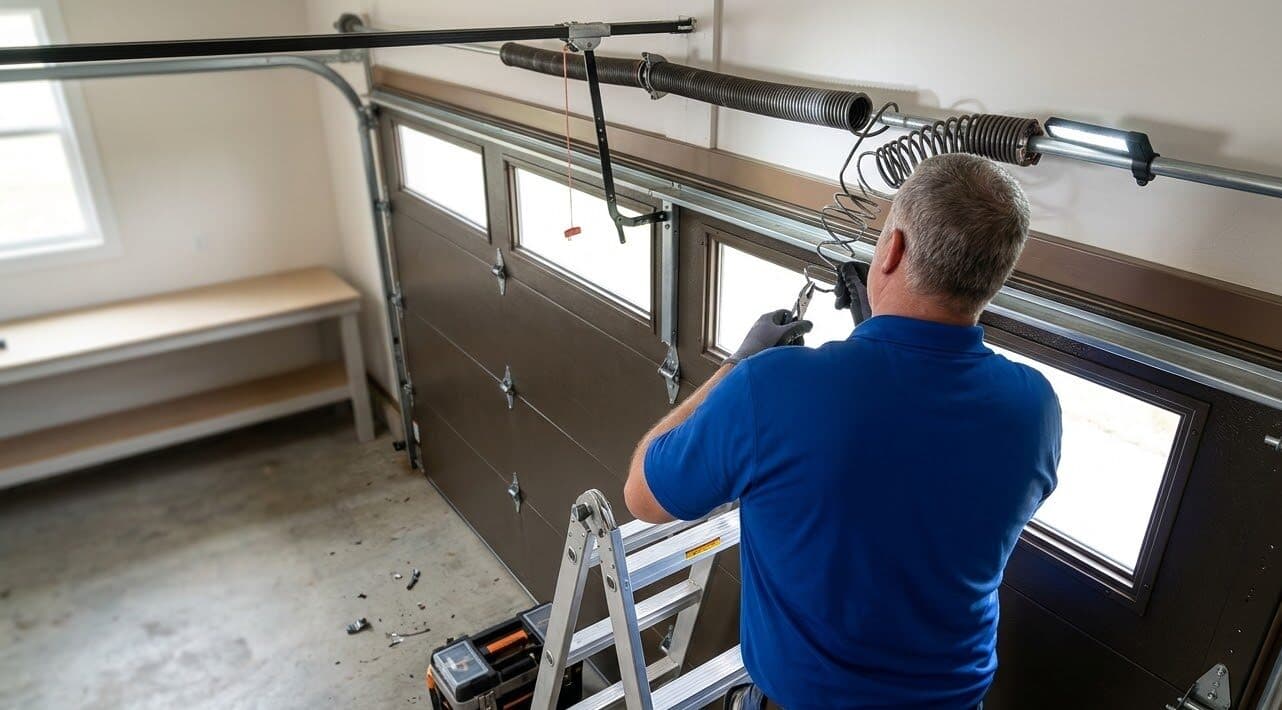
Spring work is the biggest one. Torsion springs are under extreme tension, and adjusting or replacing them requires specialized tools (winding bars, vice grips, and safety equipment) and hands-on training. Every year, homeowners are seriously injured attempting DIY spring work. This is not a YouTube tutorial situation.
Cable replacement is another professional-only job. The cables connect to the spring system, and improper installation can cause the door to fall or the springs to release unexpectedly. Track realignment also requires professional tools and knowledge because bending a track incorrectly can cause the door to bind or come off the rails entirely.
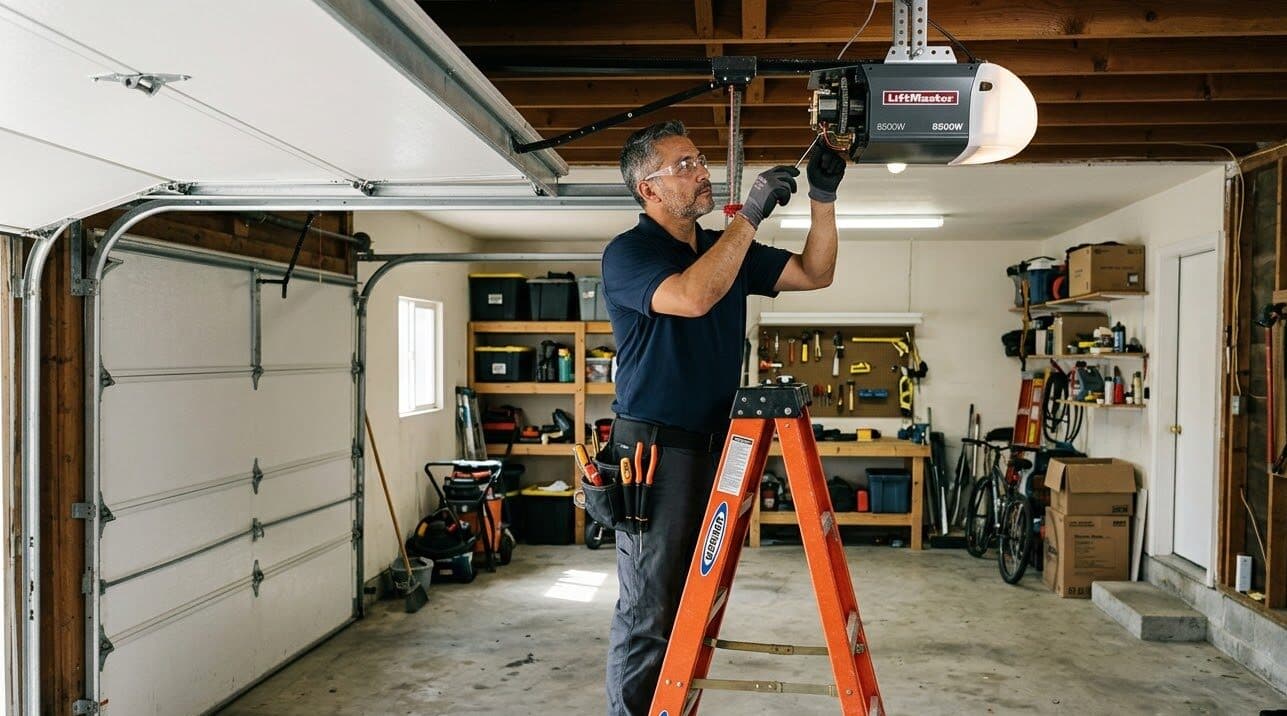
Electrical issues with the opener (wiring, circuit board problems, motor replacement) should go to a technician who understands both the electrical and mechanical systems. In Winter Haven and across Polk County, building codes require certain garage door work to meet Florida Building Code standards, and a licensed professional ensures compliance.
Rocket’s Maintenance Plan: What We Include and Why It Pays Off
Rocket Garage Door Services offers a professional tune-up for Polk County homeowners that covers everything your garage door needs to run smoothly and safely. Our technicians inspect every component, lubricate all moving parts with the correct products, test the balance and safety systems, tighten all hardware, and adjust the opener’s force and travel settings.
We recommend scheduling maintenance twice a year in Florida (once before hurricane season in May and once after in November). Polk County’s climate is harder on garage door components than moderate climates, and twice-yearly service catches problems like corroding cables, weakening springs, and deteriorating seals before they become emergency repairs.
Regular maintenance customers also get priority scheduling for repairs and discounts on parts. When you consider that a single emergency spring replacement costs $250 to $450, preventing just one unexpected failure more than covers the cost of annual maintenance. Call Rocket at (863) 624-3191 to schedule your tune-up. We serve all of Polk County, 7 days a week.
Frequently Asked Questions
How often should I maintain my garage door in Florida?
+
Is WD-40 bad for garage doors?
+
How much does a professional garage door tune-up cost?
+
What's included in a garage door maintenance visit?
+
What garage door maintenance can I safely do myself?
+
Keep reading
Energy-Efficient Garage Doors: Why They Matter in Florida
Most homeowners don't think about their garage door when they consider energy efficiency, but they should. A standard two-car garage door covers roughly 150 square feet, making it the single largest...
Read Article
Garage Door Emergency: What to Do When Your Door Won't Open
Your garage door won't open and you need to get to work. Before you assume the worst, there are a few simple things to check that solve most emergency garage door situations in Polk County homes. Sta...
Read Article
Choosing the Right Garage Door for Your Florida Home
Picking a new garage door sounds straightforward until you start comparing materials, insulation values, wind ratings, and price tags. Choosing the right garage door for a Florida home is different f...
Read ArticleMain cities we serve
Based in Winter Haven, covering every major city in Polk County. Click any city for local service details.
Popular garage door services
Garage Door Repair in Polk County, FL
Fast garage door repair in Winter Haven and Polk County, FL. Broken springs, cables, openers, and panels fixed
Learn MoreGarage Door Spring Replacement
Garage door spring replacement in Winter Haven and Polk County, FL. Torsion and extension springs replaced sam
Learn MoreGarage Door Opener Repair
Garage door opener not working? Same-day opener repair in Polk County, FL. All brands serviced. Diagnostic and
Learn MoreGarage Door Opener Installation
Garage door opener installation in Polk County, FL. LiftMaster, Chamberlain, and smart openers. Professional s
Learn MoreGarage Door Installation in Polk County, FL
New garage door installation in Winter Haven and Polk County, FL. Insulated, hurricane-rated, and custom doors
Learn MoreEmergency Garage Door Repair
Emergency garage door repair in Winter Haven and Polk County, FL. Available 7 days a week for urgent repairs.
Learn MoreNeed a Garage Door Fixed?
Same-day service. Lifetime warranty on springs. Transparent pricing. Call now or book service online.