

Garage Door Spring Replacement in Davenport, FL
Torsion and extension spring replacement in Davenport, FL. High-cycle springs sized to your door weight. Call Rocket at (863) 624-3191.
Call (863) 624-3191Garage door spring replacement in Davenport, FL is about sizing the right spring to the actual door weight, choosing the correct cycle rating for the household's usage pattern, and replacing in pairs so both springs have matching cycle histories going forward. Davenport's 2012 to 2020 construction wave installed a large cluster of ten-thousand-cycle builder springs that are now hitting end of life on predictable schedules. We carry standard and high-cycle springs for the common builder doors in the 33837, 33896, and 33897 ZIPs.
 (863) 624-3191GET IMMEDIATE SERVICE!
Garage Door Spring Replacement in Davenport
Garage door springs are the single component doing the most work on your door. The opener gets all the attention, but the motor on a residential opener is rated for only about a quarter to a half horsepower. That is nowhere near enough to lift a two-hundred-pound insulated steel door by itself. The springs store mechanical energy when the door closes and release it to help lift the door on opening. The motor just nudges the balanced system through its travel. When a spring breaks, that balance is gone, and the door suddenly feels twice as heavy to everything that touches it, including the opener.
Spring replacement is one of our most common Davenport service calls, partly because springs are wear items on a fixed lifespan and partly because the city's housing stock is hitting the end of the builder-spring window. Davenport went from under three thousand residents in 2010 to over nine thousand by 2020, and the subdivisions built during that decade received the same short-cycle builder springs across hundreds of homes. Those springs are now in their window of peak failure.
Every spring replacement visit starts with sizing, not with a generic part off the shelf. A spring matched to the wrong door weight, the wrong wire diameter, or the wrong inside diameter will fail early, wear the opener, and cause tracking problems. Getting the sizing right the first time is the difference between a ten-year repair and a one-year repair.
Torsion Versus Extension Springs: What's on Your Door
Almost every modern garage door in Davenport uses torsion springs. These sit horizontally on a metal shaft mounted above the door opening and wind up as the door closes. The stored torque is released as the door opens. Torsion springs give smoother operation, safer failure behavior, and longer service life than extension springs. Doors installed since roughly 1995 are almost all torsion-spring systems.
Extension springs are the older style, installed on older Davenport homes and some simple one-car garages. Extension springs run horizontally along the tracks above the door on each side and stretch as the door closes, storing energy in tension. They are cheaper to install originally, but they fail in more dangerous ways. When an extension spring snaps, the broken end can whip across the garage with significant force. Safety cables running through the center of each extension spring contain the broken end, and any extension spring system we service gets safety cables installed if they are not already present.
Identifying which style you have is straightforward. Look above the closed door from inside the garage. If you see a horizontal metal shaft running across the header with one or two tightly coiled springs on it, that is torsion. If you see springs running horizontally along each track on either side of the door, that is extension. The replacement process and cost are different for each, and matching the replacement to the existing system is the first decision on every job.
Cycle Ratings and Why They Determine Your Replacement Cost
Torsion springs are rated in cycles, not years. One cycle is one full open and one full close. Standard builder-grade springs are rated for about ten thousand cycles. Mid-grade springs are rated for about twenty thousand cycles. High-cycle springs run twenty-five thousand, fifty thousand, or even one hundred thousand cycles depending on the specification.
The cycle rating translates directly to service life based on usage frequency. A family that uses the garage as the main entry runs four to six cycles per day. At five cycles per day, a ten-thousand-cycle spring lasts about five and a half years. A twenty-five-thousand-cycle spring lasts nearly fourteen years. The upgrade cost from standard to high-cycle is modest, usually less than a third of the base spring price, and the lifespan difference is more than double.
We quote both standard and high-cycle options on every replacement and let the homeowner make the choice. For a home where the family plans to stay long-term, the high-cycle upgrade almost always pays back. For a rental property being prepared for sale or a home where the garage is rarely used, the standard spring is a reasonable choice. The important thing is knowing the tradeoff before making the decision. Replacing a ten-thousand-cycle spring with another ten-thousand-cycle spring is a common mistake that sets up a second service call in five or six years.
Why We Replace Springs in Pairs, Always
Two-car doors and larger single-car doors use dual spring systems. Both springs share the load, and both springs have the same cycle history. When one spring breaks, the other spring is typically within a few hundred cycles of the same fate. Replacing only the broken spring leaves the customer facing another service call in weeks or months when the surviving spring gives out.
The cost difference between replacing one spring and replacing both is modest on the parts side. The labor is nearly identical because the technician is already on the door, the shaft is already unloaded, and the setup for the second spring takes only a few additional minutes. When both springs are replaced at the same time, the door is fully rebalanced, both springs have matching cycle histories going forward, and the customer avoids a second visit with a second service charge.
We explain this on every replacement call. The customer sees the quote for both springs, understands why, and makes the decision. In our experience almost everyone chooses to replace both. The handful who replace only the broken spring usually call back within six to twelve months for the other one. We would rather do the job once and correctly than save the customer a few dollars upfront that costs them significantly more on the return visit.
(863) 624-3191GET IMMEDIATE SERVICE!
Sizing Springs to Door Weight in Davenport's Insulated Builder Doors
Spring sizing is defined by four measurements: wire diameter, inside diameter, length, and wind direction. All four must match the door weight and travel distance. Get any one wrong and the door is either overcharged or undercharged, both of which cause problems.
The door weight is the starting point. A non-insulated 25-gauge steel double car door weighs around one hundred and thirty pounds. Adding polystyrene insulation brings that to around one hundred and sixty pounds. Adding polyurethane insulation with a 24-gauge steel skin can push the weight past two hundred pounds. Many of Davenport's newer subdivisions specified insulated doors as part of the builder package, which means the spring must be sized for the actual insulated weight, not for a generic two-car door assumption.
Our technicians weigh the door during the replacement visit when there is any uncertainty about the actual weight. The door is disconnected from the opener, the emergency release is pulled, and a spring scale on the bottom rail measures the lifting force required at various heights. The spring is then sized to that exact weight. For common Davenport builder doors, we already know the correct size from the pattern of previous service calls in the same subdivision, but verifying on the job is still part of the process.
The Davenport Spring Failure Wave: 2012 to 2020 Construction
A significant share of Davenport's homes were built between 2012 and 2020, during the regional construction surge that drove the city's 213 percent population growth. That wave of construction used similar builder packages: 25-gauge insulated steel doors, standard torsion springs rated for ten thousand cycles, and half-horsepower chain-drive openers. Those packages have now been in service for five to twelve years, which puts a large cluster of them squarely inside the spring failure window.
Because so many homes share the same hardware, we see predictable bursts of spring calls from specific subdivisions at specific points in their service life. A call from Bella Trae, ChampionsGate, Providence, Astonia, or Horse Creek is often preceded by three or four similar calls from immediate neighbors in the same week. The springs were installed within a few months of each other by the same crew, and they fail within a similar window.
This pattern helps our trucks stock the exact springs the Davenport ZIPs need. The 33837, 33896, and 33897 ZIPs share a common inventory profile, and our technicians carry the right sizes to finish most replacements in a single visit without going back for parts. For less common doors, we confirm the specification during the dispatch call and stage the correct springs for the visit.
Why Spring Replacement Is Not a DIY Job
Torsion springs store a significant amount of mechanical energy when wound. A typical residential torsion spring on a two-car door stores enough energy to break bones, shatter teeth, or cause serious eye injury if it releases uncontrolled during installation. The winding bars used to charge the spring must be the correct length and diameter, and they must be held through the full wind without slipping. If a winding bar slips out of a cone, the spring can unwind violently.
The injuries we hear about from DIY attempts are real and serious. Broken fingers, broken forearms, ladder falls, and in rare cases worse. The videos online that make the job look simple do not show the experience and muscle memory the installer has from hundreds of previous replacements. They also do not show the specialized tools, the proper winding bars, the setup used to hold the shaft steady, and the process for confirming the final balance.
Professional spring replacement is not expensive relative to the safety margin it provides. Our technicians do this work daily, carry the correct tools, and finish the job in under an hour in most cases. For any homeowner considering a DIY attempt, we recommend calling (863) 624-3191 for a quote before committing. The cost is usually less than the replacement springs and tools alone if the homeowner were to buy them retail, and the risk profile is incomparable.

Other cities near Davenport
Based in Winter Haven, covering every major city in Polk County. Click any city for local service details.
Other garage door services we offer
Garage Door Spring Replacement
Garage door spring replacement in Winter Haven and Polk County, FL. Torsion and extension springs replaced sam
Learn MoreGarage Door Repair in Polk County, FL
Fast garage door repair in Winter Haven and Polk County, FL. Broken springs, cables, openers, and panels fixed
Learn MoreGarage Door Opener Repair
Garage door opener not working? Same-day opener repair in Polk County, FL. All brands serviced. Diagnostic and
Learn MoreGarage Door Opener Installation
Garage door opener installation in Polk County, FL. LiftMaster, Chamberlain, and smart openers. Professional s
Learn MoreGarage Door Installation in Polk County, FL
New garage door installation in Winter Haven and Polk County, FL. Insulated, hurricane-rated, and custom doors
Learn MoreEmergency Garage Door Repair
Emergency garage door repair in Winter Haven and Polk County, FL. Available 7 days a week for urgent repairs.
Learn MoreOther garage door services in Davenport
Garage Door Repair in Davenport, FL
Garage door repair in Davenport, FL. Same-day service for broken springs, cables, tracks, and rollers. Call (8
Learn MoreGarage Door Installation in Davenport, FL
New garage door installation in Davenport, FL. Steel, insulated, and custom doors with storm-rated options. Ca
Learn MoreGarage Door Opener Installation in Davenport, FL
New garage door opener installation in Davenport, FL. Belt, chain, and direct-drive systems with battery backu
Learn MoreGarage Door Opener Repair in Davenport, FL
Garage door opener repair in Davenport, FL. Logic board, capacitor, gear, and sensor fixes. Same-day diagnosis
Learn MoreGarage Door Emergency Services in Davenport, FL
24/7 emergency garage door service in Davenport, FL. Stuck doors, snapped springs, vehicle strikes. Call (863)
Learn MoreFrequently Asked Questions
How much does spring replacement cost in Davenport?
+
My door has one good spring and one broken one. Can I just replace the broken one?
+
How long should new garage door springs last?
+
Can I replace garage door springs myself?
+
Will higher-cycle springs really last twice as long?
+
Articles and guides for homeowners
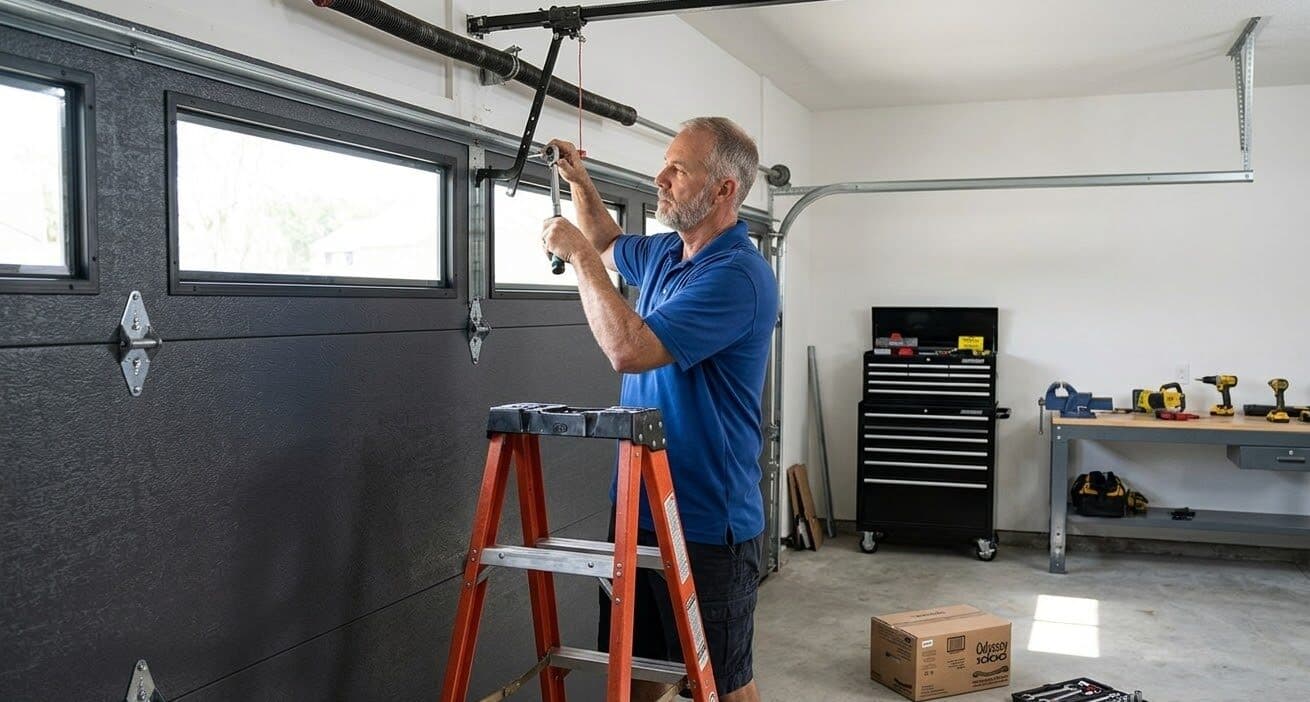
Garage Door Spring Replacement Cost Florida 2026
<p style="font-size: 17px; line-height: 1.7;">A broken garage door spring in Florida typically costs about $150 to $355 to replace on a standard single-spring job in 2026, and a pair of torsion springs on a two-car door usually runs more. Here is what drives the price, why replacing both springs usually saves money, what a fair quote includes and which quoting patterns to watch for.</p>
Read Article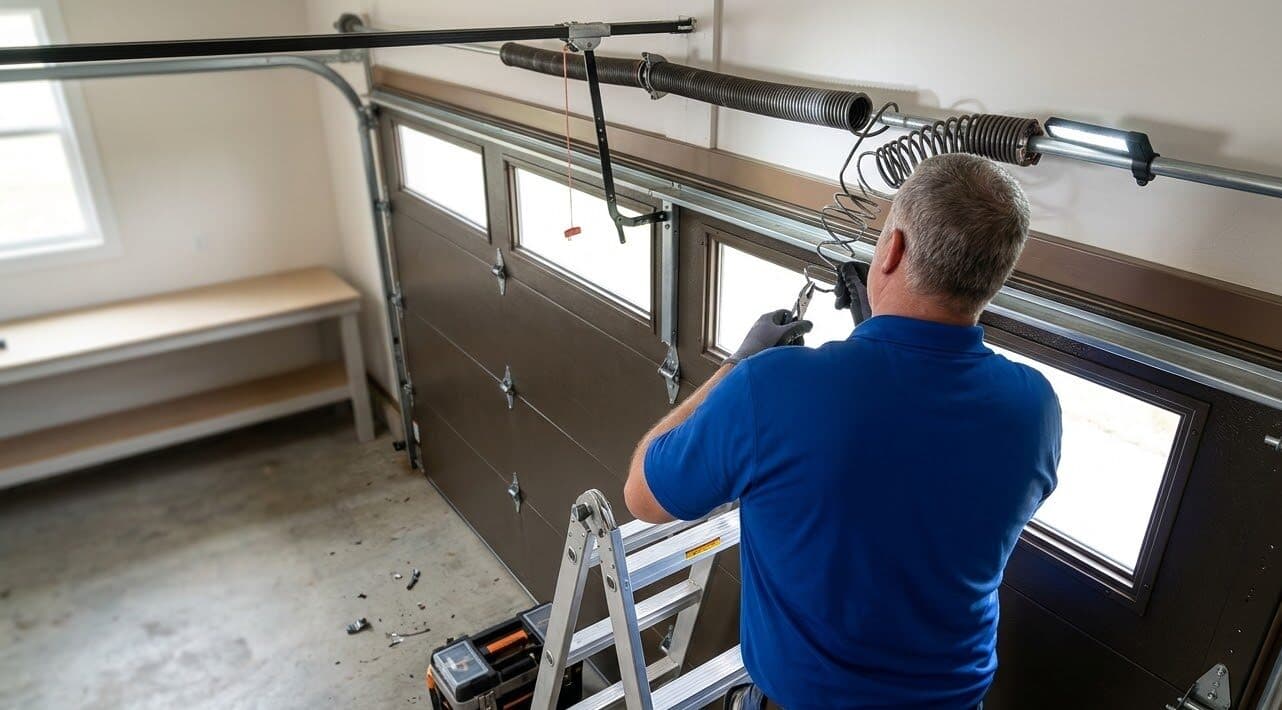
Reset Garage Door After a Power Outage (Florida)
<p style="font-size: 17px; line-height: 1.7;">When the power comes back after a Florida storm, the garage door opener does not always come back with it. Usually the trolley is still disconnected from the release cord, the travel limits got confused, a surge hit the logic board or sensors, or the battery backup is drained. Here is how to check the door safely first, reconnect the opener, reset limits and remotes, spot surge damage, and get the battery backup ready for the next outage.</p>
Read Article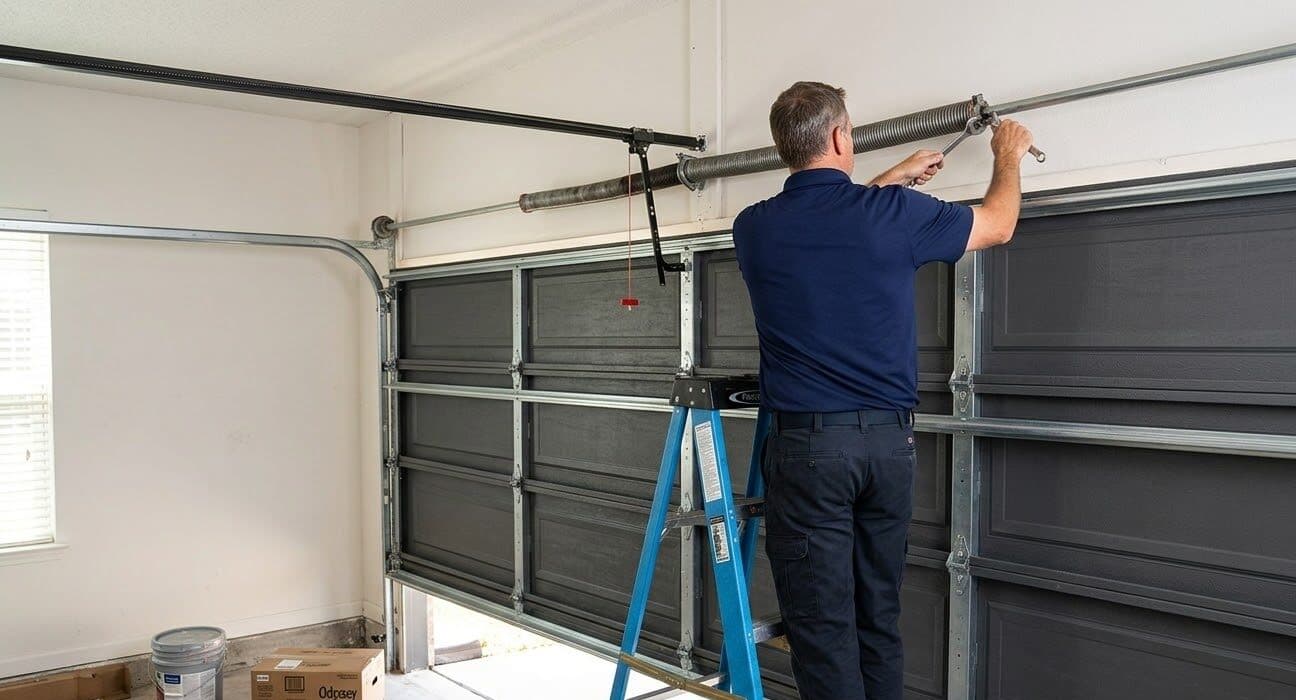
How to Program Your Garage Door Opener to Your Car in 2026
<p style="font-size: 17px; line-height: 1.7;">The garage button in your car usually learns your remote on the first try and still does not open the door. That is because every rolling code opener needs a second step: pressing the Learn button on the motor and sending the car signal within about 30 seconds. Here is the full HomeLink sequence in the order it has to happen, how to read the indicator light, the repeater fix for Security+ 2.0 openers and older cars, how to erase HomeLink before you sell a vehicle, and the Florida heat and storm issues that make you repeat it more often than you should.</p>
Read ArticleNeed a Garage Door Fixed?
Same-day service. Lifetime warranty on springs. Transparent pricing. Call now or book service online.