
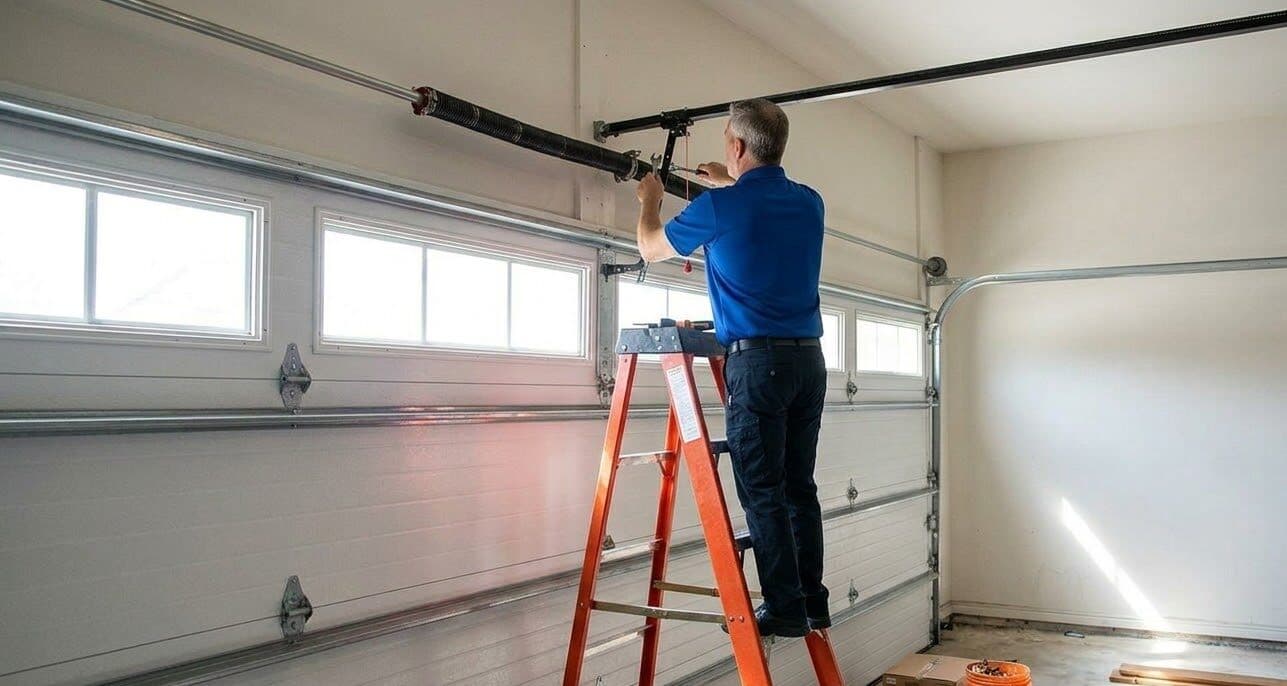
Garage Door Spring Replacement in Highland Park, FL
Torsion and extension spring replacement in Highland Park, FL. High-cycle springs sized to your door weight. Call Rocket at (863) 624-3191.
Call (863) 624-3191Garage door spring replacement in Highland Park, FL is one of the most common service calls we get from this ridge community. Highland Park sits on the Lake Wales Ridge, and that elevated position creates a unique combination of wind stress, temperature extremes, and soil conditions that wears out springs faster than what homeowners in flatland communities typically experience. Rocket Garage Door Services replaces torsion and extension springs across Highland Park with parts rated for the demands of ridge living.
 (863) 624-3191GET IMMEDIATE SERVICE!
Spring Replacement for Highland Park's Ridge Homes
Springs are the hardest-working component in your garage door system. A standard torsion spring is rated for about 10,000 cycles, where one cycle equals one open-and-close. If you use your garage door four times a day, that's roughly seven years of life under normal conditions. But conditions on the Lake Wales Ridge aren't normal. The combination of higher wind loads and extreme heat cycling shortens spring life by 15 to 20 percent, which means Highland Park homeowners often see springs fail in five to six years.
When a spring breaks, the door becomes dead weight. A standard two-car garage door weighs between 150 and 250 pounds, and without spring tension to counterbalance that weight, the opener can't lift it. Trying to force the door open manually after a spring failure is dangerous. Call us at (863) 624-3191 and we'll have a technician at your Highland Park home the same day in most cases.
Why Springs Fail Faster on the Lake Wales Ridge
Two environmental factors accelerate spring failure in Highland Park. The first is thermal cycling. During summer, a garage on the ridge can reach internal temperatures above 130 degrees Fahrenheit. At night, temperatures drop into the mid-70s. That 50-plus degree daily swing causes the steel wire in your springs to expand and contract continuously. Over thousands of cycles, the metal develops microscopic fatigue fractures that eventually cause a break.
The second factor is wind loading. Highland Park's ridge elevation means garage doors here absorb more wind pressure during storms and everyday afternoon thunderstorms than doors at lower elevations. Every time wind pushes against a closed garage door, the springs absorb additional stress beyond normal cycling. After Hurricane Charley hit the Lake Wales area in August 2004 with Category 4 winds, we replaced springs on dozens of ridge homes where the storm loading had pushed them past their fatigue limit.
Humidity also plays a role, though it's secondary. Florida's humid air accelerates corrosion on uncoated spring wire. The salt content in the air isn't as high on the ridge as it is on the coast, but moisture alone is enough to pit the wire surface over time. Corroded spots become stress concentrators where cracks initiate. Applying a silicone-based lubricant every three months helps slow corrosion, but it doesn't stop the thermal and wind fatigue that eventually gets every spring.
Torsion Springs vs Extension Springs in Highland Park
Highland Park homes use both torsion and extension spring systems, depending on the garage's ceiling height and the door's weight. Torsion springs mount on a shaft above the door opening and twist to store energy. Extension springs run along the horizontal tracks on both sides of the door and stretch to create counterbalance force. Each type has advantages, and the right choice depends on your specific garage configuration.
Torsion springs are the standard for most modern installations. They provide smoother, more controlled door movement and last longer than extension springs of comparable quality. A high-cycle torsion spring rated for 25,000 cycles can last 12 to 15 years even in Highland Park's demanding conditions. We recommend high-cycle springs for ridge homes because the cost difference is small compared to the years of additional service life you get.
Extension springs are found in older Highland Park homes with low headroom above the door opening. They work fine when properly maintained, but they have a critical safety requirement that many homeowners don't know about. Every extension spring must have a safety cable threaded through its center. If the spring breaks without a safety cable, the coiled wire whips around with enough force to shatter car windows and cause serious injury. We've found extension springs without safety cables in older Highland Park garages more times than we'd like to admit.
When we replace extension springs, we always install safety cables if they're missing. And if your garage has the headroom for a torsion spring conversion, we'll discuss the upgrade option with you. Torsion springs are inherently safer because they stay on the shaft even when they break.
(863) 624-3191GET IMMEDIATE SERVICE!
Dual Spring Systems and Proper Sizing for Highland Park Doors
Most double-car garage doors in Highland Park use a dual torsion spring system, which means two springs on the same shaft, one wound clockwise and one wound counterclockwise. When one spring breaks, the other is usually close behind because they've experienced the same number of cycles and the same environmental stress. That's why we always recommend replacing both springs at the same time, even if only one has broken.
Spring sizing isn't a one-size-fits-all calculation. The correct spring depends on the door's weight, height, and track radius. A heavier insulated door needs larger springs with higher wire gauges and longer coil lengths than a lightweight single-layer door. We weigh the door during every service call to verify the spring sizing. If a previous installer used undersized springs, the door runs heavy, the opener strains, and the springs fail even faster than they would otherwise.
For Highland Park homes with oversized doors or heavy wood composite panels, we stock oil-tempered torsion springs with wire gauges up to .2730 inches. These heavy-duty springs provide the counterbalance force that big doors need without over-stressing the coils. For homeowners who want the longest possible service life, our high-cycle pair installed at $1,200 with a lifetime warranty on the parts is the best long-term choice, though oil-tempered springs with a rust-inhibitor coating and regular lubrication perform well in most ridge applications.
Getting the spring sizing right matters more than most people realize. An oversized spring makes the door feel light and causes it to fly open, which stresses the stop brackets and can pull the tracks loose. An undersized spring makes the door heavy and forces the opener to do work the spring should be doing. Both scenarios shorten the life of other components in the system.
The Spring Replacement Process at Your Highland Park Home
Spring replacement is one of the most dangerous garage door repairs because of the extreme tension involved. A fully wound torsion spring stores enough energy to cause serious injury if it releases uncontrolled. This is absolutely not a DIY job, regardless of what YouTube videos suggest. Professional technicians use specialized winding bars, safety equipment, and techniques that take years to master.
When we arrive at your Highland Park home for a spring replacement, we start by disconnecting the opener and clamping the door in the down position. We then release the tension on the broken spring using winding bars. If it's a dual spring system and one spring is intact, we unwind that one carefully before removing it. The old springs come off the shaft, we slide the new springs on, and we wind them to the correct tension based on the door's weight and height.
After winding, we lubricate the new springs, reconnect the opener, and run the door through several test cycles. We check the balance by disconnecting the opener and manually lifting the door to the halfway point. A properly balanced door should stay in place when released at the midpoint. If it drifts up or down, we fine-tune the spring tension until the balance is perfect.
The whole process takes about 45 minutes to an hour for a standard torsion spring replacement. Dual spring replacements take slightly longer. We carry the most common spring sizes on our trucks, so there's rarely a need to order parts and schedule a return visit.
High-Cycle Springs for Highland Park's Storm Season
Standard springs rated for 10,000 cycles are fine for mild climates, but Highland Park's combination of heat, humidity, and storm wind loads makes high-cycle springs a smart investment. We offer springs rated for 25,000 and even 50,000 cycles. A 25,000-cycle spring lasts roughly two and a half times longer than a standard spring, and our high-cycle pair installed is $1,200 with a lifetime warranty on the parts. Over the life of the door, high-cycle springs actually save money because you replace them less often.
After the 2004 hurricane season, when Charley, Frances, and Jeanne all passed through Polk County within six weeks, we saw a wave of spring failures across the ridge. The repeated storm loading accelerated fatigue on springs that were already several years old. Homeowners who had invested in high-cycle springs weathered that season with far fewer failures than those running standard-cycle springs.
Hurricane Milton in October 2024 created similar stress on garage door systems across Highland Park. If your springs survived that storm but are more than four or five years old, they may be operating on borrowed time. The storm loading ages them invisibly. We can inspect your springs and give you an honest assessment of remaining life so you can replace them proactively before they snap at an inconvenient moment.
We stand behind our spring work with a parts and labor warranty. Standard springs carry a one-year warranty, high-cycle springs carry up to a five-year warranty depending on the manufacturer. That warranty covers both the spring itself and the labor to install the replacement if it fails within the warranty period.
Warning Signs That Your Highland Park Springs Are Failing
Springs rarely break without warning. Most failures are preceded by visible and audible signs that homeowners can spot during a quick garage inspection. Learning to recognize these signs can save you the hassle of a sudden failure at the worst possible time.
The most obvious sign is a gap in the spring coils. A healthy torsion spring has evenly spaced coils with no visible gaps. If you see a spot where one coil is separated from the next, the spring is starting to lose tension and needs replacement soon. Another sign is increased noise during operation. As springs fatigue, they develop uneven tension across the coils, which causes squeaking, popping, or grinding sounds that weren't there before.
The door feeling heavier than usual is another indicator. If your manually operated door feels hard to lift, or if your opener seems to strain more than it used to, the springs are losing their counterbalance force. You can test this by disconnecting the opener and lifting the door by hand to the halfway point. If it won't stay in place and drops back down, the springs are weakening.
Visible rust or pitting on the spring wire is a corrosion issue that weakens the metal and makes fracture more likely. Highland Park's humidity contributes to this. If your springs look rough or pitted rather than smooth and oily, call us for an inspection. Catching a failing spring before it breaks means we can schedule the replacement at your convenience rather than responding to an emergency when the door won't open and your car is trapped inside.

Other cities near Highland Park
Based in Winter Haven, covering every major city in Polk County. Click any city for local service details.
Other garage door services we offer
Garage Door Spring Replacement
Garage door spring replacement in Winter Haven and Polk County, FL. Torsion and extension springs replaced sam
Learn MoreGarage Door Repair in Polk County, FL
Fast garage door repair in Winter Haven and Polk County, FL. Broken springs, cables, openers, and panels fixed
Learn MoreGarage Door Opener Repair
Garage door opener not working? Same-day opener repair in Polk County, FL. All brands serviced. Diagnostic and
Learn MoreGarage Door Opener Installation
Garage door opener installation in Polk County, FL. LiftMaster, Chamberlain, and smart openers. Professional s
Learn MoreGarage Door Installation in Polk County, FL
New garage door installation in Winter Haven and Polk County, FL. Insulated, hurricane-rated, and custom doors
Learn MoreEmergency Garage Door Repair
Emergency garage door repair in Winter Haven and Polk County, FL. Available 7 days a week for urgent repairs.
Learn MoreOther garage door services in Highland Park
Emergency Garage Door Services in Highland Park, FL
24/7 emergency garage door service in Highland Park, FL. Stuck doors, snapped springs, and storm damage handle
Learn MoreGarage Door Installation in Highland Park, FL
New garage door installation in Highland Park, FL. Steel, insulated, and custom doors with storm-rated options
Learn MoreGarage Door Opener Installation in Highland Park, FL
Garage door opener installation in Highland Park, FL. Belt, chain, and direct-drive systems with battery backu
Learn MoreGarage Door Opener Repair in Highland Park, FL
Garage door opener repair in Highland Park, FL. Logic board, capacitor, gear, and sensor fixes same day. Call
Learn MoreGarage Door Repair in Highland Park, FL
Garage door repair in Highland Park, FL. Broken springs, off-track doors, cables, and rollers fixed same day.
Learn MoreFrequently Asked Questions
How long do garage door springs last in Highland Park, FL?
+
Is garage door spring replacement dangerous to do myself?
+
Should I replace both garage door springs at the same time in Highland Park?
+
How much does spring replacement cost in Highland Park?
+
Can you convert my Highland Park garage from extension springs to torsion springs?
+
Articles and guides for homeowners
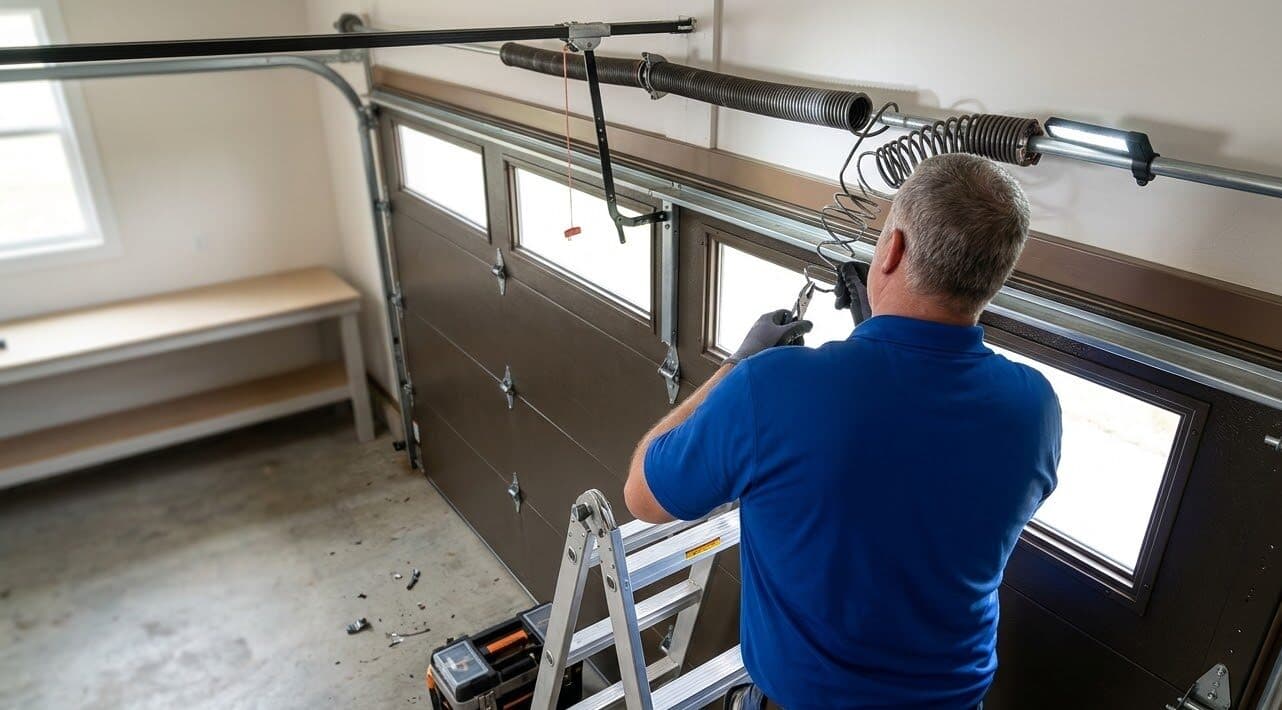
Reset Garage Door After a Power Outage (Florida)
<p style="font-size: 17px; line-height: 1.7;">When the power comes back after a Florida storm, the garage door opener does not always come back with it. Usually the trolley is still disconnected from the release cord, the travel limits got confused, a surge hit the logic board or sensors, or the battery backup is drained. Here is how to check the door safely first, reconnect the opener, reset limits and remotes, spot surge damage, and get the battery backup ready for the next outage.</p>
Read Article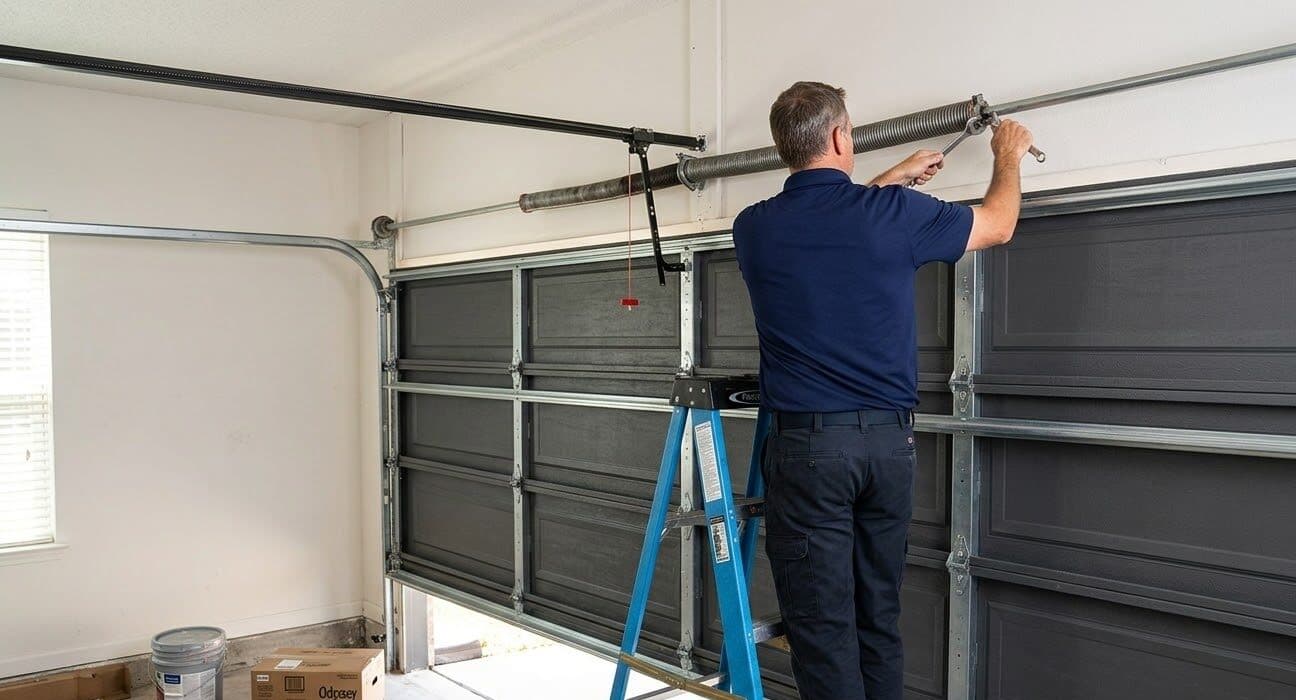
How to Program Your Garage Door Opener to Your Car in 2026
<p style="font-size: 17px; line-height: 1.7;">The garage button in your car usually learns your remote on the first try and still does not open the door. That is because every rolling code opener needs a second step: pressing the Learn button on the motor and sending the car signal within about 30 seconds. Here is the full HomeLink sequence in the order it has to happen, how to read the indicator light, the repeater fix for Security+ 2.0 openers and older cars, how to erase HomeLink before you sell a vehicle, and the Florida heat and storm issues that make you repeat it more often than you should.</p>
Read Article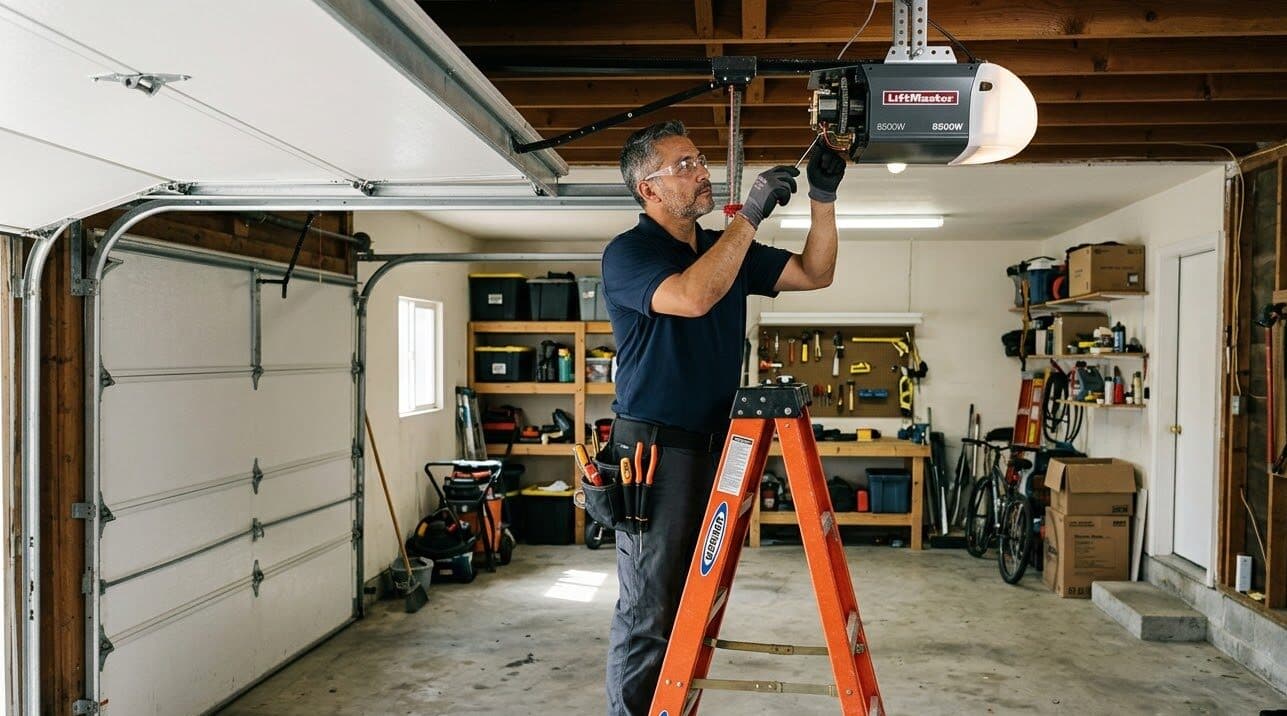
How to Program a Genie Garage Door Remote (2026)
<p>Genie programming fails for a reason that has nothing to do with the remote: the company changed the motor head interface partway through the product line, and the two generations use opposite button behavior. On one, you press and hold. On the other, holding that same button erases every remote in the house. Add the 5 foot standing rule almost nobody follows, and you get a perfectly good remote that will not pair. Here is each procedure, for remotes and keypads, plus the six things that look like programming problems and are not.</p>
Read ArticleNeed a Garage Door Fixed?
Same-day service. Lifetime warranty on springs. Transparent pricing. Call now or book service online.