
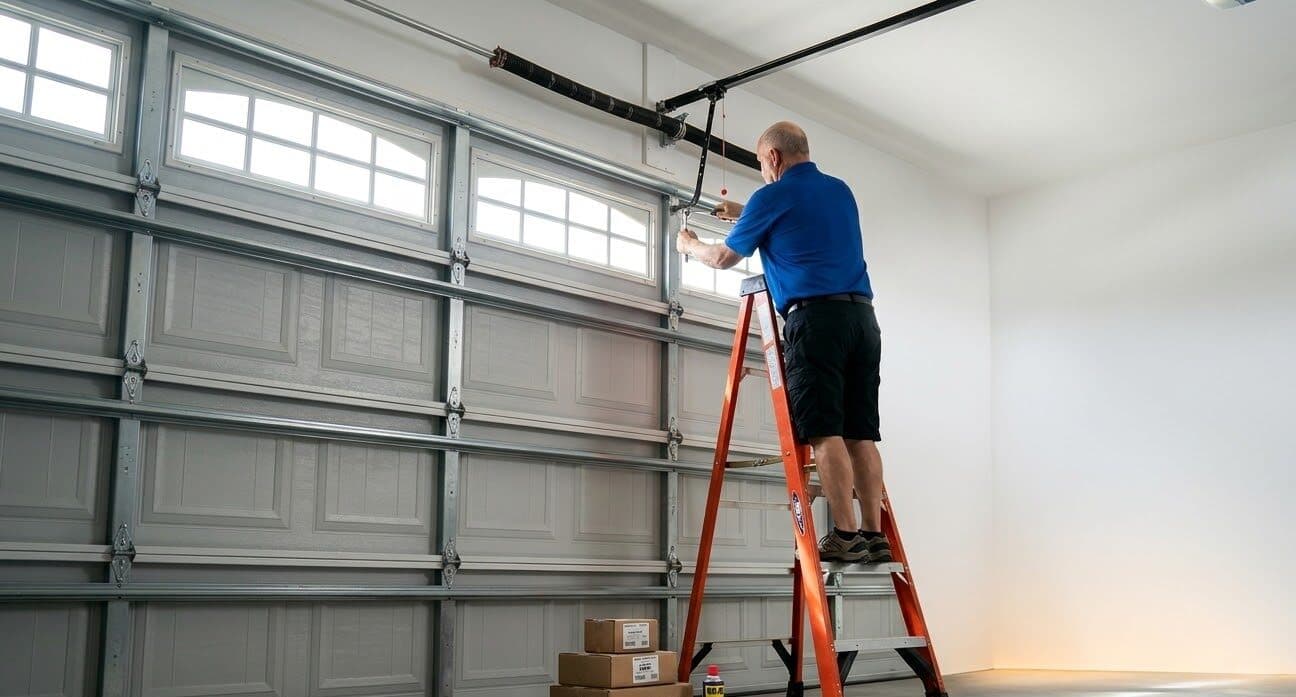
Garage Door Spring Replacement in Lake Alfred, FL
Torsion and extension spring replacement in Lake Alfred, FL. High-cycle springs sized to your door weight. Call Rocket at (863) 624-3191.
Call (863) 624-3191Garage door spring replacement in Lake Alfred, FL is one of the most common calls we get at Rocket Garage Door Services. Springs are the hardest-working component on any garage door, and Lake Alfred’s Central Florida climate puts them under stress that homeowners in cooler, drier parts of the country simply don’t experience.
 (863) 624-3191GET IMMEDIATE SERVICE!
Why Lake Alfred Garage Door Springs Fail Sooner Than Expected
Lake Alfred sits among more than a dozen lakes in the northern portion of Polk County's Chain of Lakes system. Lake Alfred, Lake Haines, Lake Rochelle, and Lake Echo surround the city, keeping relative humidity levels high for most of the year. That moisture accelerates corrosion on spring steel and weakens the metal over time. Combined with daily temperature swings that can exceed 50 degrees inside a closed garage, springs here fatigue significantly faster.
We've been replacing springs for homes throughout Lake Alfred for years, from the older residential streets near downtown to the growing neighborhoods along CR 557. Every spring replacement we do includes a full door balance check, safety inspection, and lubrication of all moving parts. We don't just swap the spring and leave.
Torsion Springs vs. Extension Springs in Lake Alfred Homes
Two main types of springs power residential garage doors in Lake Alfred. Torsion springs mount on a shaft above the door opening and use rotational force to lift and lower the door. Extension springs run along the horizontal tracks on each side of the door and stretch to store energy. Both types do the same job, but they perform very differently in Polk County's conditions.
Torsion springs are the superior system for Lake Alfred homes. They provide smoother, more controlled door movement and distribute lifting force evenly across the full width of the door. They also last longer under the thermal stress that Central Florida imposes because the coil design handles expansion and contraction cycles better than stretched extension springs.
Extension springs are still found in many Lake Alfred homes, particularly older properties built in the 1960s through 1980s along streets like Nekoma Street and Carolina Avenue. These springs work fine, but they wear out faster and pose a greater safety risk when they break. A snapping extension spring can whip the attached cable across the garage with enough force to dent a car hood or crack drywall.
If your home currently uses extension springs, we can convert your system to torsion springs during replacement. The conversion requires a torsion bar and mounting hardware above the door opening, but most Lake Alfred garages have enough headroom to accommodate the upgrade. It's a one-time investment that pays off in longer spring life and better safety.
High-Cycle Springs and Why They Make Sense in Polk County
Standard garage door springs are rated for about 10,000 cycles. One cycle equals one full open-and-close of the door. For a family that uses the garage door four times a day, that's roughly seven years of life under normal conditions. But Lake Alfred's climate cuts that down to five years or less.
High-cycle springs are an upgrade we recommend for Lake Alfred homeowners who want to avoid frequent replacements. These springs use thicker wire and longer coil lengths to distribute stress over more material. They're available in 25,000-cycle, 50,000-cycle, and even 100,000-cycle ratings.
The math works out clearly. A standard single spring replacement runs $250 to $350, or $450 to $600 for a pair, and you'll need to do it every five to six years in this climate. A high-cycle spring costs more upfront but lasts two to three times longer. Over a 15-year period, the high-cycle option saves you money and eliminates two or three emergency service calls.
We carry high-cycle springs on our trucks in the most common residential sizes. For Lake Alfred homes with double-car doors, we almost always recommend high-cycle options because the larger doors cycle heavier weight and put even more stress on standard springs.
(863) 624-3191GET IMMEDIATE SERVICE!
The Safety Risks of Broken or Failing Springs
Garage door springs carry the full weight of the door. A standard two-car garage door weighs 200 to 300 pounds. When a spring breaks, that weight is no longer counterbalanced. If the door is open when a spring snaps, it can come crashing down with enough force to cause serious injury or crush anything underneath it.
We get emergency calls from Lake Alfred residents who hear a loud bang from the garage and find their door stuck. That bang is the sound of a spring breaking under tension. The door is typically stuck in a partially open or fully closed position, and the opener motor alone can't lift the unbalanced weight safely.
Don't try to operate a garage door with a broken spring. The opener was designed to work with spring assistance, and running it without that assistance strains the motor, strips the gears, and can burn out the drive unit entirely. You'll turn a $300 spring replacement into a $700 opener repair on top of the spring cost.
If you suspect a spring is failing, you can test it by disconnecting the opener and lifting the door manually to the halfway point. A properly balanced door should stay in place on its own. If it drops or rises, the spring tension is off, and replacement should be scheduled soon before a complete failure happens.
Spring Replacement After Storms in Lake Alfred
Polk County's storm history adds another layer of stress to garage door springs. The 2004 hurricane season sent three storms directly through the county within six weeks. Hurricane Charley on August 13 brought Category 4 winds of 149 mph. Frances followed on September 5, and Jeanne hit on September 26. Combined property damage across Polk County exceeded $1.2 billion.
During high winds, garage doors flex and vibrate against their springs. Even if the door survives the storm intact, the springs absorb thousands of stress cycles during a single weather event. That means a spring that was at 80% of its rated life before the storm might be at 95% after. Several Lake Alfred homeowners discovered broken springs in the days and weeks following Hurricane Milton in October 2024, even on relatively new doors.
We recommend having your springs inspected after any significant storm event. It takes just a few minutes to check for visible damage, measure coil spacing, and test door balance. Catching a weakened spring before it breaks completely is safer and cheaper than dealing with an emergency failure at 10 PM on a Thursday night.
And if your door did take direct storm damage, bent panels and twisted tracks put uneven pressure on the springs. We always check and replace springs as part of any storm damage repair to make sure the entire system works together properly.
What to Expect During a Spring Replacement in Lake Alfred
When you call Rocket Garage Door Services for spring replacement in Lake Alfred, we aim for same-day service in most cases. Our technicians carry a full inventory of standard torsion and extension springs sized for residential doors ranging from 7-foot single-car to 16-foot double-car openings.
The replacement process starts with securing the door in the down position and releasing the tension on the broken or worn spring. For torsion springs, we use professional winding bars to safely unwind the remaining tension before removing the spring from the torsion bar. Extension springs are disconnected from the pulley system and removed from the track brackets.
After installing the new spring, we wind it to the manufacturer's specified number of turns for your door's weight. This calibration is critical. Too few turns and the door is heavy and strains the opener. Too many turns and the door flies up or won't stay closed. We check the balance by hand after winding to verify the door moves smoothly and holds at any point in its travel.
The whole job typically takes 45 minutes to an hour for a single spring, and about 90 minutes for a dual spring replacement. We clean up all old parts, test the opener through several full cycles, and verify that the safety reverse system works correctly before calling the job complete.
Keeping Your Lake Alfred Garage Door Springs Healthy Longer
Regular maintenance extends spring life significantly, even in Lake Alfred's tough climate. The single most important thing you can do is lubricate your springs every three to four months with a silicone-based garage door lubricant. The lubrication reduces friction between coils and creates a moisture barrier that slows corrosion.
Never use WD-40 on garage door springs. It's a solvent, not a lubricant, and it actually strips the existing lubrication off the coils. Use a product specifically designed for garage door springs, or a white lithium grease. Spray along the full length of each spring coil and let it work in naturally.
Keeping your door balanced also protects your springs. If your door is dragging on one side because of worn rollers or a bent track, the springs have to work harder to compensate. That extra work shortens their life. A $179 to $279 roller replacement today can prevent a $300 spring repair six months from now.
Visual inspections help too. Look at your springs once a month for signs of rust, gaps between coils, or any stretching. If you notice rust forming, apply lubricant immediately. If you see a gap or notice the coils are no longer evenly spaced, call us for an inspection. Those are signs the spring is near failure.

Other cities near Lake Alfred
Based in Winter Haven, covering every major city in Polk County. Click any city for local service details.
Other garage door services we offer
Garage Door Spring Replacement
Garage door spring replacement in Winter Haven and Polk County, FL. Torsion and extension springs replaced sam
Learn MoreGarage Door Repair in Polk County, FL
Fast garage door repair in Winter Haven and Polk County, FL. Broken springs, cables, openers, and panels fixed
Learn MoreGarage Door Opener Repair
Garage door opener not working? Same-day opener repair in Polk County, FL. All brands serviced. Diagnostic and
Learn MoreGarage Door Opener Installation
Garage door opener installation in Polk County, FL. LiftMaster, Chamberlain, and smart openers. Professional s
Learn MoreGarage Door Installation in Polk County, FL
New garage door installation in Winter Haven and Polk County, FL. Insulated, hurricane-rated, and custom doors
Learn MoreEmergency Garage Door Repair
Emergency garage door repair in Winter Haven and Polk County, FL. Available 7 days a week for urgent repairs.
Learn MoreOther garage door services in Lake Alfred
Emergency Garage Door Services in Lake Alfred, FL
24/7 emergency garage door service in Lake Alfred, FL. Stuck doors, snapped springs, and storm damage handled
Learn MoreGarage Door Installation in Lake Alfred, FL
New garage door installation in Lake Alfred, FL. Steel, insulated, and custom doors with storm-rated options.
Learn MoreGarage Door Opener Installation in Lake Alfred, FL
Garage door opener installation in Lake Alfred, FL. Belt, chain, and direct-drive systems with battery backup.
Learn MoreGarage Door Opener Repair in Lake Alfred, FL
Garage door opener repair in Lake Alfred, FL. Logic board, capacitor, gear, and sensor fixes same day. Call Ro
Learn MoreGarage Door Repair in Lake Alfred, FL
Garage door repair in Lake Alfred, FL. Broken springs, off-track doors, cables, and rollers fixed same day. Ca
Learn MoreFrequently Asked Questions
Why do garage door springs break faster in Lake Alfred than in northern states?
+
How much does spring replacement cost in Lake Alfred, FL?
+
Can I replace a garage door spring myself in Lake Alfred?
+
Should I replace both garage door springs at the same time in Lake Alfred?
+
How do I know if my garage door spring needs replacement in Lake Alfred?
+
Articles and guides for homeowners
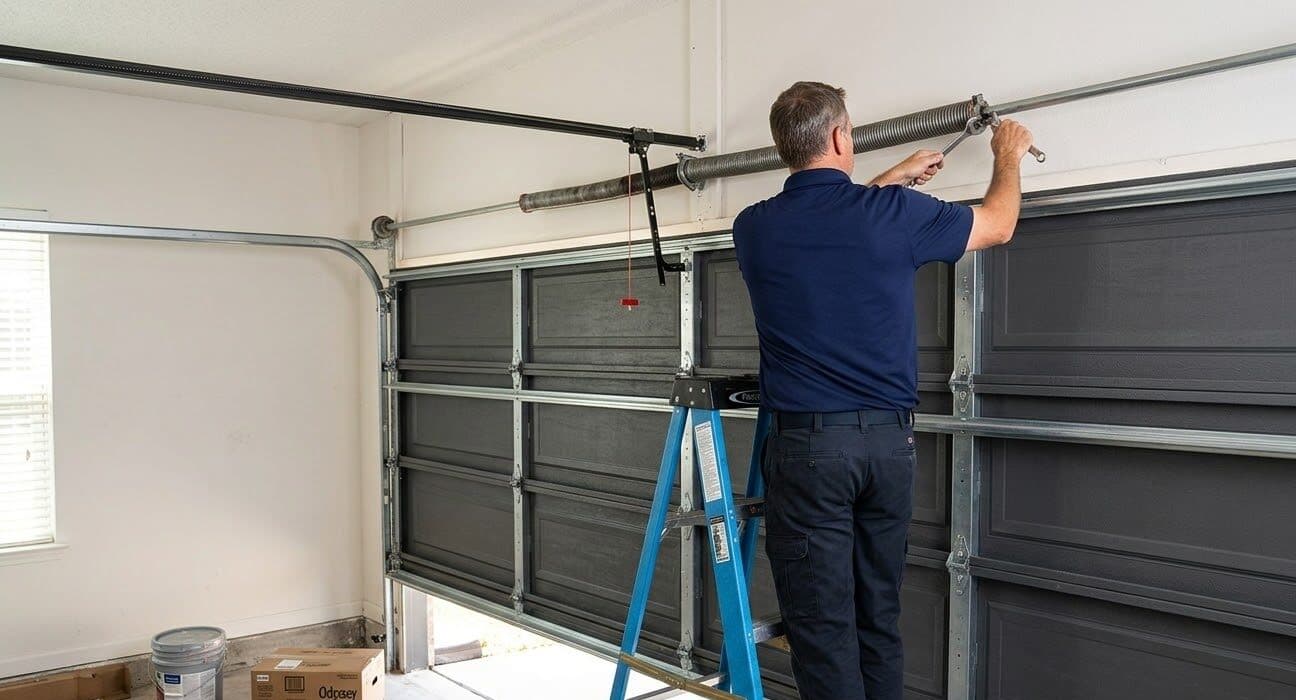
How to Program Your Garage Door Opener to Your Car in 2026
<p style="font-size: 17px; line-height: 1.7;">The garage button in your car usually learns your remote on the first try and still does not open the door. That is because every rolling code opener needs a second step: pressing the Learn button on the motor and sending the car signal within about 30 seconds. Here is the full HomeLink sequence in the order it has to happen, how to read the indicator light, the repeater fix for Security+ 2.0 openers and older cars, how to erase HomeLink before you sell a vehicle, and the Florida heat and storm issues that make you repeat it more often than you should.</p>
Read Article
How to Program a Genie Garage Door Remote (2026)
<p>Genie programming fails for a reason that has nothing to do with the remote: the company changed the motor head interface partway through the product line, and the two generations use opposite button behavior. On one, you press and hold. On the other, holding that same button erases every remote in the house. Add the 5 foot standing rule almost nobody follows, and you get a perfectly good remote that will not pair. Here is each procedure, for remotes and keypads, plus the six things that look like programming problems and are not.</p>
Read Article
How to Reset a LiftMaster Garage Door Opener (2026)
<p>Half the LiftMaster resets people perform do not address the symptom they are chasing, because four different procedures share the same name. Holding the Learn button wipes every remote in the house. Pressing and releasing it does the opposite and teaches a new one. Neither touches travel limits, which live on a different set of buttons entirely. And none of them clears the previous homeowner off the myQ account. Here is each procedure, what the LED is telling you at each step, and how to know which one your door actually needs.</p>
Read ArticleNeed a Garage Door Fixed?
Same-day service. Lifetime warranty on springs. Transparent pricing. Call now or book service online.