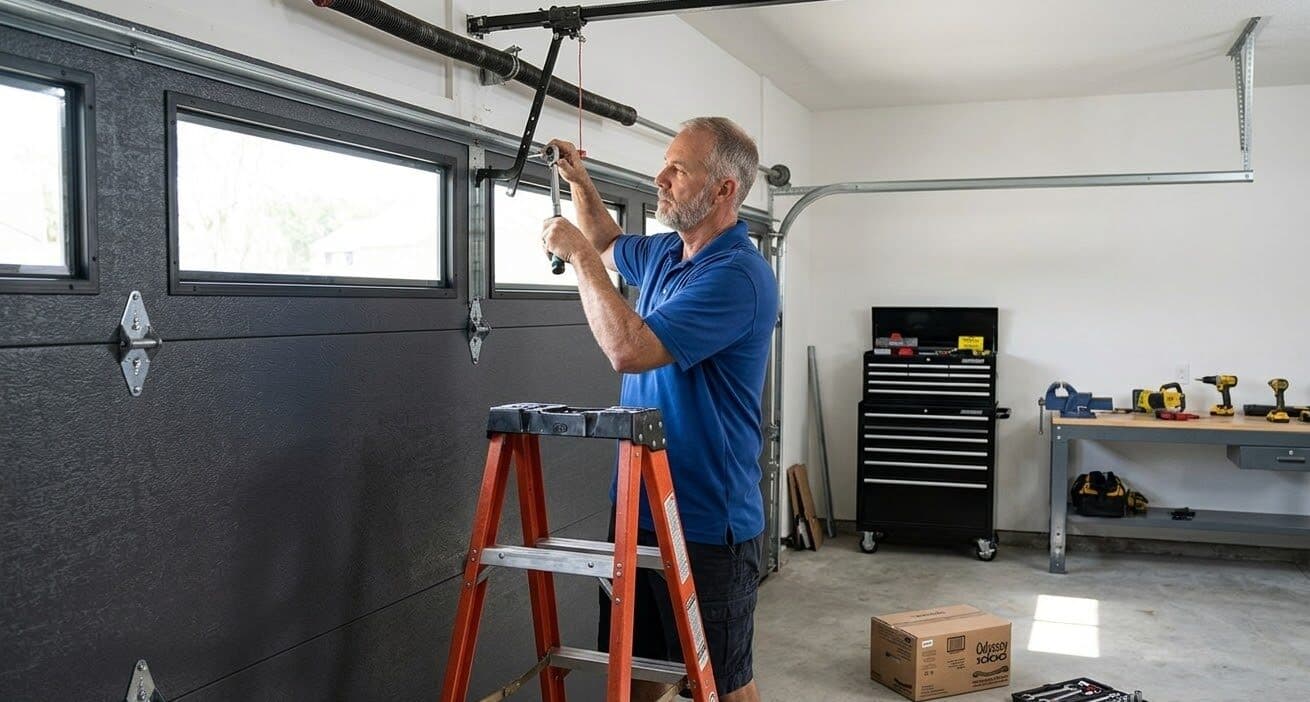
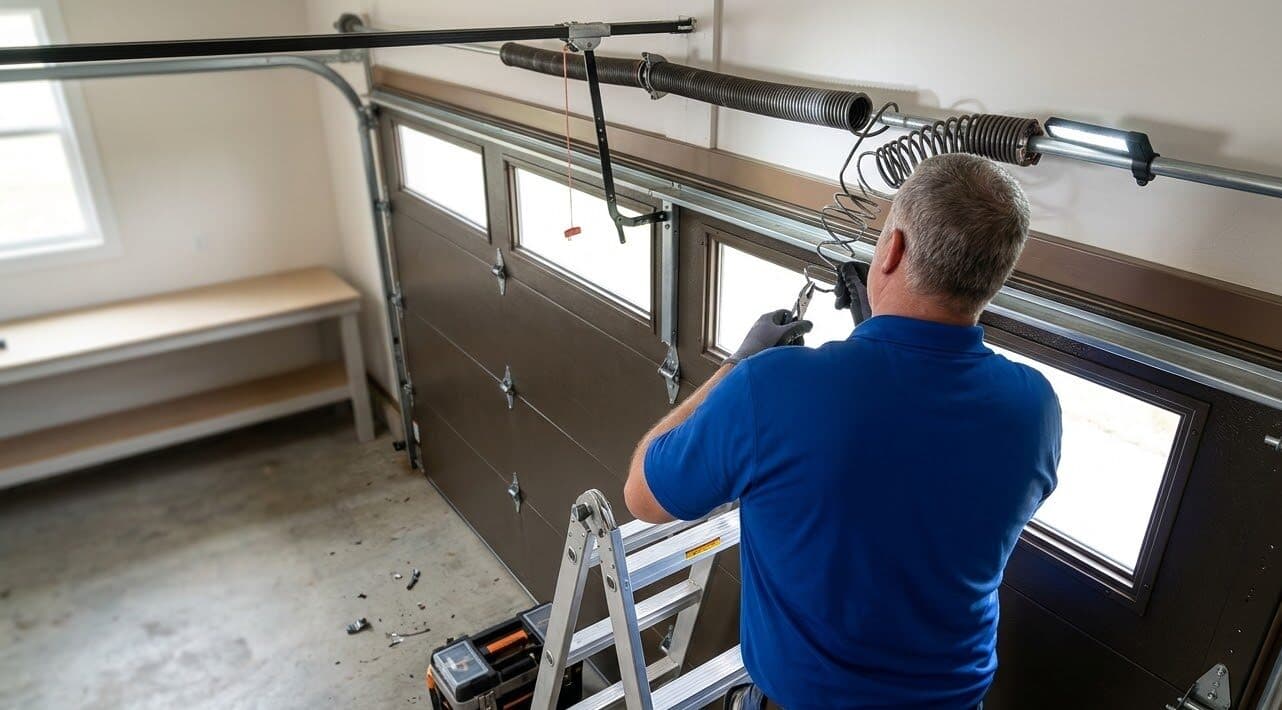
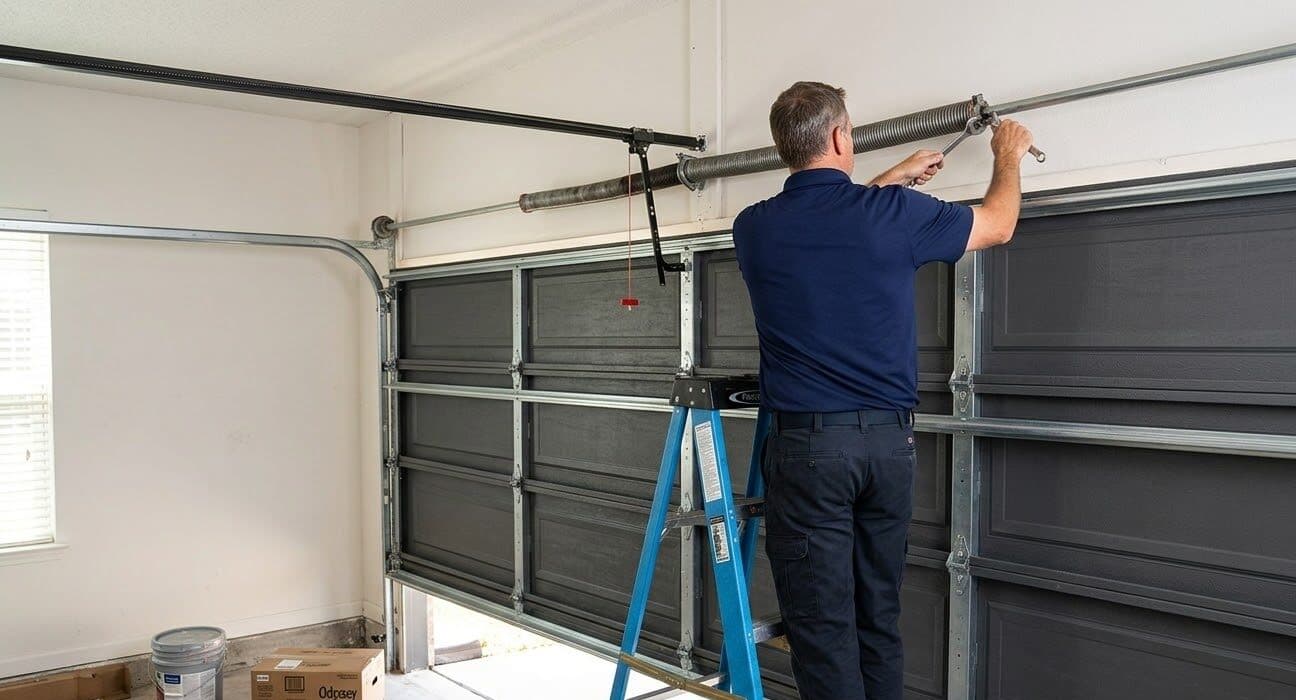
Three Drives, and Why Florida Changes the Answer
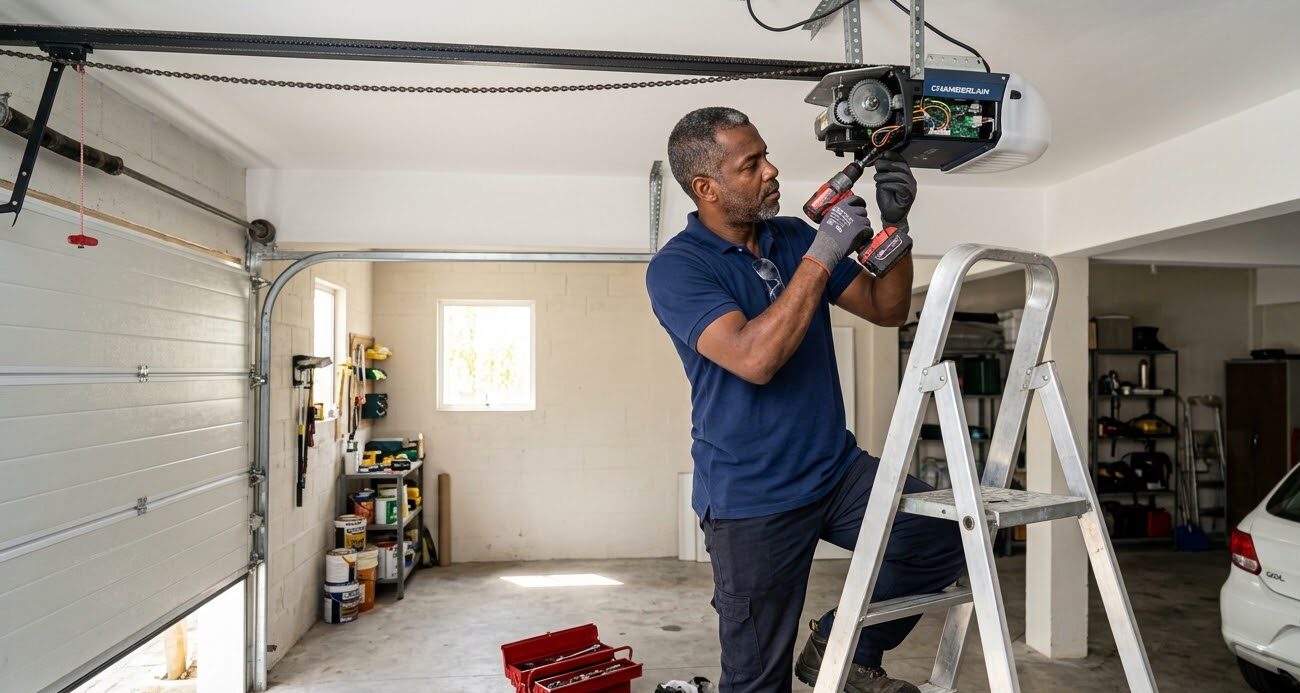
Every garage door opener moves the door the same way: a motor pulls a trolley along a rail, and the trolley pulls the door. What separates the types is the thing connecting motor to trolley. A chain, a rubber belt, or a threaded steel rod. That single component decides how loud the opener is, how much maintenance it wants, and how long it lasts.
National buying guides usually rank these three on noise and price and stop there. That ranking is incomplete in Florida, because an attached garage here spends half the year well above ambient temperature, and heat treats these three drives very differently. Two of them have a documented heat weakness. One does not. That is the whole argument, and it is worth understanding before you spend the money.
Chain Drive: The Workhorse That Heat Works Against
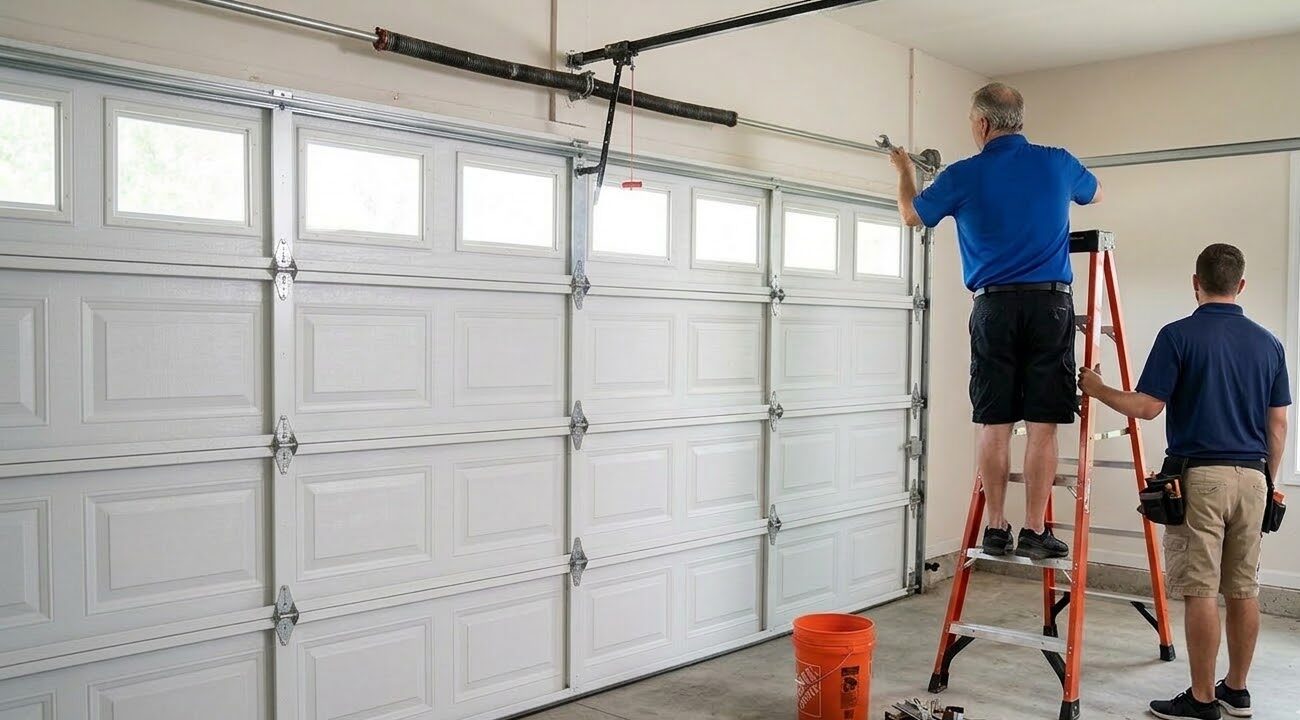
A chain drive uses a metal chain, essentially a bicycle chain, running along the rail. It is the oldest design, the cheapest to buy, and the strongest puller per dollar. For a heavy door, a chain has nothing to prove.
It has two costs. The first is noise: a chain drive typically registers 70 to 75 decibels, roughly a vacuum cleaner running in your house. If the garage is detached or sits under a room nobody sleeps in, that is a non-issue. If a bedroom sits above the garage, you will hear every cycle.
The second cost is the one Florida homeowners feel. A chain runs on lubrication, and heat accelerates the breakdown of that lubrication. A garage door tune-up and maintenance visit is what keeps that lubrication schedule from slipping. Chains dry out faster in a hot garage, and a dry chain gets louder and wears faster. That produces a predictable arc: the opener is acceptable when new, gradually turns into the loudest thing in the house, and the wear accumulates the whole time. Chain drives require lubrication at regular intervals or they can rust, run unevenly, and eventually fail.
The honest read on chain: it is not a bad opener, it is a high-maintenance one, and Florida raises the maintenance. A chain drive lasts 10 to 15 years on average, and beyond that with regular attention. The question is whether you will actually give it that attention, because most people do not think about the opener until it stops.
Belt Drive: Why It Wins in a Hot Garage
A belt drive swaps the chain for a reinforced rubber belt. Same motor, same rail, same trolley, different connector. Two things follow from that swap, and both matter here.
Noise drops to 50 to 55 decibels, quieter than a normal conversation. In practice a belt drive is heard rather than announced, and in a house with a bedroom over the garage that difference is the entire purchase.
The bigger point is heat. Reinforced rubber handles heat well and has no lubrication to break down, with modern belt materials rated for 150 degrees Fahrenheit and beyond. That removes the failure mode that Florida imposes on the other two designs. A belt drive is far closer to a set-it-and-forget-it system: no lubrication schedule, and because there is no oiled chain, it does not collect dust the way a lubricated chain does.
Belts also last longer. Modern reinforced belts run 15 to 20 years, against 10 to 15 for a chain. So the belt costs more up front, asks for nothing, and outlives the cheaper option. In a Florida garage that is not a preference. That is the correct default, and it is why we install belt drives on most residential jobs.
Screw Drive: Simple Mechanics, a Temperature Problem
A screw drive runs the trolley along a threaded steel rod. The motor turns the rod, the rod walks the trolley. It is elegant, and it has the fewest moving parts of the three: no chain tension to adjust, no belt to inspect, with periodic lubrication of the screw rod as the main maintenance task.
The noise sits in between. Screw drives are typically louder than belt drives and quieter than chain drives.
The problem is temperature, in both directions, and it is the reason screw drives are a hard sell in Florida. The steel rod expands with heat, and that expansion can leave the door not closing completely or trip travel-limit faults. Meanwhile the grease on the rod thins in high heat, which slows operation, and thickens in cold, which makes it sluggish or fails it outright.
Read that against a Florida garage. The rod expansion problem produces exactly the complaint we get called out for constantly: the door stops short, or reverses, or throws a limit error, and it does it on hot afternoons and behaves fine in the morning. That is a maddening thing to chase, and on a screw drive it is often just the design meeting the climate. A screw drive can absolutely work here. It just has a temperature sensitivity that the belt does not, and we do not see a reason to accept it.
The Fourth Option Most Guides Skip: Wall-Mount
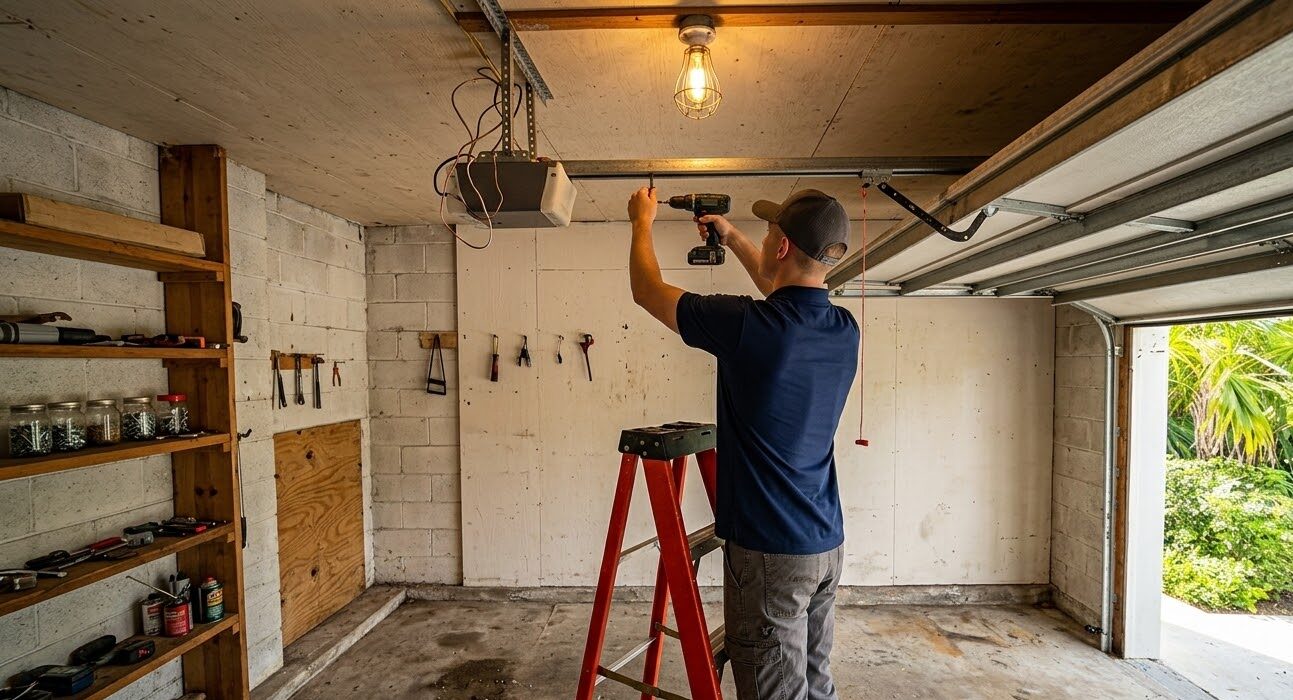
There is a fourth configuration worth knowing about, because it does not fit the chain-belt-screw framing at all. A wall-mount opener, also called a jackshaft, does not use an overhead rail. It mounts on the wall beside the door and drives the torsion bar directly.
That buys two things. Your garage ceiling stays completely clear, which matters for overhead storage, a lift, or a high ceiling where a rail-mounted unit is awkward. And with no rail and no trolley over your head, the noise profile changes character entirely.
It costs more, and it requires a properly balanced door on a torsion spring system, so it is not a drop-in for every garage. But for a homeowner who wants ceiling space back or has a tall or unusual door, it is the answer that the standard three-way comparison never surfaces. If your current unit is failing and you are weighing options, our guide on the signs you need spring replacement covers the door-side questions that come with it.
The Three Side by Side
| Drive | Noise | Typical lifespan | Maintenance | Florida heat behavior |
|---|---|---|---|---|
| Chain | 70 to 75 dB | 10 to 15 years | Regular lubrication or it rusts and runs unevenly | Heat accelerates lubrication breakdown; chain dries out, gets louder, wears faster |
| Belt | 50 to 55 dB | 15 to 20 years | Essentially none; no lubrication | Reinforced rubber handles heat; materials rated 150°F and beyond |
| Screw | Between the two | 10 to 20 years | Periodic lubrication of the rod | Rod expands in heat and can cause incomplete closing or travel-limit faults; grease thins in heat |
One number in that table applies to all three: with proper maintenance, every opener type lasts 10 to 20 years. The drive type moves you within that band. It does not move you out of it.
Which One Belongs in Your Garage
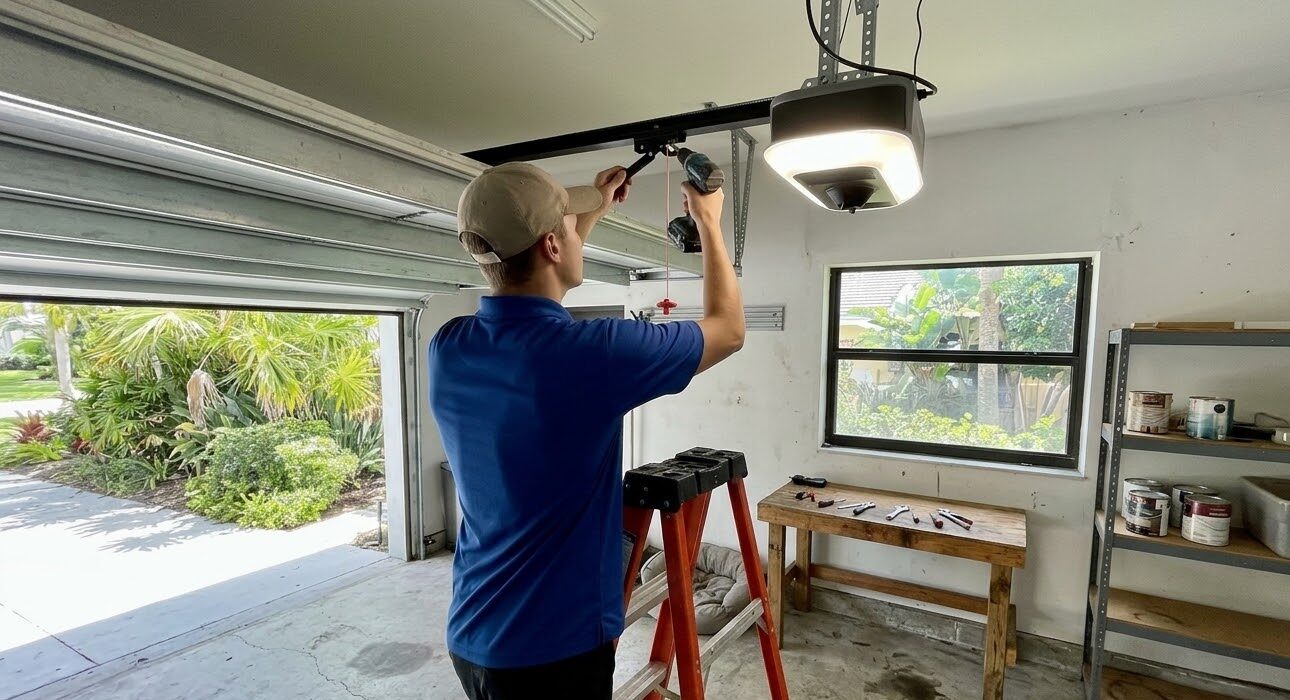
Match the opener to the situation and this stops being a debate.
- Attached garage with a bedroom or living space above: belt, without hesitation. The 20-decibel gap between a belt and a chain is the difference between a door that opens and a door that wakes people up.
- Attached garage, no room above, Florida heat: still belt. Not for the noise, for the maintenance. The chain's heat-driven lubrication breakdown is a schedule you have to keep, and the belt does not hand you one.
- Detached garage or a workshop where noise does not matter: chain is defensible and cheaper up front. Just be honest that you are accepting a lubrication routine, and that a hot Florida garage shortens the interval.
- Heavy door, oversized or solid wood: a chain's pulling strength is real, but so is a properly sized belt drive. Horsepower and door balance decide this, not drive type.
- Ceiling space is the constraint: wall-mount, and plan on a balanced torsion-spring door.
- Anyone quoting you a screw drive in Florida: ask why. There may be a good reason. The rod expansion and grease behavior in heat mean you should hear it out loud.
What Actually Decides How Long Your Opener Lives
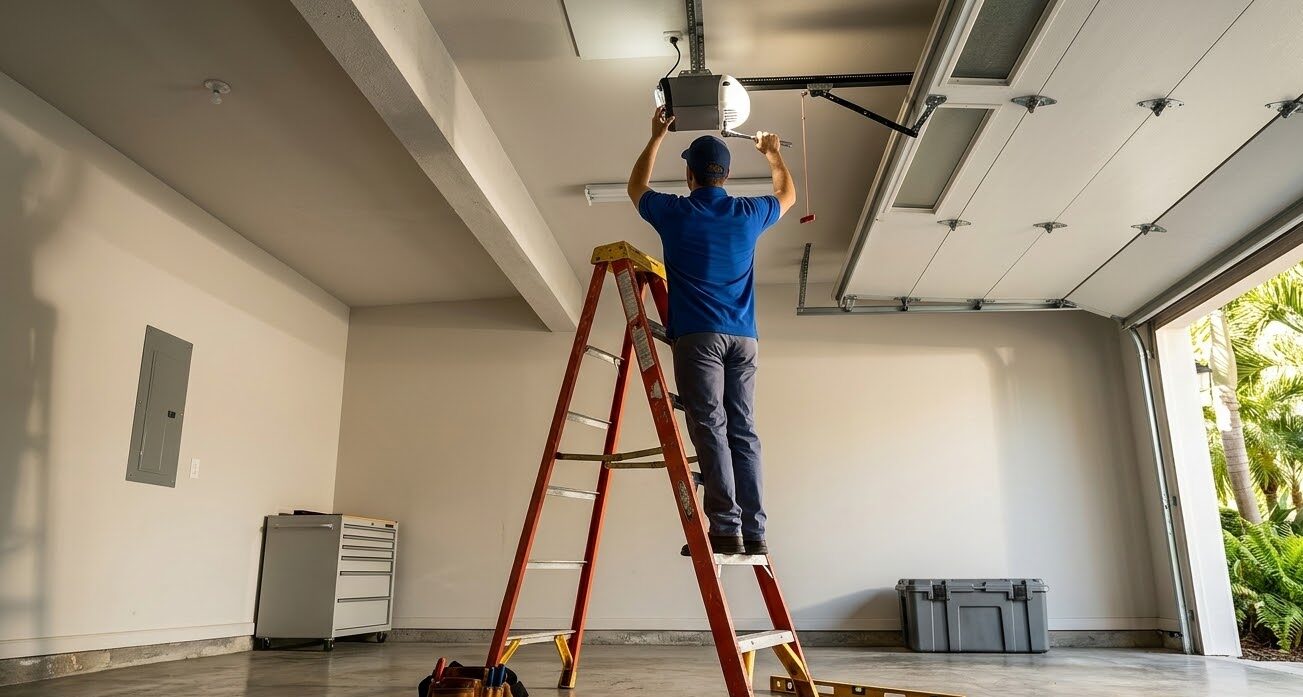
Here is the part that almost every opener comparison leaves out, and it matters more than the choice you have been agonizing over.
The opener does not lift your door. The springs do. A garage door is counterbalanced so the springs carry nearly all of its weight, and the opener's job is only to guide a nearly weightless door along its track. When the springs are properly tuned and the door is balanced, the opener does very little work. When the door is out of balance, the opener is dragging real weight on every single cycle, and it will not reach the lifespan on the box no matter which drive you bought.
This is why we see chain drives that outlast their rating and belt drives that die early on the same street. The variable was never the drive. It was the door. Rollers, hinges, track alignment, and spring tension are what an opener is actually fighting, and a $700 belt drive on a badly balanced door is money spent on the wrong component.
Before you replace an opener, get the door checked. Sometimes the opener is not the problem at all, which we cover in what garage door repair actually costs in Polk County, and a straightforward maintenance routine keeps whichever drive you pick at the top of its range.
How to Pick, in One Pass
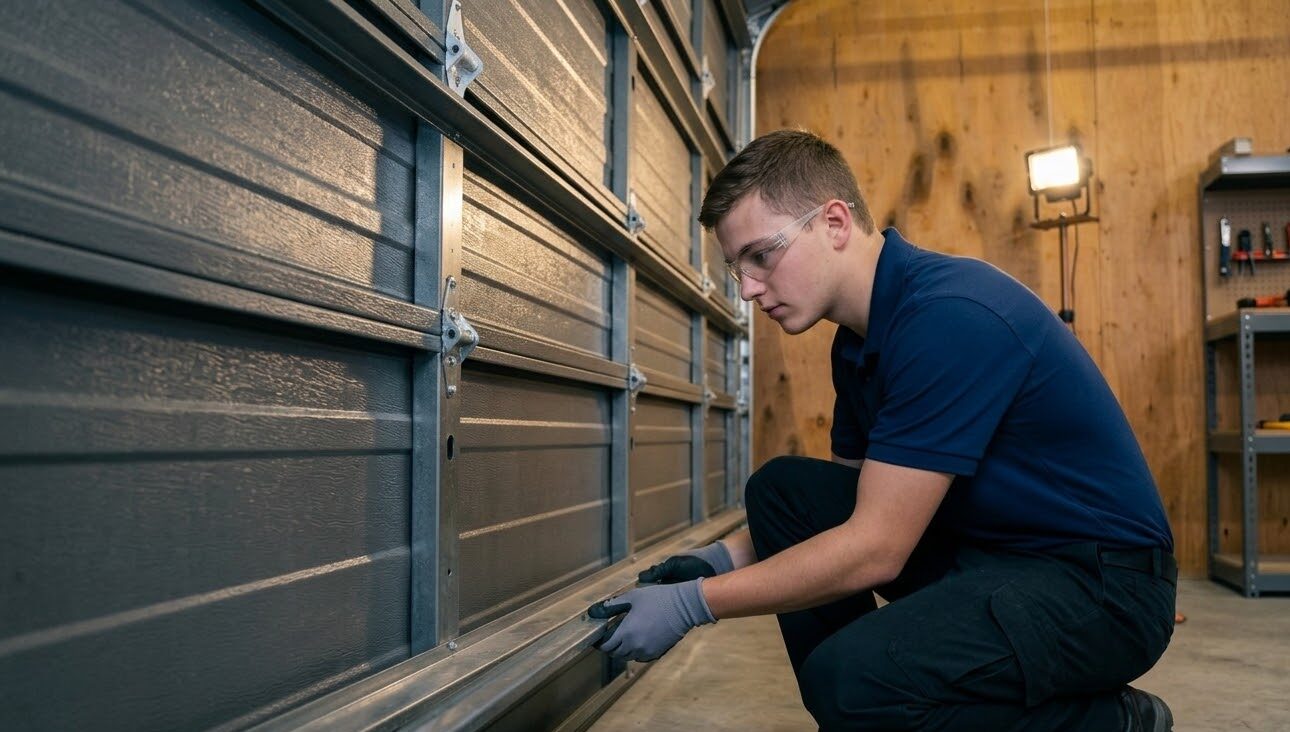
If you want the short version: buy a belt drive unless you have a specific reason not to. It is quieter by about 20 decibels, it lasts 15 to 20 years against a chain's 10 to 15, it asks for no lubrication, and its reinforced rubber is rated for temperatures that a Florida garage reaches. The premium over a chain is small measured against the years it adds and the maintenance it removes.
Buy a chain if the garage is detached, budget is the binding constraint, and you will genuinely keep up with lubrication in a hot garage. Consider a wall-mount if you want your ceiling back. Ask hard questions about a screw drive here.
And whatever you buy, have the door balance and springs checked at the same visit. That is the component that decides whether the opener you chose reaches the number on the box. If you are comparing specific units and smart features, our LiftMaster vs Chamberlain vs Genie comparison covers the brand side, and choosing the right garage door in Florida covers the door itself.