What the Tesla Wall Connector Actually Does

The Gen 3 Wall Connector delivers 48 amps at 240 volts, which is 11.5 kW to the vehicle, and that works out to roughly 44 miles of range per hour of charging. It ships with a 24-foot cable and carries a 4-year warranty.
Two versions matter in 2026:
- Wall Connector (NACS): $475 as of mid-2026. The native Tesla connector, for a Tesla-only household.
- Universal Wall Connector: roughly $595 to $650. Same charging hardware with a built-in J1772 adapter, so it also serves a non-Tesla EV. If there is any chance the second car in the household is not a Tesla, the $120 to $175 premium is cheap insurance against buying a second charger later.
The 44 miles per hour figure is the one worth internalizing, because it reframes the whole product. Overnight is roughly 350 to 400 miles of range added. For the overwhelming majority of Florida drivers, that means the car is full every single morning regardless of what yesterday looked like, and public charging becomes a road-trip tool rather than a weekly errand.
The Circuit: What an Electrician Is Actually Installing
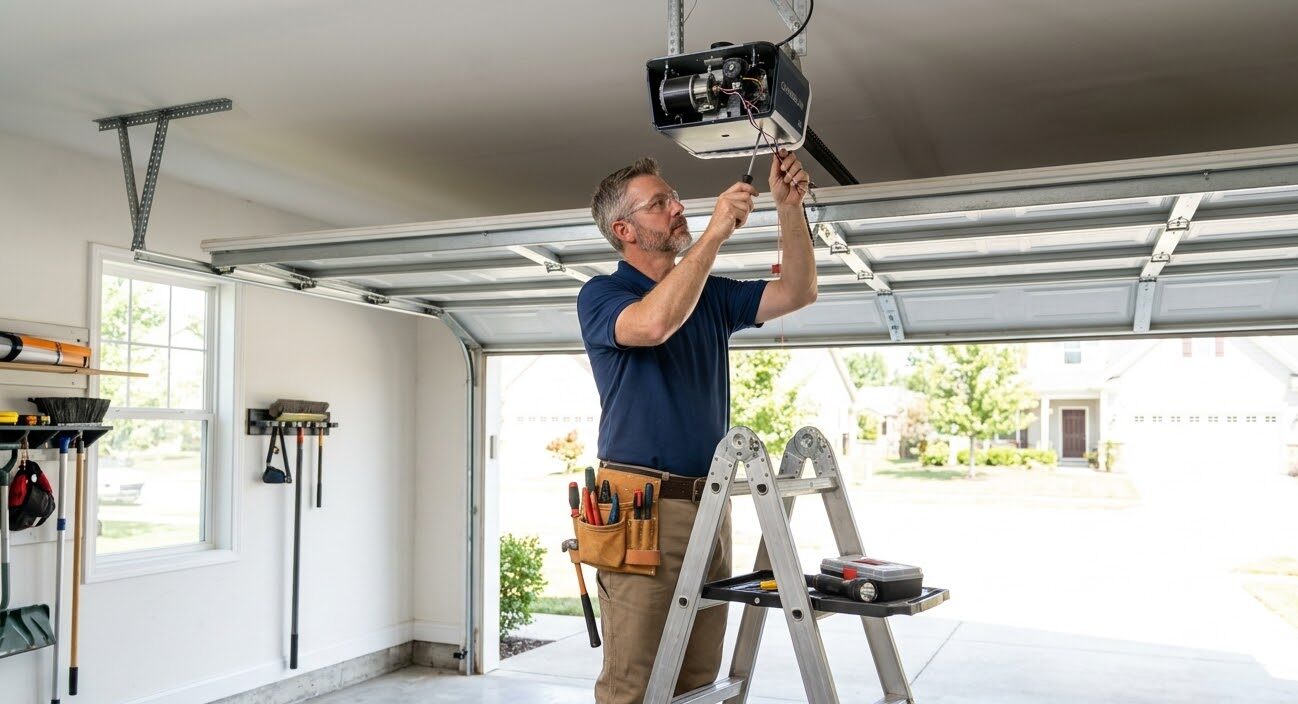
The Wall Connector needs a dedicated 240-volt circuit on a 60-amp double-pole breaker. The reason it is 60 and not 48 is the continuous-load rule: code requires the breaker to be rated at 125 percent of a continuous load, and 48 amps times 1.25 is 60. That circuit cannot be shared with anything else, including the garage door opener, the freezer or the lights.
Wire is 6 AWG copper THWN as the minimum for a 60-amp circuit. On runs over about 100 feet, that gets upsized to 4 AWG to keep voltage drop in check. Detached garages and long panel-to-garage runs are exactly where this bites, and it is one of the two biggest cost variables in the whole job.
The other variable is panel capacity. An older Florida home on a 100-amp service, already carrying central air, an electric water heater and a dryer, may not have 60 amps of headroom to give. That does not necessarily mean a service upgrade, but it does mean a load calculation before anybody promises a price.
Real 2026 Installed Cost
The electrician portion of a Wall Connector install runs $400 to $1,200 in most cases, and the total project lands at $875 to $1,675 including the unit itself. Where you fall in that band is decided by three things, in order of impact:
- Distance from the panel to the charger location: the single largest driver. A charger on the wall directly behind the panel is a different job from one across a detached garage.
- Panel headroom: if a subpanel or service upgrade is required, the number moves well past the top of that range.
- Wall construction and routing: surface-mounted conduit in an unfinished garage is quick. Fishing through finished drywall, insulation and a firewall is not.
Worth saying plainly: this is licensed electrical work on a 60-amp circuit inside an attached structure. It is permitted work in every Polk County jurisdiction we operate in, and it is not a weekend project.
The Outage Question Nobody Asks Until It Happens
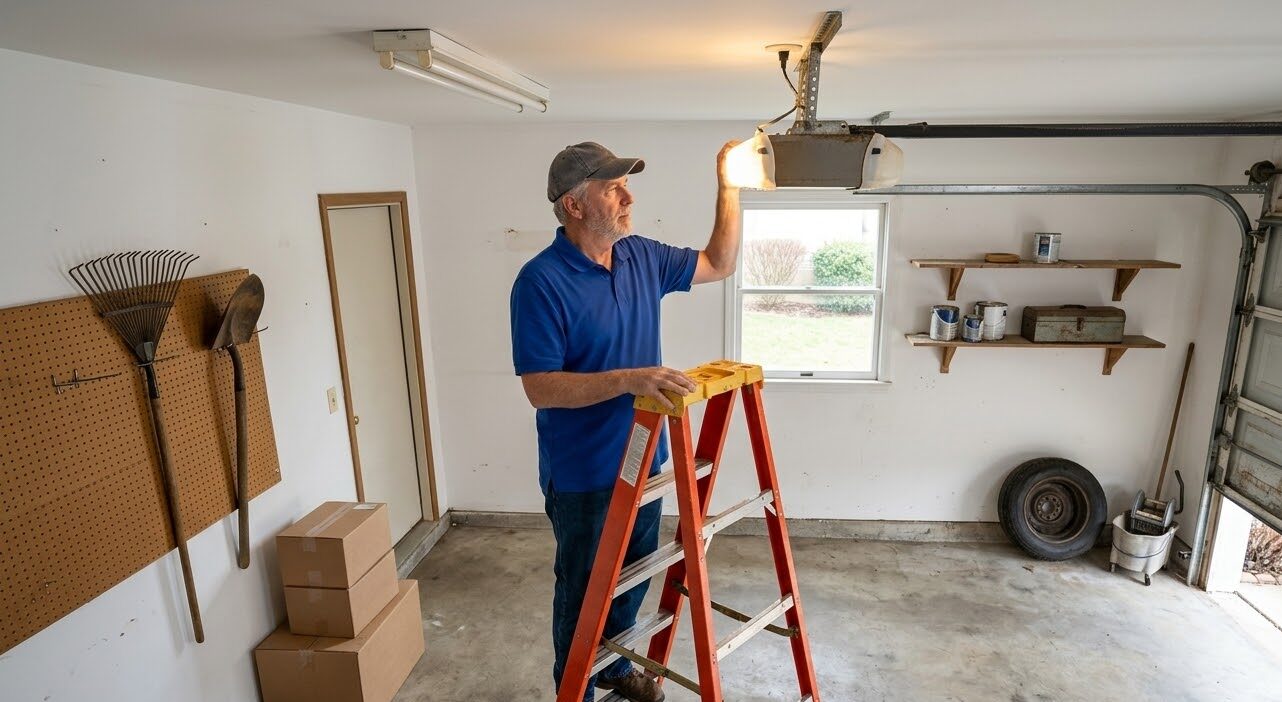
Here is the scenario, and it is not hypothetical in this state. A storm takes the grid down at 6 p.m. Your car is in the garage at 40 percent. The Wall Connector is dead, because it is a grid device with no storage of its own. And the garage door opener is dead too.
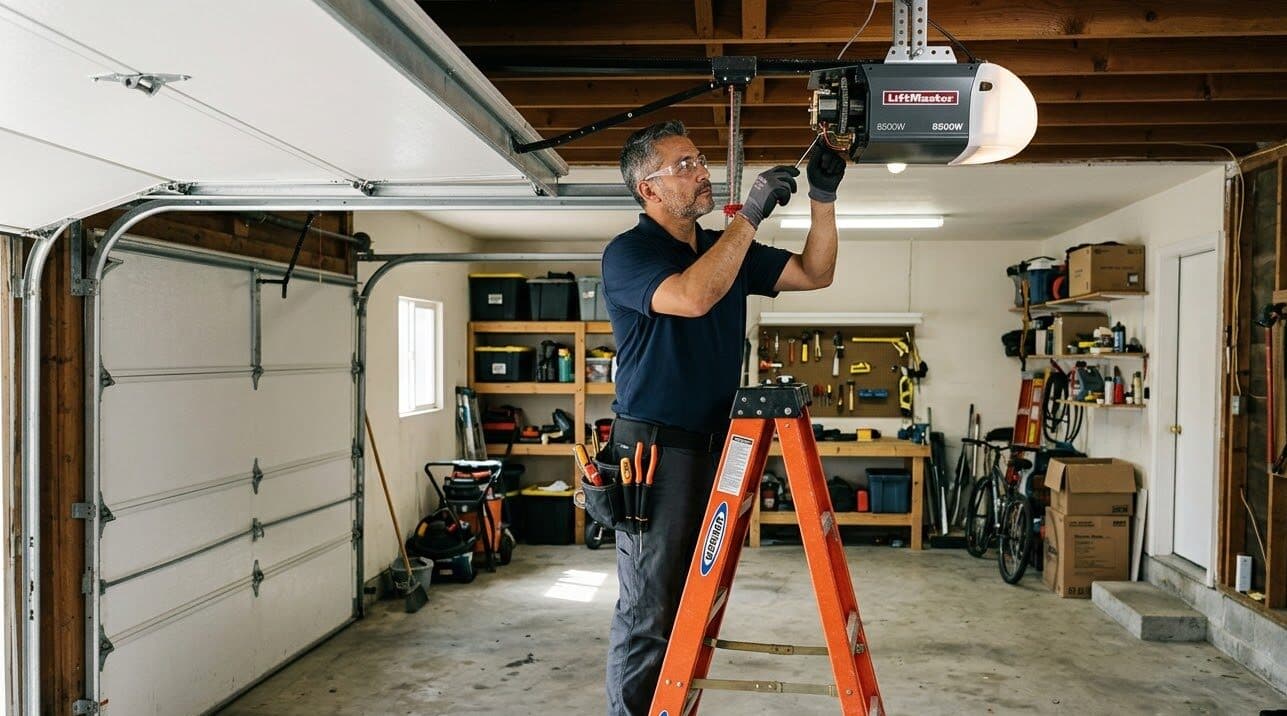
That last part is the one people are unprepared for. An automatic garage door opener without a battery backup does not open during an outage. The door has a manual release, and that is the correct answer, but it comes with conditions most homeowners have never tested.
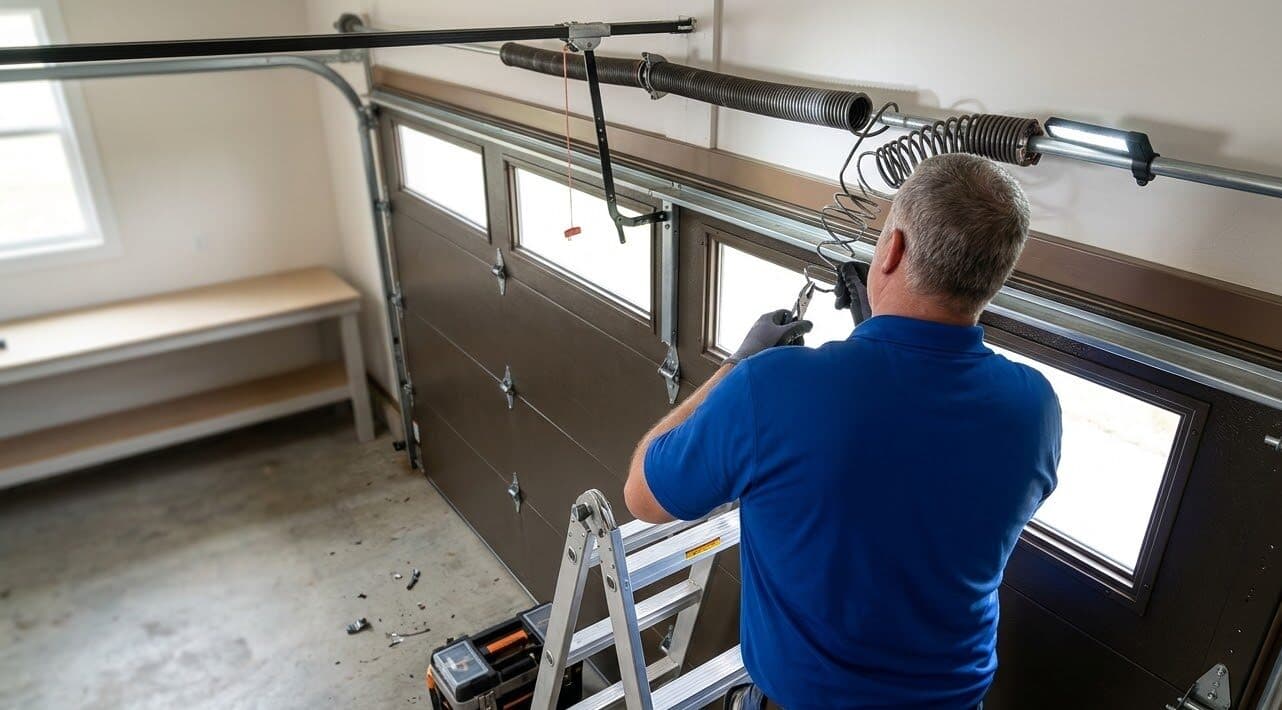
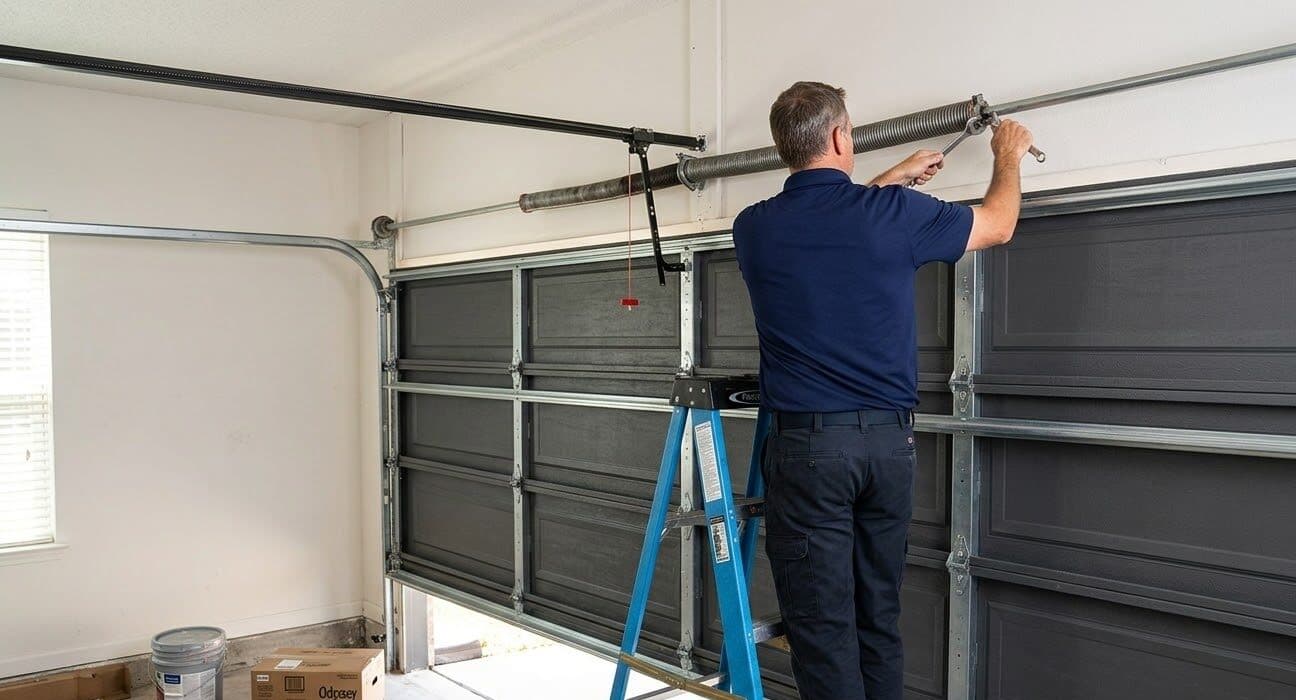
The manual release disconnects the door from the opener carriage so you can lift it by hand. On a properly balanced door, that lift is genuinely manageable. On a door whose springs have lost tension, it is not, because the springs carry the weight of the door, not you. A double door can weigh well over 150 pounds, and when the spring is weak, that weight goes to whoever pulls the rope. This is why door balance is not a comfort issue, it is the thing that determines whether the manual release is usable in an emergency. It is worth reading how the balance check works in our guide to testing your door's safety systems, because the same 30-second check tells you both things.
The other condition: if you leave through the garage and pull the door down behind you, an unpowered door with no lock is not secure, and re-engaging the carriage when power returns has its own small procedure. Knowing that procedure before the storm is the entire point.
Battery Backup Openers, and Why Florida Has No Law About Them
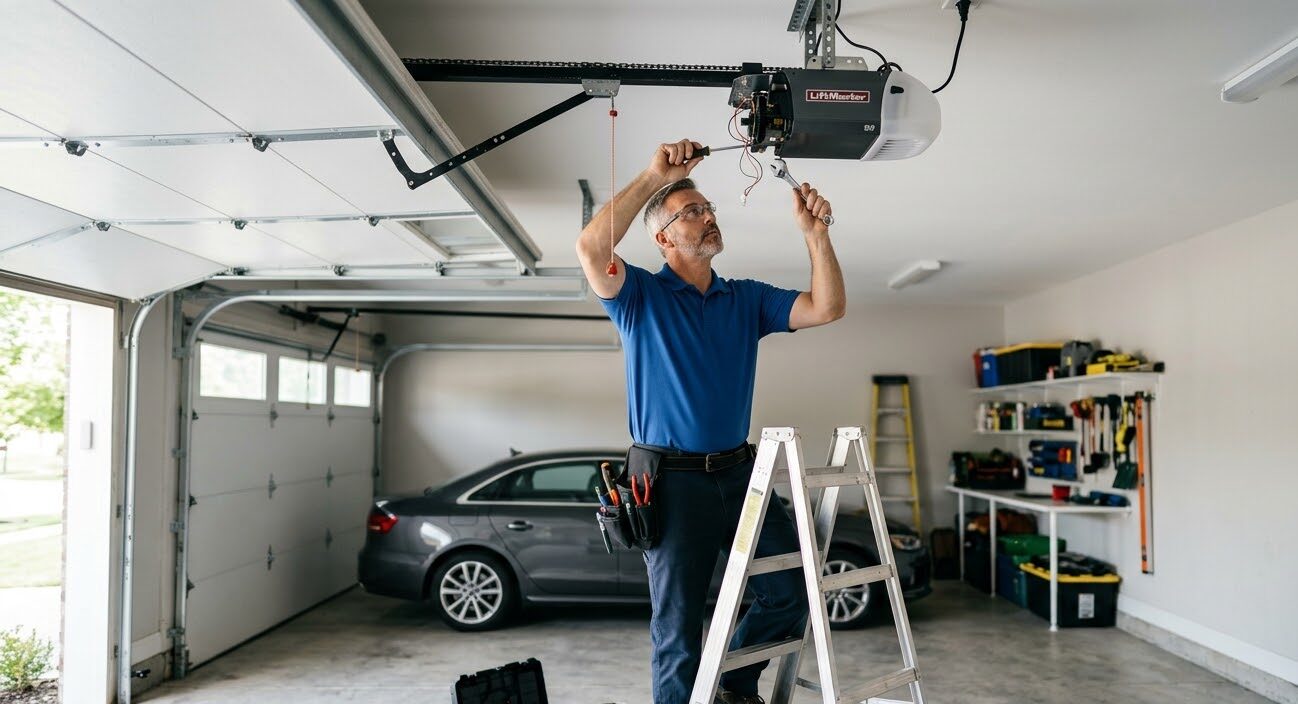
California requires battery backup. Since July 1, 2019, under SB 969 signed in September 2018, no residential automatic garage door opener may be manufactured for sale, sold or installed in California without a battery backup function designed to operate during an electrical outage. Violations carry a $1,000 civil penalty. The law came out of a wildfire season where people died trapped in homes because they could not get a powered door open.
Florida has no equivalent statute. We get asked about a Florida battery backup law regularly, and it is worth stating clearly that as of 2026 there is not one. Nobody is going to require this of you here.
Which is a strange thing to celebrate in the state with the country's most reliable hurricane season. The hazard California legislated against is a hazard we have more of, not less. A battery backup opener typically delivers somewhere around 20 cycles on a charge, which is far more than you need to get a car out and back in during even a multi-day outage, and the backup battery is a consumable that gets replaced every few years like any other.
If you are already having an electrician in the garage for a 60-amp circuit, that is the cheapest moment you will ever have to also handle the opener. We cover the tradeoffs between repairing and replacing an existing unit in opener repair versus replacement, and battery backup is one of the features that pushes the math toward replacement on an older opener.
Actually Charging During an Outage: The Powerwall Math

If the goal is not just opening the door but keeping the car charging while the grid is down, that is a home battery question, and the honest numbers are less romantic than the marketing.
A Tesla Powerwall 3 stores 13.5 kWh and delivers 11.5 kW of continuous output, uses lithium iron phosphate chemistry, runs about 97.5 percent round-trip efficient, includes an integrated solar inverter, and carries a 10-year warranty to at least 70 percent capacity retention.
Now the scaling, which is the part that matters:
- One unit: covers a typical home's essentials, meaning refrigerator, lights, internet and fans, for roughly 24 hours. Not air conditioning, and not car charging.
- Two units: what you need if air conditioning or any EV charging is in the picture. In Florida, air conditioning is not optional in August, so two is the realistic floor here.
- Three units: what it takes to charge an EV at a genuinely useful rate during an outage.
Installed cost for a single Powerwall 3 in 2026 runs roughly $9,200 to $16,500 depending on installer and region, and there is a 2026-specific catch worth knowing before you budget: the 30 percent federal Residential Clean Energy Credit under Section 25D expired December 31, 2025, and residential batteries placed in service on or after January 1, 2026 do not qualify. A system that penciled out in 2024 does not automatically pencil out now.
The pragmatic read for most Florida households: a battery backup opener plus a balanced door solves the trapped-car problem for a couple hundred dollars. Charging through the outage is a separate, much larger project, and it is worth deciding which problem you are actually solving.
Where the Charger Should Go on the Wall
Location gets decided by the electrician's convenience more often than it should, and it is worth having an opinion before they arrive.
- Match the port side: Teslas take the port at the driver-side rear. With a 24-foot cable there is slack, but a charger mounted on the wrong wall means the cable crosses the walking path every night for the life of the house.
- Mount height: roughly 42 to 48 inches to the unit keeps the cable off the floor and away from standing water, which matters in a Florida garage during heavy rain.
- Stay clear of the door hardware: the horizontal tracks, the torsion tube, the spring and the opener rail all live on that ceiling and those side walls. The charger, its conduit and the cable in its resting position all need to stay out of the door's swept path. This is the coordination step that gets missed when the electrician and the door company never speak, and the failure mode is a cable that eventually contacts a moving door.
- Think about the second car: if a second EV is plausible, note that Wall Connectors support power sharing across multiple units on a shared circuit. Running conduit for a future second position while the walls are open costs a fraction of doing it later.
The Smart Garage Layer, and What It Is Worth
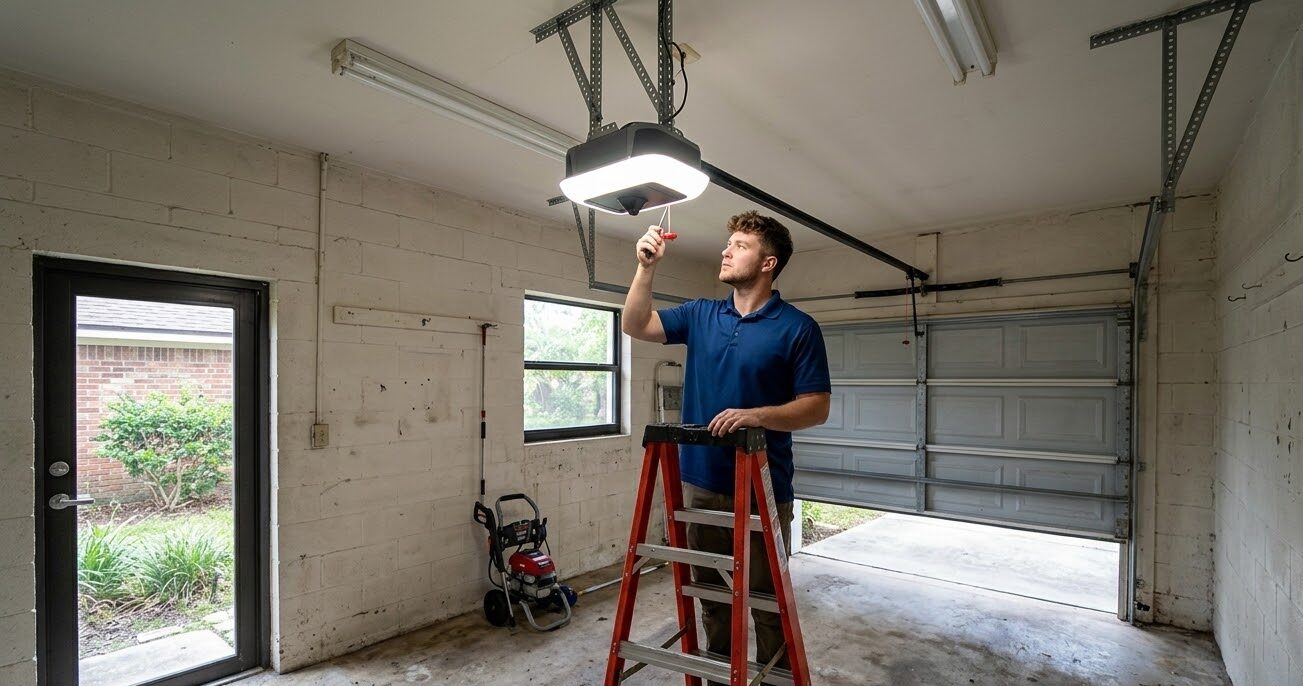
A connected opener adds remote open and close from a phone, alerts when the door has been left open, and scheduled auto-close. For an EV household there is a specific and underrated benefit: you get a notification when the door is open, and the garage with a car charging in it is a room you want closed.
Two honest limitations. First, a smart opener is a Wi-Fi device, so it goes down with your internet, and in an outage the internet is usually the first thing to go, which is a separate failure from the opener itself losing power. Second, connected features do not replace battery backup. They are different problems: one is convenience and visibility, the other is whether the door physically moves. A connected opener with no battery is just as stuck as a dumb one.
If you are already adding a charger, smart garage door installation is the natural moment to do it, because the wall is already open and the electrician is already there.
The Sequence That Avoids Rework
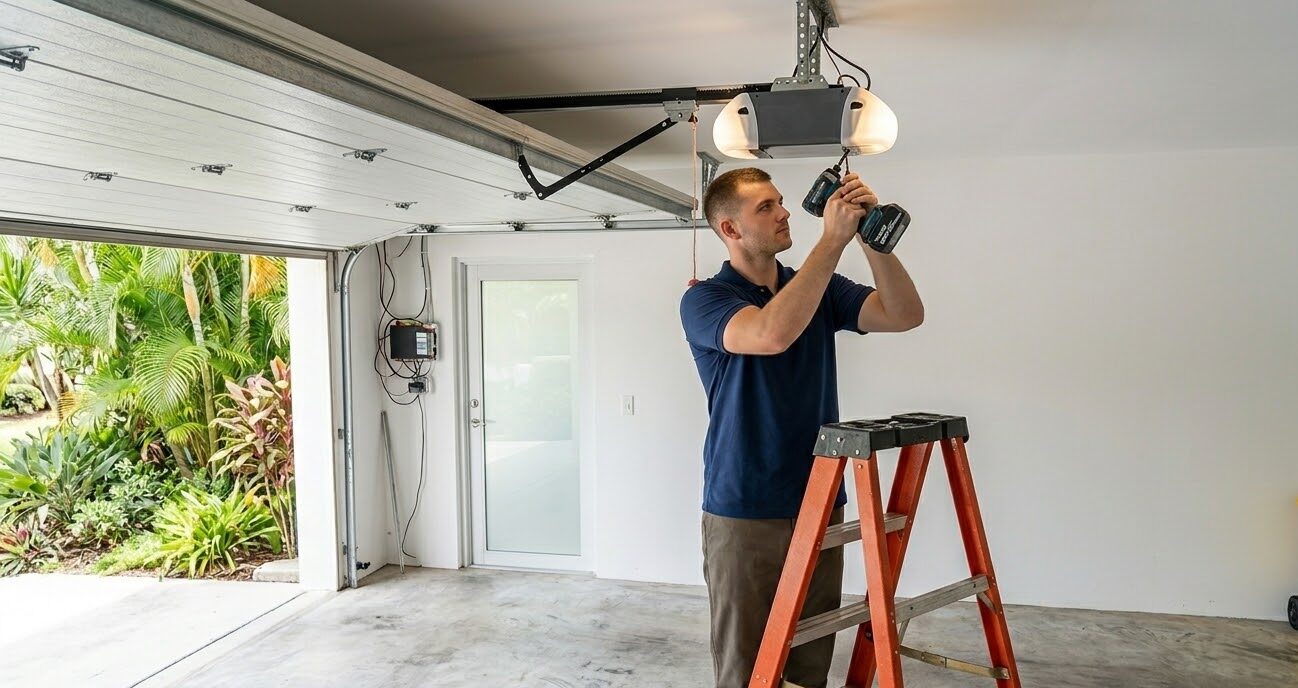
Order matters here, and doing it backwards is what creates change orders.
- 1. Load calculation first. Before choosing a charger location, find out whether the panel has 60 amps to give. This can change the entire scope.
- 2. Decide the charger position with the door in mind. Port side, mounting height, clearance from tracks, springs and the opener rail.
- 3. Handle the opener in the same visit. Battery backup, balance check and safety sensor test while access is easy.
- 4. Run conduit for the second position now if it is even possible. The marginal cost during the first job is small.
- 5. Test the manual release with the power off, on purpose, before you need it. Everyone in the household should have done it once.
That last one is free and it is the highest-value item on the list.
Getting It Set Up in Polk County

Rocket Garage Door Services works the door side of this across Lakeland, Winter Haven and Bartow. We do not pull the 60-amp circuit, that is your electrician's work, but we handle everything the charger is going to share a room with.
That means confirming the door is balanced so the manual release is genuinely usable, testing the safety reversal, putting a battery backup unit in through opener installation if the current one has none, and checking that the planned charger position clears the tracks, the torsion tube and the opener rail before anyone drills. If the garage is also getting hardened for storm season, hurricane reinforcement is the same visit.
Call (863) 624-3191 or use the contact page and we will look at the door before the charger goes in, which is a much shorter conversation than looking at it afterwards.