The Rule, and Where the $300 Actually Comes From
The industry rule of thumb is not a dollar figure. It is a ratio: replace the opener if the repair quote exceeds roughly 50 percent of what a new unit costs installed. The dollar figure is what that ratio works out to in a given market and year.
Run the 2026 numbers. A new garage door opener installed runs $300 to $900 depending on drive type, features and site conditions, with typical residential replacements landing in the $250 to $550 band and the national average replacement sitting near $329. A belt drive with battery backup, which is what most Polk County homes should be buying, sits toward the upper middle of that range once installation and haul-away are included.
Take a realistic installed replacement figure of roughly $600 for that specification. Half of it is $300. That is the whole derivation. The rule is not that $300 is magic, it is that $300 is what half looks like right now for the opener most Florida homeowners should actually be installing.
Which means the rule adjusts. If you genuinely only want a basic chain drive replaced with the same thing, your installed replacement number is lower and your threshold drops with it. If you are looking at a wall-mount jackshaft unit because the ceiling is occupied by storage, your installed number is higher and a $400 repair might still be the right call. Do the ratio, not the memorized dollar amount.
Two caveats keep the rule honest. First, it assumes the door itself is sound. An opener struggling because the springs are out of balance is not an opener problem, and replacing it will not fix anything. Second, it assumes the repair is the last repair. On a unit that has already had two service calls this year, the third quote is not really $250, it is $250 plus the next one.
What Each Repair Actually Costs in 2026
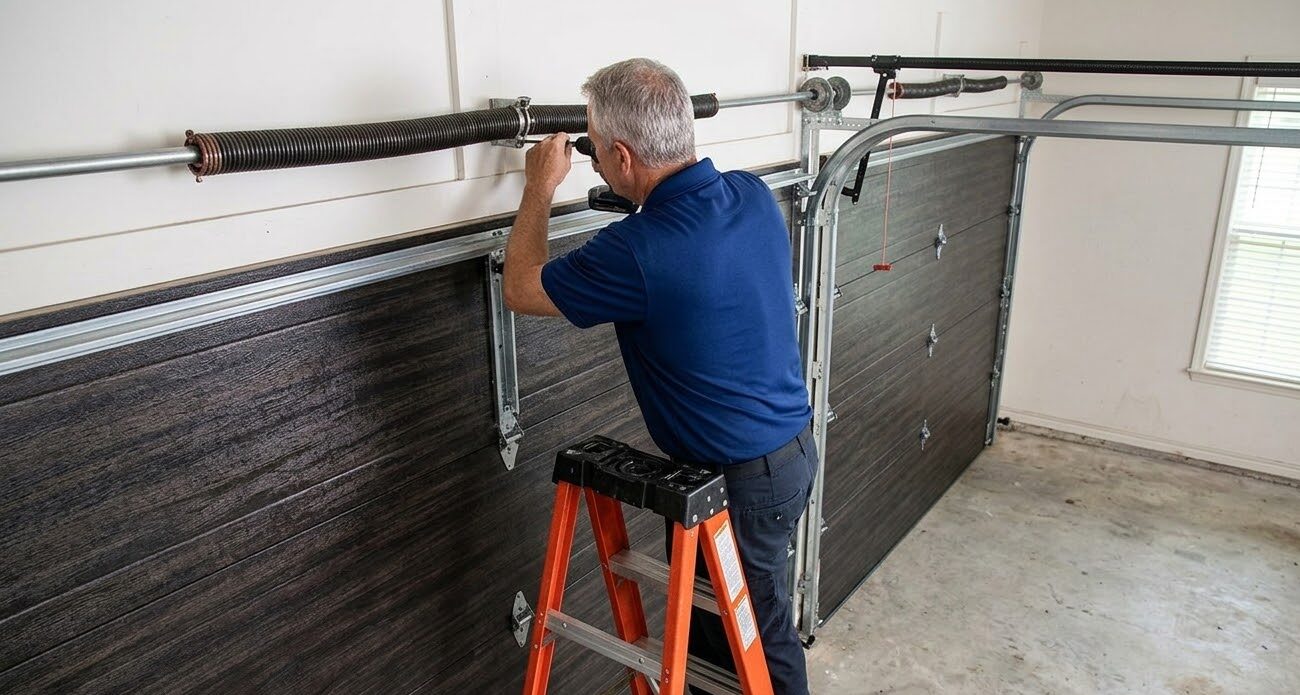
Garage door opener repairs average around $174, with most common fixes landing in the $100 to $200 range. Broken out by what actually failed:
- Stripped or worn drive gear: $75 to $150. The plastic gear that drives the trolley wears out, usually announcing itself with a motor that runs while the door does not move. This is the single most repairable failure on the list.
- Logic board: $120 to $220. The board is the opener's brain, and in Florida it is the component heat and humidity go after first.
- Capacitor: generally the cheapest real repair on an AC opener. Symptoms are a motor that hums but will not start, or one that starts only sometimes.
- Safety sensors: often no part cost at all, because most sensor calls are alignment or a dirty lens rather than a failed unit. If a sensor genuinely needs replacing, the part is inexpensive.
- Limit and travel adjustment: frequently a service call with no parts. A door that reverses before it closes or stops short is usually a travel setting, not a broken opener.
- Remote or keypad: a programming visit or an inexpensive replacement transmitter, well below the decision threshold either way.
Notice that most of that list sits comfortably under $300. That is not an accident. The majority of opener service calls are repairs worth making, and any contractor who reaches for replacement on a $120 gear kit is selling, not diagnosing.
What a Replacement Actually Costs, Installed
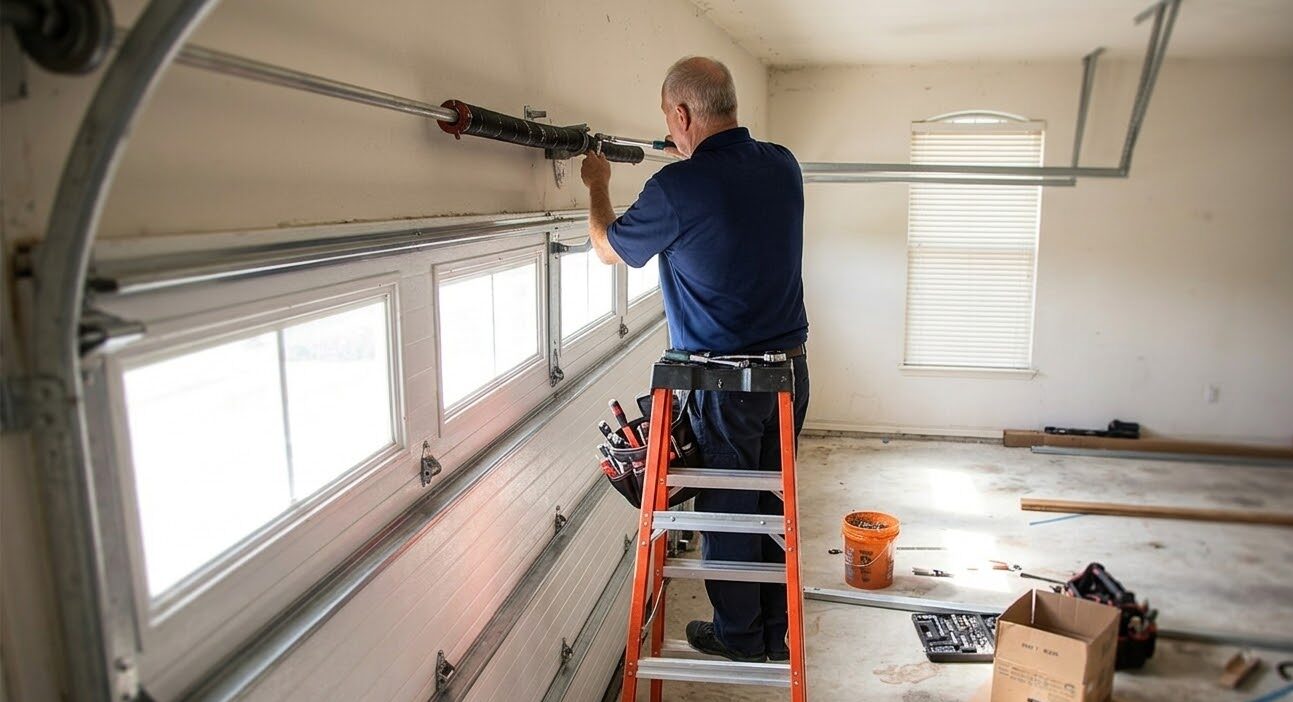
Replacement pricing depends almost entirely on drive type and on whether the unit carries battery backup:
- Basic chain drive, installed: the bottom of the $300 to $900 range. Loud, durable, and the reason it is loud matters more in an attached garage with a bedroom above it than most people expect.
- Belt drive with DC motor, installed: the middle of the range and the right default for Florida. Quieter, and DC motors handle soft start and soft stop, which reduces the shock loading that kills gears.
- Belt drive with battery backup, installed: a step up again, and the feature that matters most in a state that loses power in every named storm.
- Wall-mount jackshaft, installed: the top of the range, and the answer when the ceiling is needed for storage or when the door has an unusually high lift.
The drive type decision has downstream consequences on lifespan and noise that go well beyond the purchase price, and we broke that comparison down in detail in our guide to chain, belt and screw drive openers. If you have narrowed it to a specific brand, the LiftMaster, Chamberlain and Genie comparison covers how the platforms actually differ.
The Age Test: Under Seven Repair, Over Twelve Replace
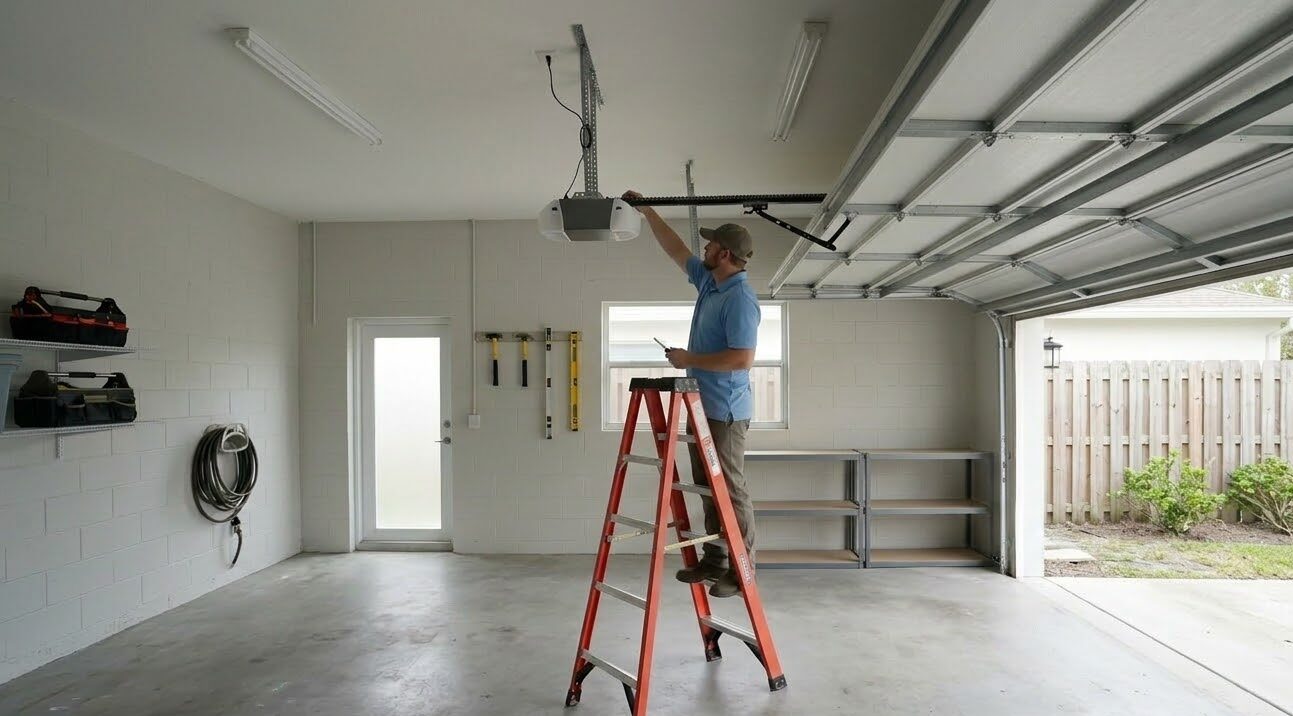
Cost is one axis. Age is the other, and it is the one that resolves the ambiguous cases.
A residential opener has a useful life of roughly 10 to 15 years, and around 10,000 cycles is a reasonable checkpoint for a unit that has had a normal duty cycle. Two openings and two closings a day is about 1,460 cycles a year, so a household with two drivers and a teenager can pass 10,000 cycles in well under a decade.
The working version of the rule:
- Under seven years old: repair almost anything short of a catastrophic motor failure. The unit has most of its life left and the parts are current.
- Seven to twelve years: apply the 50 percent cost rule strictly. This is the band the rule exists for.
- Over twelve years: lean toward replacement even when the repair is cheap, because you are buying time on a unit whose other components are the same age as the one that just failed.
The age you want is not the age of the house. It is the date code on the motor housing label, which almost every manufacturer prints. If nobody has looked at that label, the age conversation is guesswork.
The 1993 Line: If Your Opener Predates It, the Decision Is Already Made
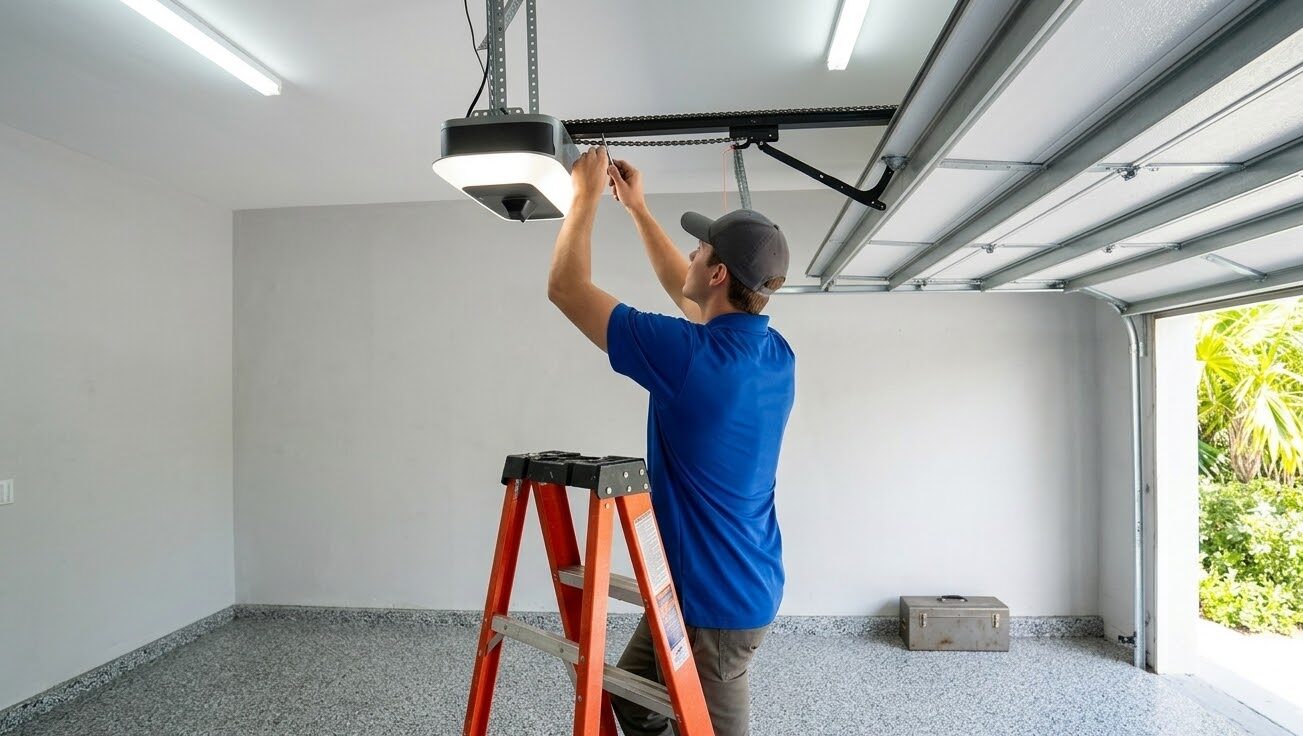
This is the one case where cost and age stop mattering.
Since January 1, 1993, federal regulation has required every residential garage door opener sold in the United States to include an entrapment protection system, and UL 325 defines what that protection has to do. In practice that means two things. The opener has to reverse the door when it contacts an obstruction, within two seconds of contact. And it has to include a non-contact system, which is virtually always the photo eyes mounted on each side of the opening no higher than six inches off the floor, projecting a beam that stops and reverses the door if anything breaks it while closing.
If your opener has no photo eyes at the base of the tracks, it was manufactured before that requirement and it should be replaced regardless of what it costs to nurse along. There is no repair that adds entrapment protection to a unit that was not built with it.
The same era brings a second problem. Openers old enough to lack photo eyes generally use fixed-code remotes, where the transmitter sends the same code every time. Modern openers use rolling code, where the code changes with every press specifically to defeat code grabbing. A fixed-code opener on an attached garage is a door into your house that broadcasts its own key.
If your opener does have photo eyes but they are misbehaving, that is a different and much cheaper conversation, and most of it you can diagnose yourself using our walkthrough on testing garage door safety sensors and auto-reverse. What you must never do is bypass them.
Five Failures That Are Almost Always Worth Repairing
- Motor runs, door does not move. Classic stripped drive gear. $75 to $150, and on a unit under ten years old it is not a close call.
- Motor hums but will not start. Usually the capacitor on an AC unit. One of the cheapest repairs on the list and a common Florida failure.
- Door reverses right before it closes. Almost always a close-limit or force setting, occasionally a sensor slightly out of alignment. Frequently no parts at all.
- One remote stopped working, the wall button still does. A transmitter or programming issue, not an opener failure.
- Grinding or rattling that started suddenly. Worth diagnosing before assuming the worst, because a loose rail bracket or a dry trolley makes a noise that sounds far more expensive than it is.
The theme is that mechanical wear items and settings are cheap. If the diagnosis is a single wear part on a unit that has been reliable, spend the money.
Four Failures That Usually Mean Replace
- Failed logic board on an opener over ten years old. The board is $120 to $220 in parts, which on its own can approach the threshold, and on a unit that age you are replacing the newest component in an old machine.
- Motor failure. On residential units the motor is rarely economical to replace as a standalone component compared to a new opener.
- Second or third failure inside twelve months. Repeated failures in different subsystems are not coincidence, they are a unit reaching the end of its service life a piece at a time.
- No photo eyes. Covered above, and it is not really a cost decision.
There is a fifth that is not a failure at all: an opener that works but has no battery backup in a hurricane state. That is a planned replacement rather than an emergency one, and the right time to do it is on your schedule rather than during an outage with the door down.
The Two Florida Variables That Move the Line

National cost guides are written for climates that do not do what Central Florida does to electronics, and two local factors matter enough to change the answer.
Heat and humidity attack the electronics first. An attached Polk County garage in August is one of the hottest occupied spaces on the property, and the opener hangs at the ceiling where that heat concentrates. Sustained high temperature shortens the life of capacitors and logic boards specifically, which is why board failures show up earlier here than the national averages suggest. Humidity adds corrosion at every connection point, particularly on units that have never been cleaned. The practical implication is that the seven-to-twelve-year decision band arrives earlier on a Florida opener than on the same unit in a temperate garage.
Power outages are a design requirement, not an inconvenience. Every named storm season produces outages across Polk County, and a garage door with no battery backup and no accessible manual release is a car that cannot leave. Openers with integrated battery backup keep operating through an outage for a meaningful number of cycles. If the opener you are deciding about does not have it, that absence belongs in the replace column with real weight, because the repair does not add it.
A third factor is duty cycle rather than climate. Florida garages get used year round with no seasonal slowdown, so cycle counts accumulate faster than in states where a household hibernates for four months. Calendar age understates wear here.
Parts Availability: The Quiet Deal-Breaker

The repair or replace math assumes the part exists. On openers past roughly fifteen years, that assumption starts failing.
Manufacturers discontinue boards and gear kits for older models, and once the manufacturer stops producing a board the remaining supply is aftermarket or salvaged. Aftermarket boards vary in quality, and a salvaged board is by definition the same age as the one that just failed. Neither is a good foundation for another decade of service.
The tell is a technician who has to check availability rather than quote from stock. That is not a red flag about the technician, it is information about the opener. If the part has to be hunted, the repair carries schedule risk on top of cost, and the honest comparison is not $200 against $600. It is $200 plus an uncertain wait against $600 today.
What Replacement Buys That the Repair Never Will
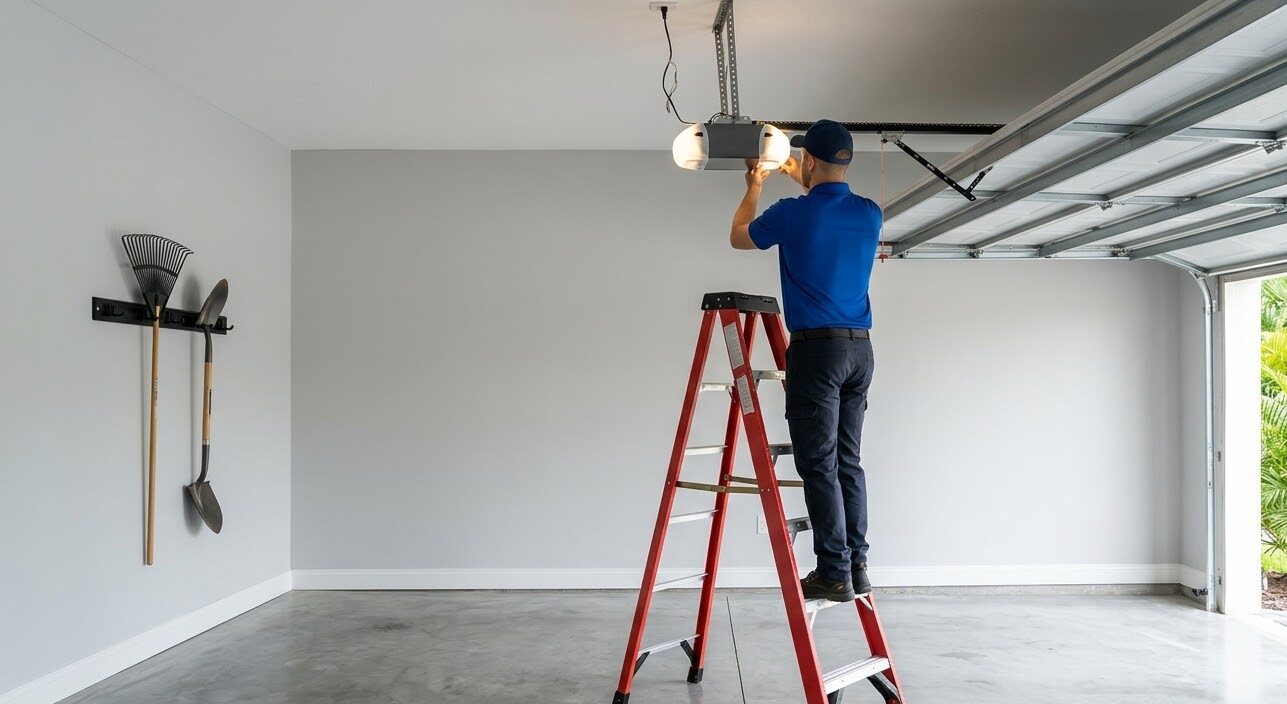
The repair restores the status quo. Replacement moves the specification forward, and on a ten-year-old opener the gap is genuinely large:
- Battery backup: the door still works when the power does not, which in this state is the feature that earns its cost.
- Rolling code security: a transmitter code that changes every press instead of broadcasting a fixed one.
- DC motor with soft start and soft stop: the door accelerates and decelerates instead of slamming into the limits, which reduces the shock loading that strips gears and loosens hardware. Longer life for the whole system, not just the opener.
- Meaningfully quieter operation: a belt drive on a DC motor against a ten-year-old chain drive is a difference you notice from the room above the garage.
- Smart control and monitoring: knowing whether the door is open when you are not home, which for many households turns out to be the feature they use most.
- A fresh warranty on every component, rather than a new part inside an out-of-warranty machine.
Deciding in Ten Minutes
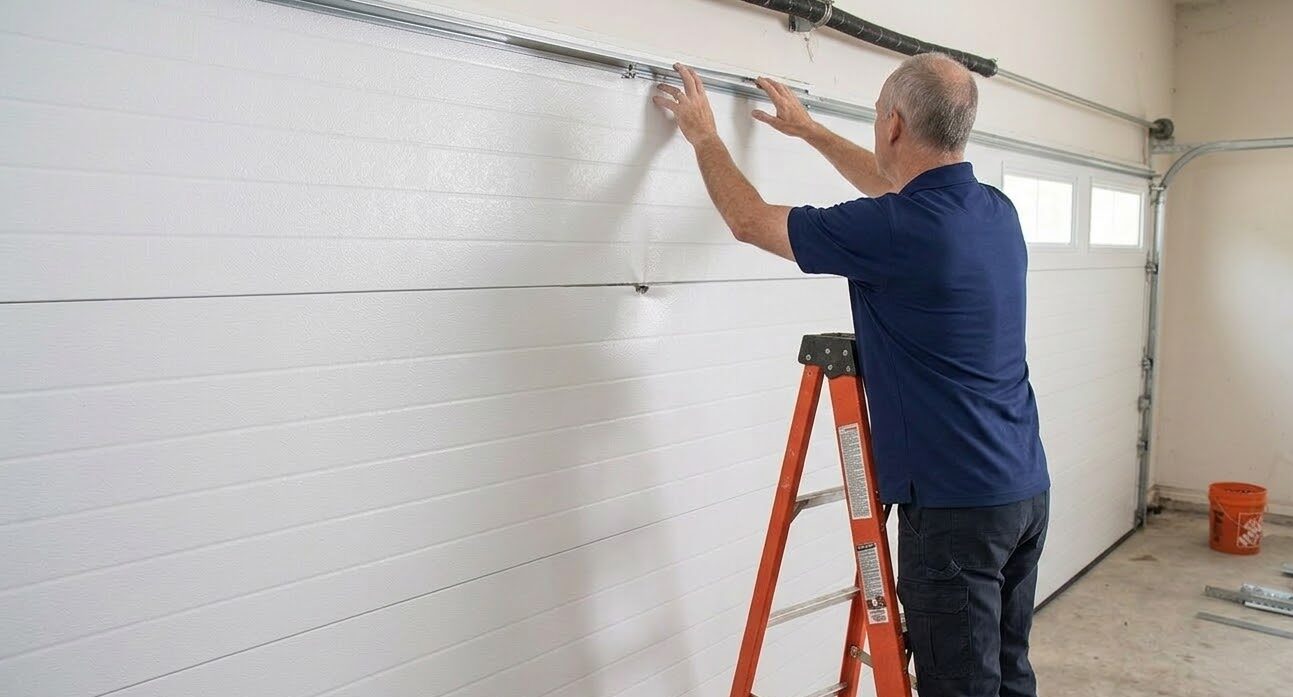
With the technician standing there, work through this in order:
- Find the date code on the motor housing label. Under seven years, repair. Over twelve, lean replace.
- Look for photo eyes at the base of both tracks. If there are none, replace, and stop the conversation there.
- Ask what specific part failed, by name. A diagnosis of the opener is bad is not a diagnosis.
- Ask what the replacement would cost installed, to the same specification you would actually want, including battery backup.
- Compare the repair to half of that number. Over it, replace. Under it, repair.
- Ask how many service calls this opener has had. If this is the third in a year, the ratio is understating the real cost.
- Ask whether the part is in stock. If it has to be sourced, factor the wait.
Rocket Garage Door Services runs garage door opener repair and opener installation across Polk County, including Lakeland, Winter Haven and Bartow, and we will tell a homeowner that a $110 gear kit is the right answer when it is, because on a sound door under ten years old it usually is. If the diagnosis turned out to be a sensor rather than the opener itself, that is a sensor repair and a much smaller number. Call (863) 624-3191 or start on the contact page and we will put the date code, the failed part and the installed replacement price in front of you before you decide.