When the Opener Will Not Move the Door, You Still Can
Every garage door with an automatic opener can also be opened by hand. The opener is only a motor that pushes and pulls the door along a rail. The real lifting work is done by the springs, which counterbalance the weight of the door so a person can raise it with modest effort. When the power is out, the opener has failed or the remote is dead, a short pull on the release cord separates the door from the motor and turns it back into a manual door.
That sounds simple, and most of the time it is. But the same pull that frees a healthy door can drop a door with a broken spring, and a disconnected door left unlocked is a door anyone can lift from the driveway. In Central Florida, where summer thunderstorms knock out power for an hour and hurricanes knock it out for days, knowing how to do this safely is worth five minutes of reading before you need it.
This guide walks through how to open a garage door manually from inside the garage, how to get in from outside when the garage is your only entrance, what to check before you pull anything, how to lock the door while it is disconnected and how to reconnect the opener when power returns. If your power has already come back and the opener is acting strange, our guide to resetting a garage door after a power outage picks up from there.
Before You Pull the Release Cord: The 30-Second Safety Check
Most injuries during manual operation happen in the first few seconds, when someone pulls the release on a door that cannot hold its own weight. Run this check first:
- Is the door fully closed? Pull the release with the door all the way down whenever possible. If the door is stuck partway open, do not pull the cord until you know the springs are intact, because a disconnected door with a broken spring falls.
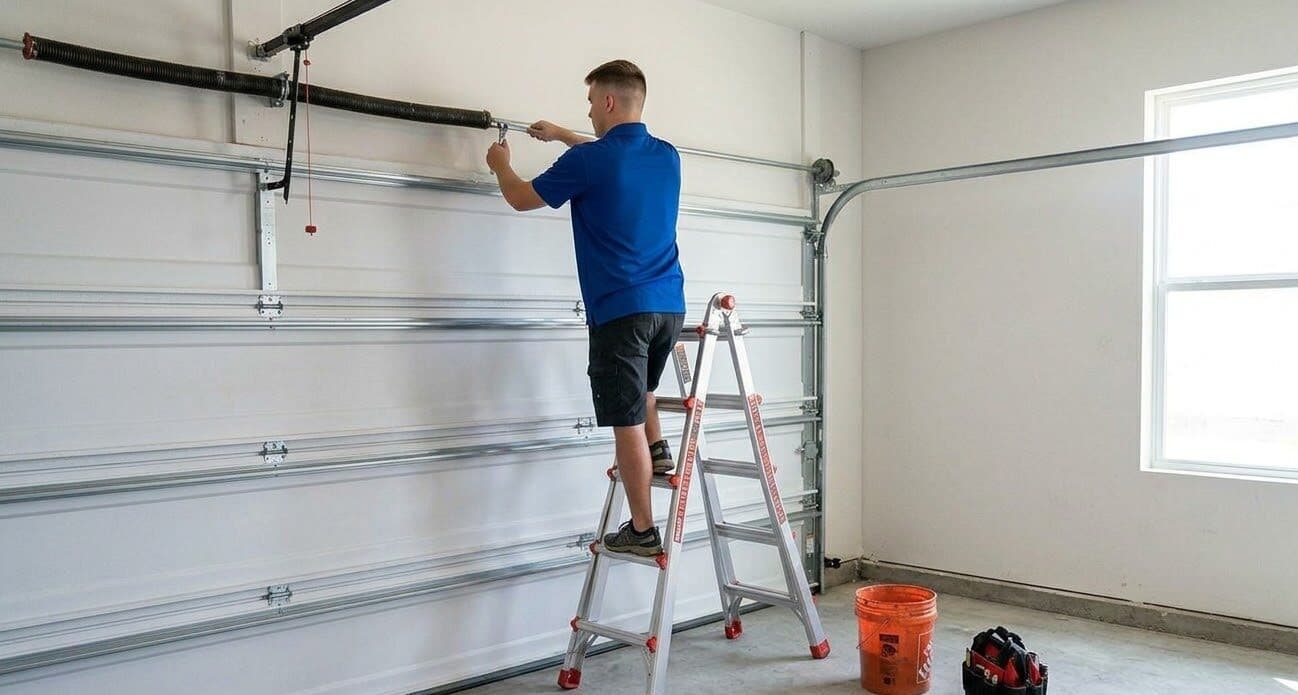
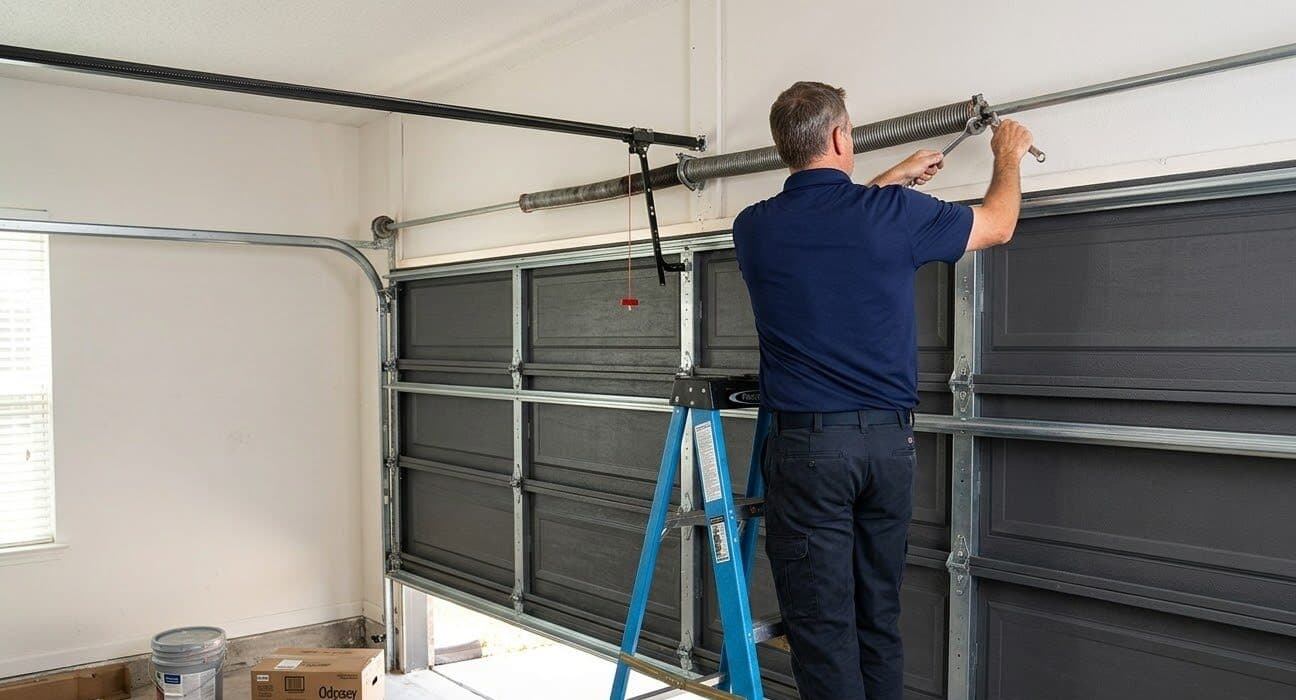
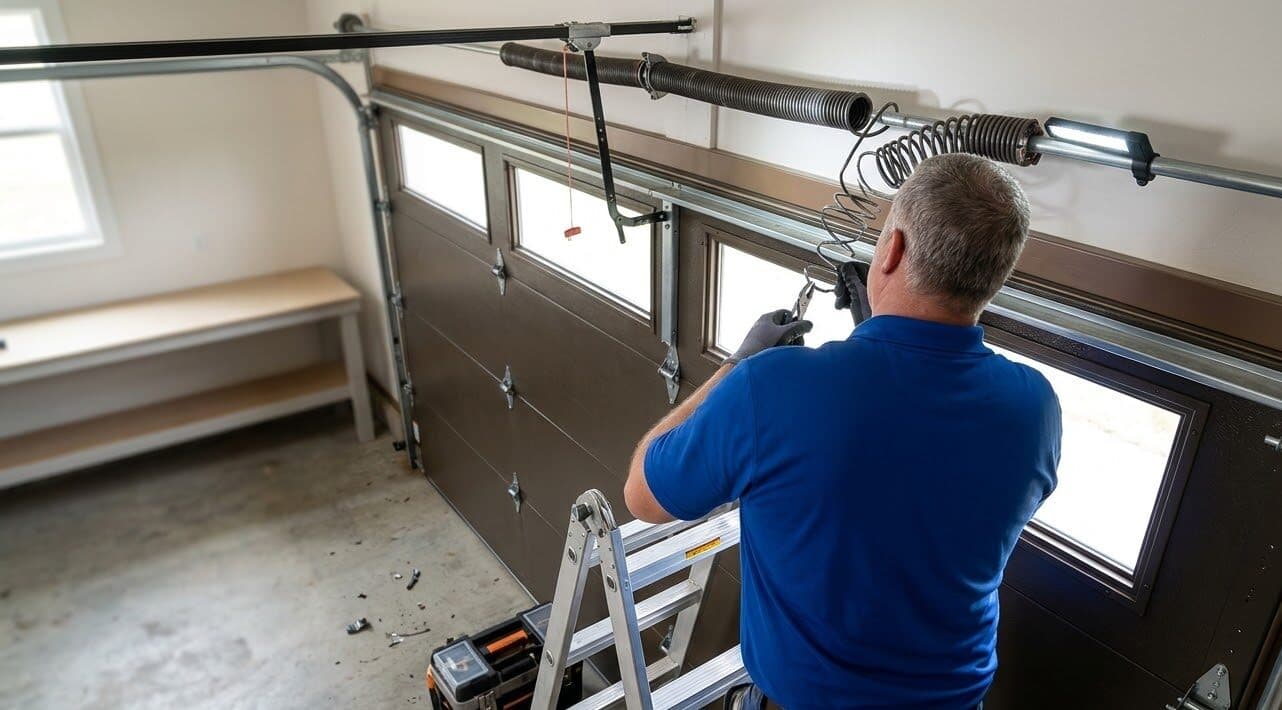
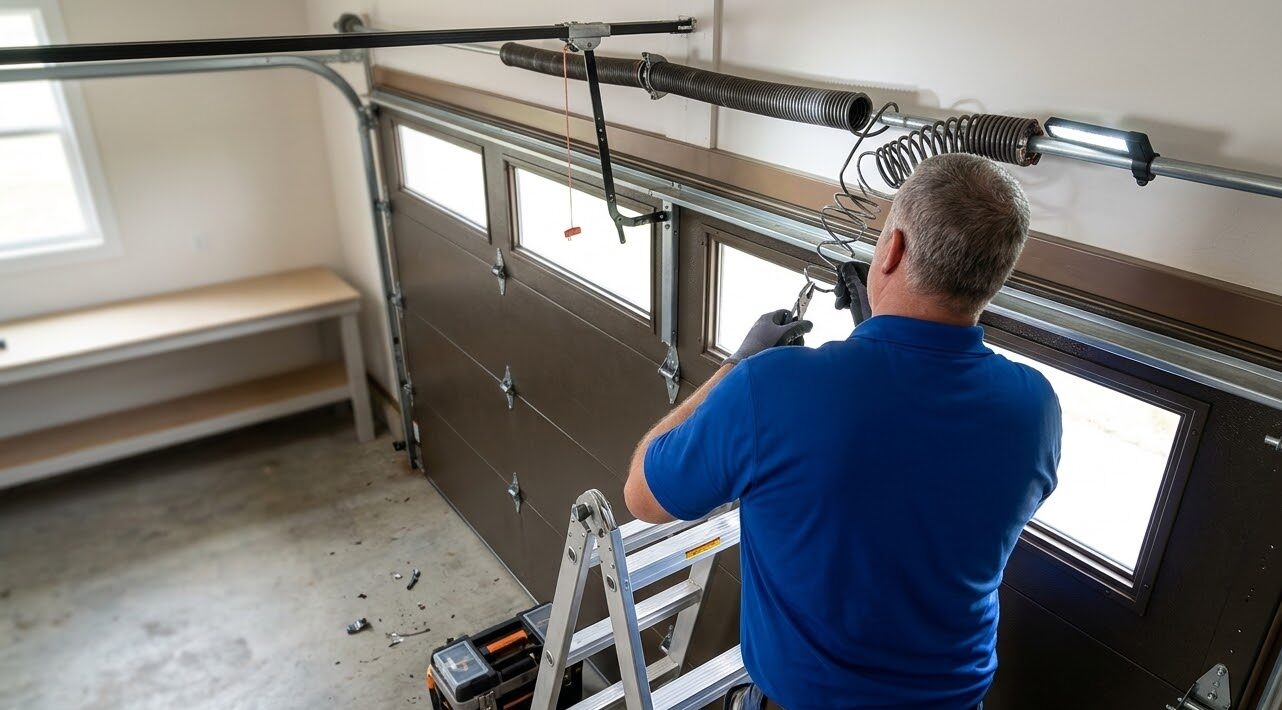
- Look at the springs. On most homes, a torsion spring sits on a metal bar above the door. If you see a gap of an inch or more in the coils, the spring is broken. Some older doors use extension springs that run along the horizontal tracks; check those for a snapped spring or a loose cable.
- Look at the cables. The lift cables run from the bottom corners of the door up to drums or pulleys. A cable that is slack, frayed or off its drum means the door can tilt or drop when released.
- Check the door itself. If the door is crooked in the opening, off its track or has a bent section, leave it closed.
- Clear the doorway. Move children, pets and anything you do not want crushed out of the door's path before you touch the release.
If any of those checks fail, the safe move is to leave the door closed and call for help. A double door can weigh roughly 150 to 250 pounds, and a broken spring puts all of it in your hands. Our garage door spring replacement technicians handle exactly this situation every week.
How to Open a Garage Door Manually From Inside
With the door closed and the springs and cables looking normal, the manual opening process takes under a minute:
- Step 1, unplug the opener if power might return. If the outage could end at any moment, unplug the opener so it does not start moving while your hands are on the door.
- Step 2, find the red release handle. It hangs on a cord from the trolley, the moving carriage on the opener rail, usually a few feet back from the door.
- Step 3, pull the handle straight down. A firm pull separates the trolley from the door. You will often hear a click. On many models, pulling down and back toward the motor holds the release in the disconnected position. Your opener's manual shows the exact motion for your model.
- Step 4, unlock the door. If your door has a manual side lock or slide bolt, release it. A locked door will not move by hand.
- Step 5, lift from the bottom. Use the handle or lift point near the bottom center of the door, keep your fingers out of the section joints and lift with your legs, not your back. A balanced door rises smoothly.
- Step 6, raise it all the way. Open the door fully so it rests in the horizontal tracks. A door left halfway is more likely to drift.
Do not try to move the door by pushing the trolley or holding the opener rail, and never hang on the release cord to pull the door down when closing. Use the handle on the door.
Does the Door Stay Up? The Balance Test That Tells You
A healthy, balanced door should feel fairly light and should stay in place when you let go of it around halfway up. That is the same balance test technicians use during a tune-up:
- Stays in place at half open: The springs are doing their job. You can open and close the door by hand as needed.
- Drifts down slowly: The springs have lost some tension. The door is usable with care, but it needs adjustment soon.
- Drops quickly or feels very heavy: A spring or cable is failing. Lower the door gently with both hands, keep it closed and schedule service.
- Shoots up on its own: The springs are over-tensioned. That also needs professional adjustment.
A door that fails the balance test also wears out the opener, because the motor ends up lifting weight the springs should carry. If you find this during an outage, our garage door balance adjustment service can correct it once things settle down.
How to Open the Garage Door From Outside
If the garage is your only way into the house, or your car keys are inside, you need a way to release the door from the driveway. That is what an outside emergency release kit does. It is a small keyed lock installed in the top section of the door, connected by a cable to the trolley release inside. Turning the key and pulling the lock cylinder trips the release, and you can then lift the door by hand.
A few points about outside releases:
- Not every home has one. Many Florida homes have a door from the garage into the house plus a front door, so the kit is never installed. If you do not see a small keyhole near the top center of the door, you probably do not have one.
- Keep the key with your house keys. An outside release without the key is useless during an outage.
- Check that the cable still connects. Test the kit once a year with the power on, so you know it actually trips the release.
- Consider it if the garage is your main entry. Homes where everyone uses the garage to come and go benefit the most. A technician can add one during a routine visit.
Without an outside release, do not try to pry the door, force the bottom seal or reach in with a hook. That damages the door and is exactly the technique burglars use, which is why a properly locked door matters.
Lock the Door While It Is Disconnected
When the opener is engaged, the motor and trolley hold the door closed. Once you pull the release, that hold is gone, and a disconnected door can often be lifted from outside. During a long outage, especially after a storm when neighborhoods are dark and empty, that is a real security gap.
Close the door by hand and then use the manual side lock or a slide bolt if your door has one. If it does not, a C-clamp clamped tightly on the track just above a roller keeps the door from being raised. Remove the clamp before you try to run the opener again. Locking matters just as much if you evacuate and leave the opener disconnected.
Reconnecting the Opener When Power Returns
Reconnecting is usually easier than disconnecting. Close the door by hand, unlock any side lock or clamp, plug the opener back in and follow your manual. On most residential openers, pressing the wall button runs the trolley along the rail until it latches back onto the door carriage, and the door then operates normally. On some models you first move the release handle back to the connected position.
Then run the door through one full open and close cycle and watch it. The reversing safety system should stop and reverse the door if it meets an obstruction, and the photo-eye sensors near the floor should show steady lights. If the opener hums without moving the door, the trolley did not reconnect or a gear may be stripped. If the door reverses for no reason, the travel limits may need resetting. Our garage door opener repair team handles both.
Florida Outages and Hurricanes: Planning Ahead
In Central Florida, the most common reason to open a garage door manually is a power outage, and the worst time to learn how is in the dark with a storm coming. A little preparation helps:
- Practice once with the lights on. Pull the release, lift the door, close it and reconnect while power is available, so you know how your door feels.
- Keep a flashlight in the garage. The release handle is easy to find in daylight and hard to find in the dark.
- Get the car out before the storm. If you plan to evacuate, move the vehicle out while power is still on.
- Keep the door closed during high winds. The garage door is the largest opening in most homes. Opening it in a storm can let wind pressurize the house, and a wind-rated or braced door is heavier to lift by hand.
- Consider a battery backup. Florida does not require one on residential openers. Our article on whether Florida requires a battery backup garage opener explains the law and what to look for, and it turns a short outage into a non-event.
When to Stop and Call a Technician
Manual operation is meant for a healthy door with no power. It is not a repair method. Stop and call for help if you see or hear any of the following:
- A loud bang from the garage before the door stopped working. That is often a torsion spring breaking.
- A gap in the spring coils or a cable hanging loose.
- The door hanging crooked or one side higher than the other.
- Rollers out of the track or a bent track section.
- The door is too heavy to lift or will not stay in place after you let go.
Any of these means the door is not safe to move by hand. Keep it closed, keep people away and call a professional. Our garage door emergency services cover broken springs, snapped cables and off-track doors across Polk County, with local service for garage door repair in Lakeland and emergency garage door service in Winter Haven.
Call (863) 624-3191 if your door will not open safely by hand. We will get it working, check the springs and balance and make sure the opener reconnects before we leave.