The Power Came Back. The Garage Door Did Not.
In Polk County, losing power is part of summer. An afternoon thunderstorm knocks out a line, a transformer fails in the heat, or a hurricane takes the grid down for days. When Hurricane Milton crossed Florida in October 2024, about 3.4 million utility customers were without power at the peak. A lot of those homeowners found out the same thing at the same moment: the garage door opener does not just pick up where it left off.
Usually one of four things has happened. The door was released by hand during the outage and the opener is no longer connected to it. The opener lost its travel limits or its remote memory. A surge when power came back damaged the logic board or the safety sensors. Or the battery backup carried the door through the outage and is now dead. This guide walks through each one in order, from the 30-second fix to the signs that the opener needs a technician.
Step One: Before You Touch Anything, Check the Door Itself
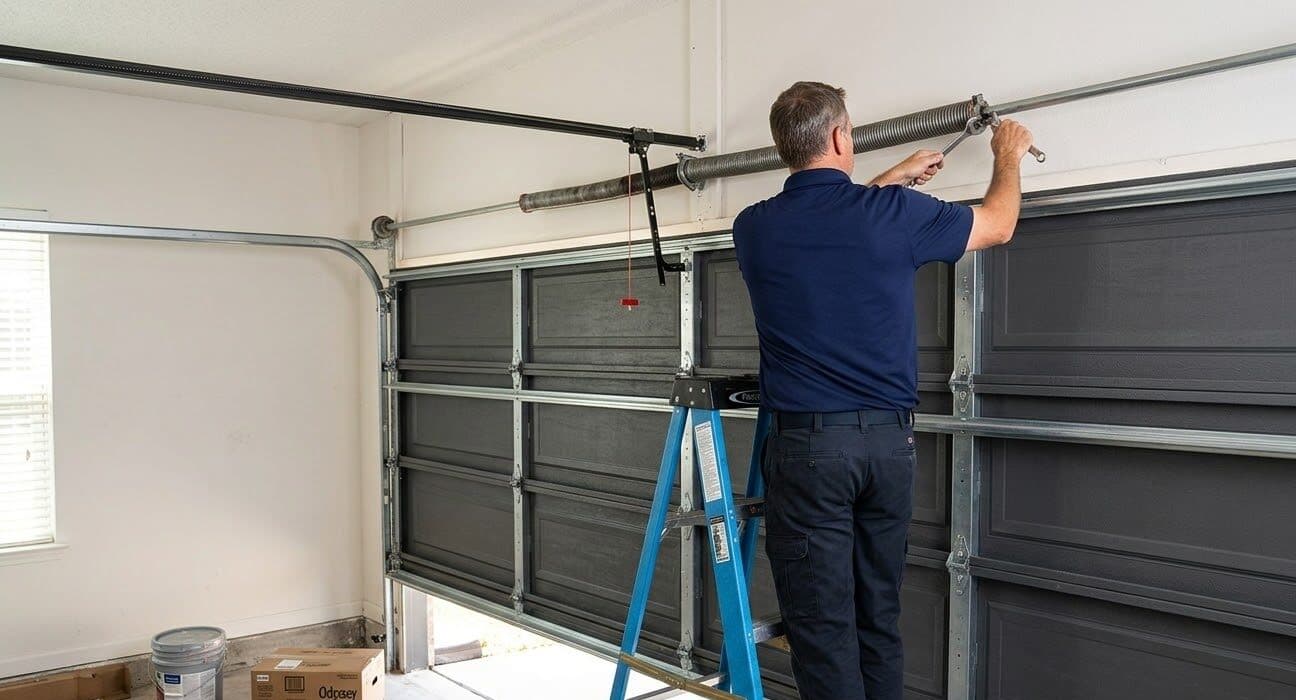
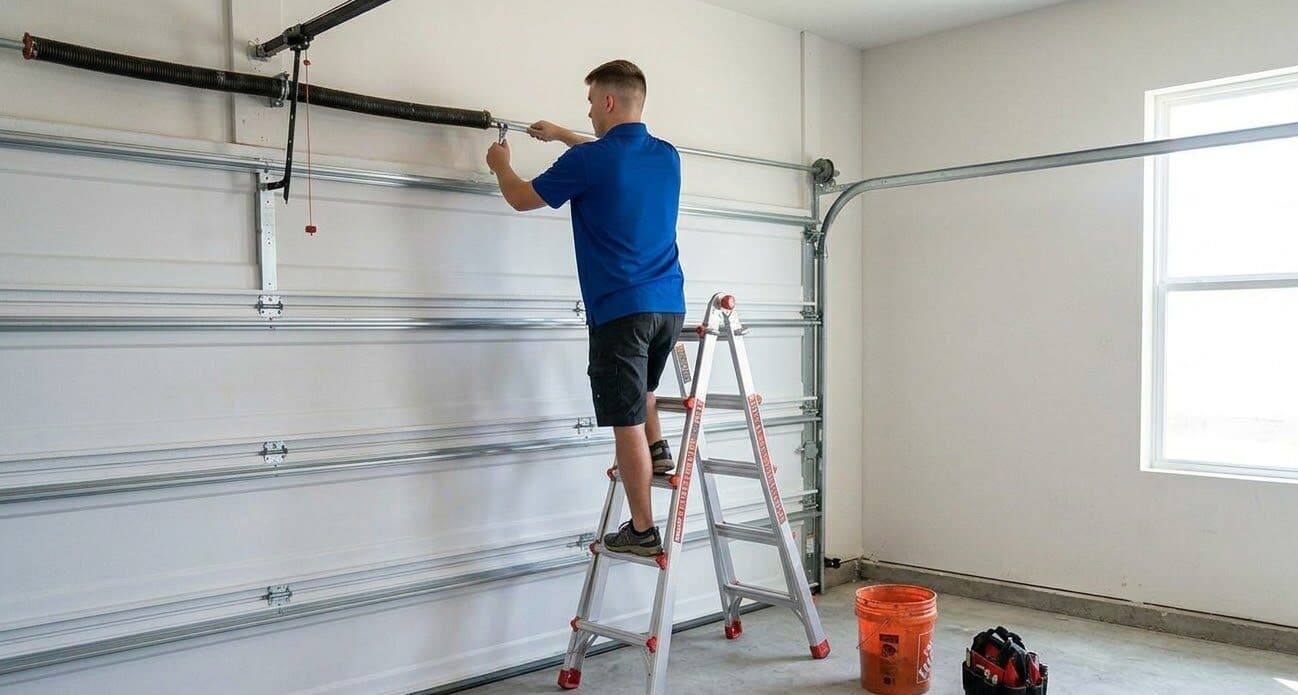
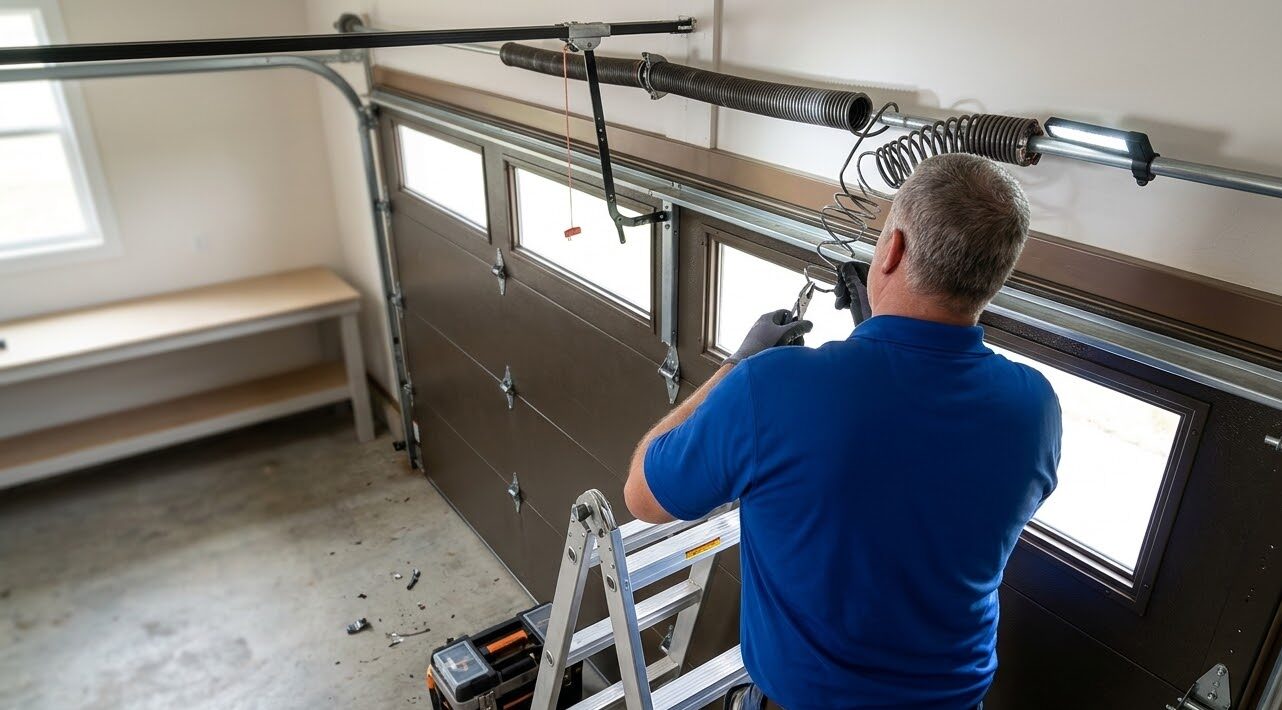
The garage door opener does not lift the door. The torsion or extension springs do that, and the opener only guides it. During an outage, the only way to open the door is to pull the red emergency release cord and lift it by hand, and that is when a weak or broken spring becomes dangerous.
- Release the door only when it is closed. If you pull the red cord with the door open and a spring is broken, the door can come down fast. If the door is stuck open when the power goes out, leave it, or support it before releasing.
- Lift test. With the opener disconnected, a balanced door should lift with moderate effort and stay roughly in place when you let go halfway up. If it feels like hundreds of pounds, or slams down, a spring has failed. Stop and do not run the opener.
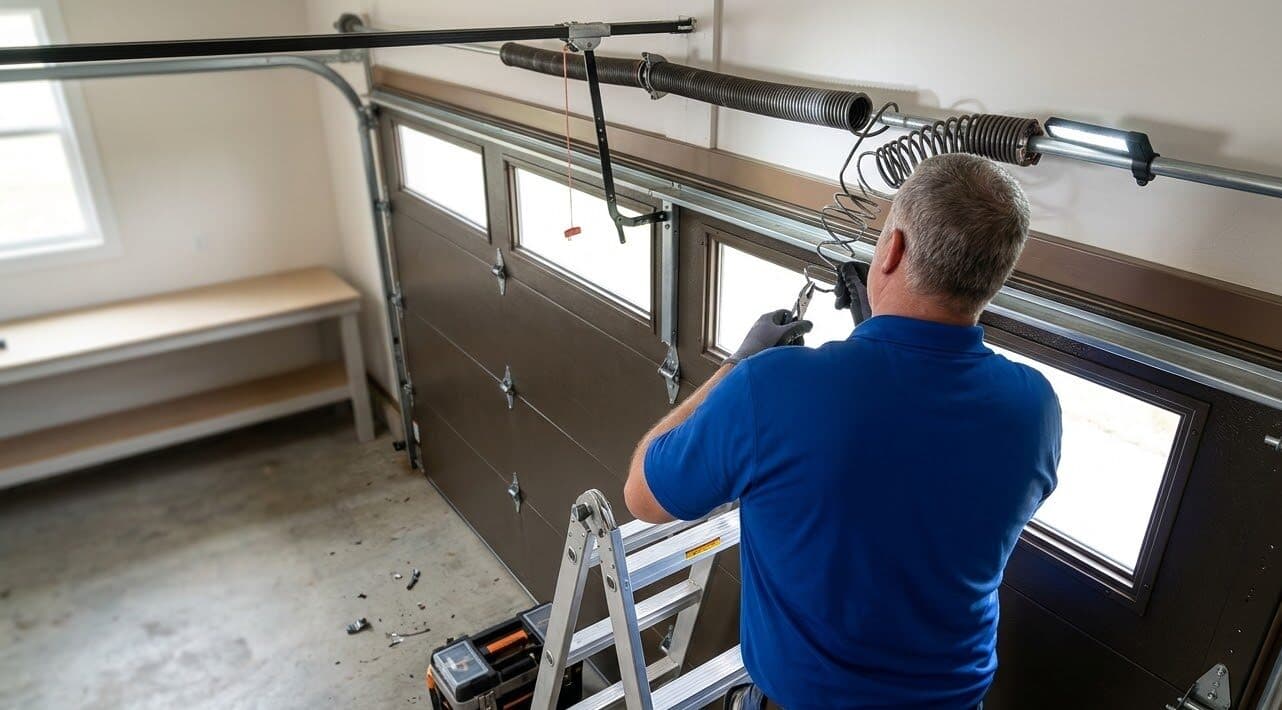
- Look and listen. A gap in a torsion spring above the door, a loose cable or a bang heard during the storm all point to a spring or cable problem, not an opener problem.
If the door fails the lift test, the opener is not the issue, and resetting it will not help. A broken spring is a job for garage door spring replacement, and running the opener on a door with a broken spring can strip gears or bend the door.
Step Two: Reconnect the Opener to the Door
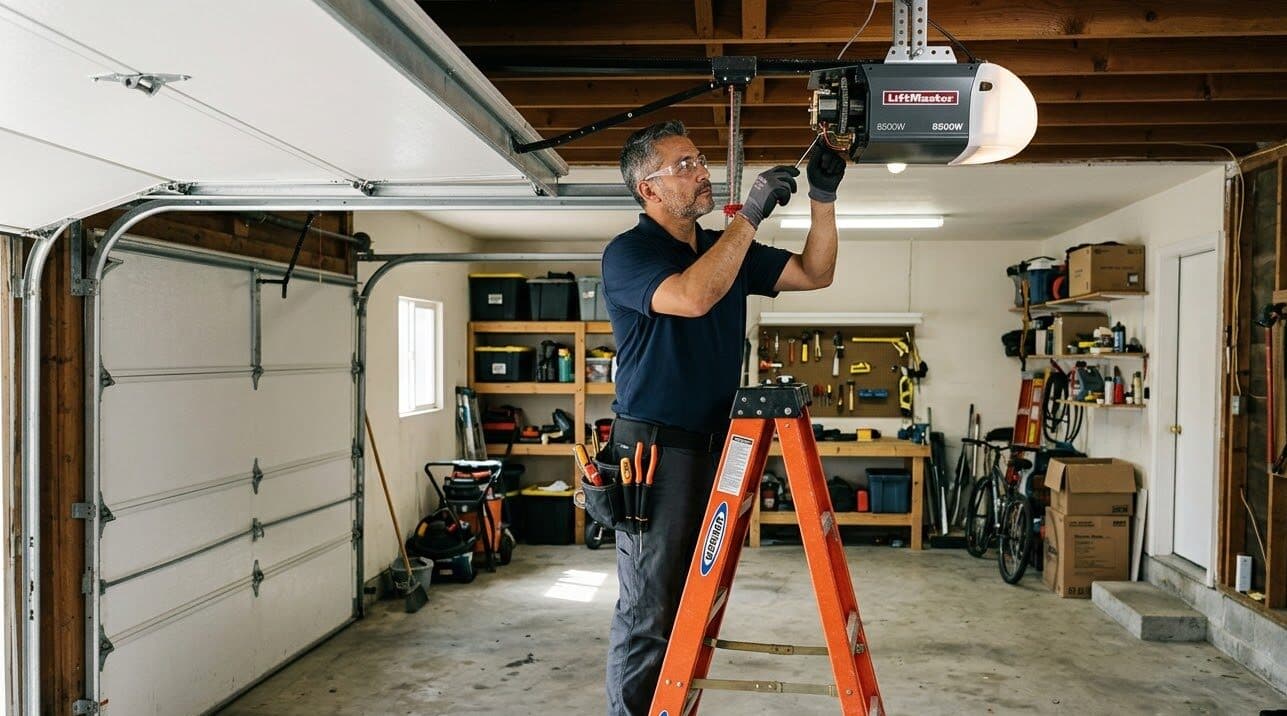
If you pulled the red cord during the outage, the trolley on the rail is disconnected from the carriage that the chain or belt drives. The opener will run, the light will come on, and the door will not move. Reconnecting it is the most common fix after a power outage.
- Close the door fully by hand. Reconnecting with the door partway open can make the door move unevenly or bind.
- Set the release to re-engage. On most LiftMaster and Chamberlain openers, pull the red cord toward the door so the spring-loaded lever is set to latch. Other brands, including Genie, use their own release designs, so check the label on the trolley or the manual if you are not sure.
- Run the opener. Press the wall button. The carriage travels along the rail until it meets the trolley and latches with a click.
- Alternatively, move the door by hand. With the release set to re-engage, lift the door slowly until you hear the trolley click into the carriage.
- Test a full cycle. Open and close the door completely, watching that it travels smoothly and stops where it should.
Step Three: Check the Travel Limits and Force
Newer openers store their travel limits electronically, and an outage or surge can sometimes leave the opener confused about where the floor and the fully open position are. Symptoms include the door stopping a few inches short of the floor, reversing just as it touches down, or opening only partway.
Most opener brands set limits through the up and down arrow buttons or the adjustment controls on the motor head, and many newer LiftMaster and Chamberlain units run a learning cycle after the limits are set. Our LiftMaster reset guide covers the full limit and force procedure step by step. After any limit change, put a 1-inch board flat on the floor under the door and close it. The door must reverse when it touches the board. If it does not, do not use it until it is fixed.
If the door is reversing before it reaches the floor, the limits may not be the problem at all. Our guide to why a garage door will not close walks through sensors, limits and force in order.
Step Four: Remotes, Keypads and the Car Button
Most modern openers keep remote and keypad codes in memory that survives a power outage, so a remote that stops working afterward usually has a different cause. Check these in order.
- Lock mode. Many wall controls have a lock or vacation button. If it got pressed while you were working in the dark, remotes will be ignored. Look for a blinking light on the wall control.
- Batteries. Remote and keypad batteries tend to die at the worst time. Swap them before reprogramming anything.
- Reprogram if needed. If the opener truly lost its memory, reprogramming a remote takes a minute with the Learn button. Our guide to garage door remotes that stop working covers each brand.
Surge Damage: When the Opener Is Dead or Acting Strange
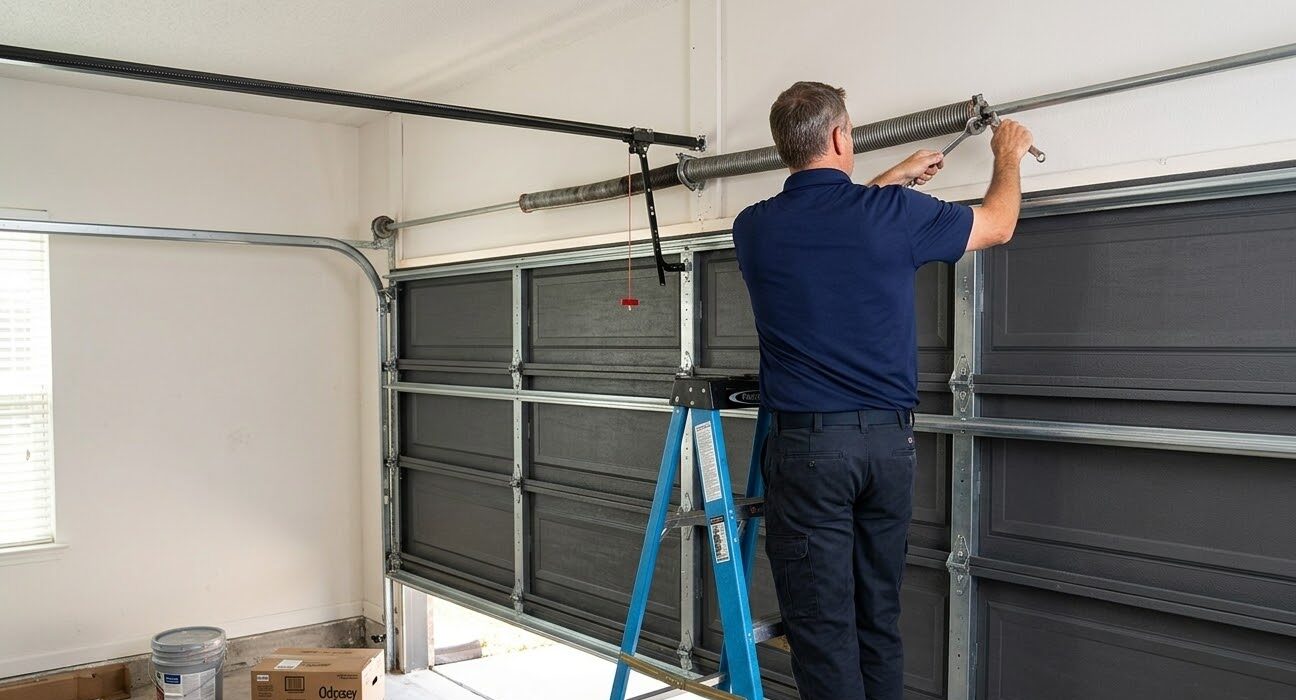
When the power comes back after a storm, it does not always come back clean. Surges and brownouts can damage the logic board, the receiver or the safety sensors. These are the signs that the outage did real damage.
| Symptom after the outage | Likely cause | What to do |
|---|---|---|
| Nothing happens, no lights at all | Tripped breaker or GFCI outlet, or a dead logic board | Reset the breaker and any GFCI outlet in the garage, check that the opener is plugged in |
| Opener hums but the door does not move | Trolley still disconnected, or a stripped gear | Reconnect the trolley, if it still hums, call for repair |
| Light blinks, door will not close | Safety sensors misaligned or damaged | Clean and realign the sensors, check the indicator lights |
| Wall button works, remotes do not | Lock mode, dead batteries or damaged receiver | Turn off lock mode, replace batteries, then reprogram |
| Door moves erratically or reverses randomly | Limits lost or board damage | Reset limits and force, then test with the 1-inch board |
If the breaker and outlet are fine and the opener is still dead or erratic, the logic board is the usual suspect. On an opener more than 10 to 15 years old, replacing the whole unit often makes more sense than replacing the board. Our garage door opener repair team carries common boards and can tell you which way makes sense. Plugging the opener into a surge protector rated for motor loads is a cheap way to reduce the risk next time.
If the sensors were affected, our guide to a blinking garage door sensor explains how to read the lights and realign them.
Battery Backup: What Happens During and After an Outage
Openers with a built-in battery backup keep running during an outage, which is exactly what you want in hurricane season. LiftMaster rates its 485LM backup battery for about 20 open and close cycles in a 24-hour period, depending on the opener model. When running on battery, many openers beep and run more slowly, and some will not run the light, to save power.
After the outage, the battery needs time to recharge, about four and a half hours for the 485LM. These batteries typically last one to two years before their capacity drops, and the opener will beep and show a warning light when replacement is due. If your opener beeps every so often after the power is restored, the battery backup is usually what is asking for attention.
Despite a claim that circulates online, Florida does not have a law that requires battery backup on garage door openers. We explain where that claim came from in our article on the Florida battery backup opener law. Battery backup is still one of the most practical upgrades a Polk County homeowner can make before hurricane season.
Hurricane Season: Garage Door Outage Plan
- Before the storm: Show everyone in the house where the red release cord is and how to use it safely. Test the battery backup by unplugging the opener and running it.
- During the outage: Release the door only when it is closed. If you need the car out before a storm, move it before the power goes.
- Lock it: A released door is not locked by the opener. Use the manual slide lock if your door has one, or keep it closed and secured from inside.
- After the storm: Check for spring, cable and panel damage before reconnecting the opener. Look at the track for bends from wind pressure.
When to Call for Help
Most power outage problems are a reconnect and a test. Call a technician when the door fails the lift test, when a spring or cable is visibly damaged, when the opener is dead after you have checked the breaker and outlet, or when the door will not reverse on the 1-inch board after you reset limits and force.
Rocket Garage Door Services works Lakeland, Winter Haven, Haines City, Bartow and the rest of Polk County. After storms we prioritize doors that will not close or are stuck open. Homeowners in Lakeland and Winter Haven can usually be scheduled within a day or two, and urgent cases go through our emergency garage door service.