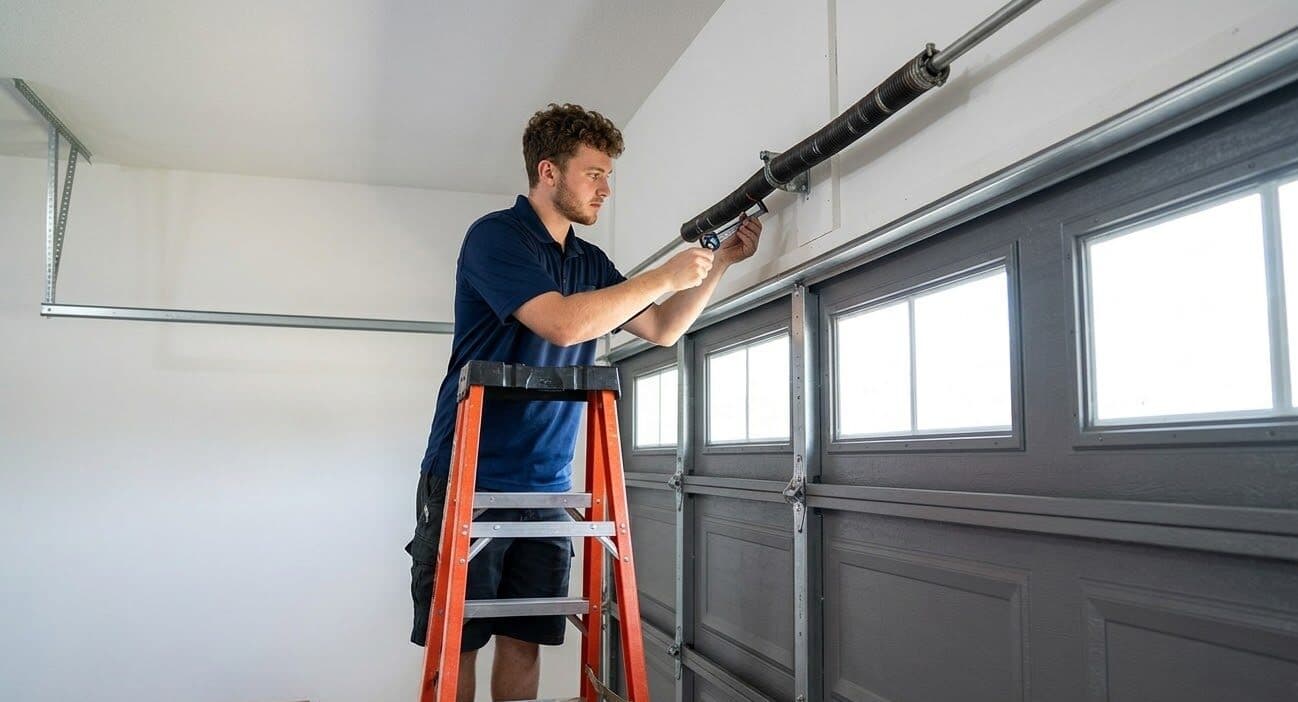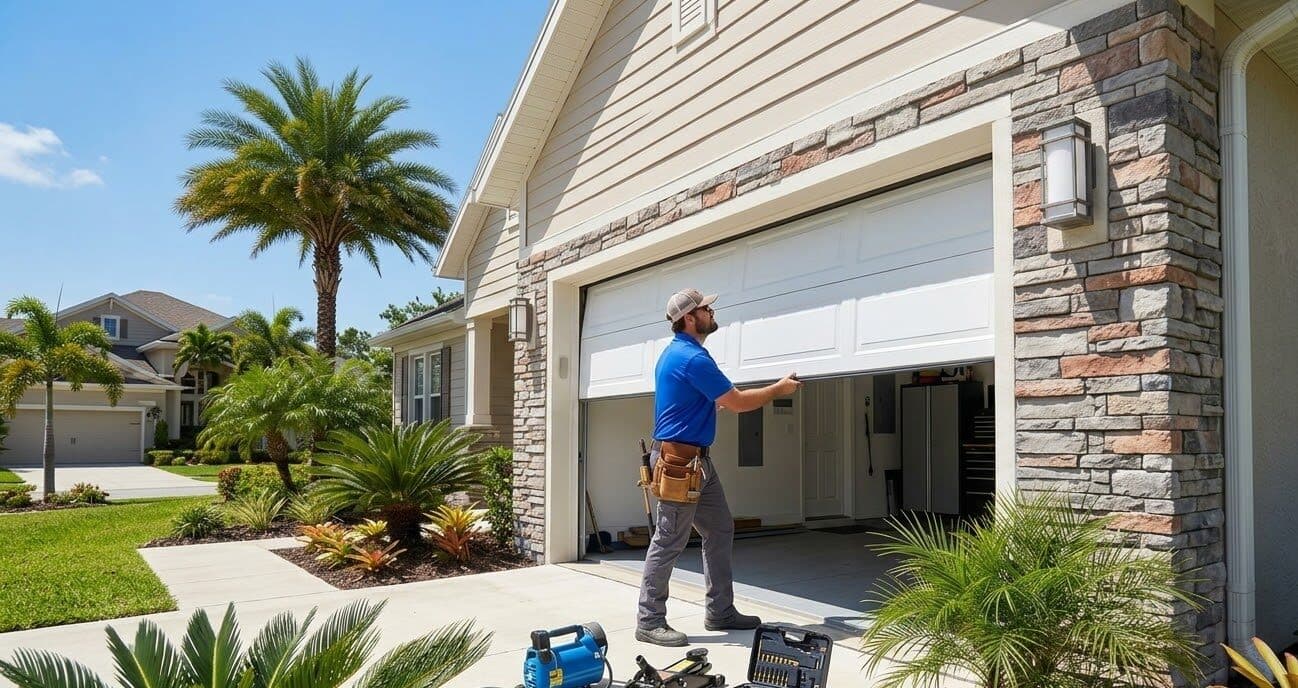
Standard Garage Door Sizes at a Glance
Garage doors are sold in a small set of standard sizes, and almost every house in Central Florida was framed around one of them. Knowing which one you have tells you how fast a replacement door can arrive, what it will cost and whether an upgrade, like a taller door for a lifted truck, is a simple swap or a framing job. This guide lists the standard single, double and RV sizes, explains what each one actually fits and covers the Florida detail that changes the conversation: the bigger the door, the harder the wind pushes on it.
Garage door sizes are always written width first, then height, in feet. A 16x7 door is 16 feet wide and 7 feet tall. Here are the sizes you will see on most quotes, based on the size ranges published by Clopay, one of the largest residential door manufacturers in the country:
- Single-car, most common: 8x7 and 9x7. Single doors range from 8 to 10 feet wide.
- Single-car, taller: 8x8 and 9x8, since 8-foot-tall doors are widely available.
- Double-car, most common: 16x7. Double doors typically run from 12 to 18 feet wide.
- Double-car, wider or taller: 18x7, 16x8 and 18x8 for full-size trucks, SUVs and three-row vans.
- Tall and RV: 9 and 10 feet tall for lifted vehicles, and 10, 12 or even 14 feet tall for RVs and oversized vehicles.
- Extra-wide: up to about 20 feet wide by special order for garages with high ceilings.
Seven feet is the standard height for most residential garage doors. If you remember only one number from this guide, remember that one, because it is the reason so many Florida homeowners with full-size trucks and roof racks end up asking about taller doors.
Single Garage Door Sizes: 8x7, 9x7 and When to Go 10 Feet
A single garage door covers one parking space. The two sizes you will find on most older Polk County homes are 8x7 and 9x7. The 8-foot width shows up most often on older homes, built when cars were narrower. Newer houses tend toward 9 feet, and that extra foot matters more than it sounds.
- 8x7: fits a compact or midsize car with room to open the doors once inside. Mirrors on a full-size pickup or a large SUV can get uncomfortably close to the jambs on an 8-foot opening, which is why scraped mirrors and dented trim are so common in older garages.
- 9x7: the most common single size today. It handles most SUVs and half-ton trucks if the driver pulls in straight.
- 10x7 and 10x8: the upper end of the single range. A 10-foot width gives real clearance for wide trucks and for drivers who are not perfectly centered every time.
- 8x8 and 9x8: the same widths with an extra foot of height, useful for vans, roof racks and trucks with a lift kit.
Some Florida homes also have narrow doors on a separate bay, often used for golf carts, mowers or bikes. These are less standardized, so they usually need the opening measured and a quote from the manufacturer's size list rather than an off-the-shelf door.
Double Garage Door Sizes: Why 16x7 Rules and When 18 Feet Wins
A double garage door covers two parking spaces with one door. The 16x7 is the dominant size in Florida subdivisions, and it is the size most door lines are stocked in. That has two practical benefits: shorter lead times and more choice of styles, colors and insulation levels.
- 16x7: the standard two-car door. Two midsize vehicles fit side by side, but there is not much room between them, and two full-size trucks are a tight squeeze.
- 18x7: the upgrade most families ask about. Clopay's guidance is that homeowners opt for wider double doors, up to 18 feet, and the extra two feet are what let a full-size truck and an SUV park without folding mirrors.
- 16x8 and 18x8: the same widths with more height, for lifted trucks, roof boxes and high-roof vans.
- 12x7 and 14x7: smaller doubles found on some older and custom homes. They fit one large vehicle comfortably or two very small ones.
One question that comes up on every two-car garage: one double door or two single doors? Two singles leave a center post between the bays, which makes parking more forgiving and keeps one bay closed when the other is open. They also mean two openers and more hardware to maintain. A single double door is cheaper to buy and service and gives a wider clear opening for moving furniture or a boat trailer. Neither is wrong. The deciding factor is usually the framing already in place, since removing or adding a center post is a structural change.
RV and Tall Garage Door Sizes
RV garages and detached shops are where standard sizing ends. Clopay notes that it is not unusual to see doors 10, 12 or even 14 feet tall for RVs and oversized vehicles. The right size starts with the vehicle and the law that governs it.
Florida Statutes section 316.515 sets the maximum width of a vehicle on Florida roads at 102 inches, excluding safety devices like mirrors, and the maximum height at 13 feet 6 inches. Those two numbers are the outer envelope of what any road-legal RV or trailer can be, which makes them a useful starting point:
- Width: 102 inches is 8 feet 6 inches. A 12-foot-wide door leaves room for mirrors and for steering in at a slight angle. Many RV owners choose 12 or 14 feet.
- Height: a Class A motorhome built close to the legal limit, with an air conditioner and antenna on top, can need a door 14 feet tall. Smaller Class C and travel trailers often fit through 12 feet.
- Measure the real vehicle: check the manufacturer's listed height, then measure to the highest point on the roof, including air conditioners, vents, satellite domes and ladders. Add clearance for suspension movement when the vehicle rolls over the threshold.
Tall doors also need a garage that can hold them open. A 14-foot door needs a ceiling high enough for the door to lift, plus room for the spring system, the track and the opener. In most cases that means a high-lift or vertical-lift track and a commercial-duty or jackshaft opener. If you are building a new RV garage or a shop, the door size should be decided before the walls are framed, not after.
What Each Size Actually Fits: A Quick Reference
Vehicle sizes vary by model and year, so treat this as a planning guide and measure your own vehicles with the mirrors out:
- Compact and midsize cars: fit easily through an 8x7 single or two-up through a 16x7 double.
- Midsize SUVs and minivans: fit a 9x7 single. Two of them fit a 16x7 double with care.
- Full-size SUVs and half-ton pickups: fit a 9x7 single if the driver is careful. A 10-foot single or an 18-foot double gives real breathing room.
- Lifted trucks and vans with roof racks: start at 8 feet tall. Measure the highest point, including racks and light bars.
- Boats on trailers: measure the tallest point, usually the windshield, the T-top or the outboard in tilted position, and check the width of the trailer fenders.
- RVs: plan around 12 to 14 feet wide and 12 to 14 feet tall, based on the actual vehicle.
A simple test before you commit to a size: tape a line on the driveway at the width you are considering and pull in a few times. If it feels tight on the driveway, it will feel tighter inside, where there are walls on both sides and a step or a freezer in front of the bumper.
How Florida Wind Codes Change the Size Question
In most of the country, a bigger garage door is just a bigger garage door. In Florida, it is also a bigger sail. Wind load on a door grows with its area, and a 16x7 door has 112 square feet of surface, compared with 63 square feet for a 9x7. That is why the Florida Building Code requires garage doors to carry a design pressure rating suited to the house, its location and the opening, and why a wider or taller door needs more reinforcement, stronger struts and heavier track to earn the same rating.
Two practical effects follow from that. First, an 18-foot or RV-size door costs more than its extra area alone would suggest, because the reinforcement scales up with it. Second, any change in size is a change in what the building department needs to approve. Our hurricane-rated garage door code guide explains design pressure and impact ratings in detail, and our hurricane reinforcement and wind upgrade service covers bracing and upgrades for existing doors.
Standard Sizes Versus Custom Sizes
A standard size is a size the manufacturer builds as a regular catalog item. A custom size is anything in between, such as a door a few inches taller, an extra-wide door or a door shaped to fit an unusual opening. Clopay says it offers a range of custom sizes for residential projects, and most major manufacturers do the same.
- Lead time: standard sizes in popular styles are often in stock at distributors or ship quickly. Custom sizes are built to order and take longer.
- Price: custom doors cost more, and the wind rating has to be verified for the exact size.
- Style choice: some designs and window layouts are only offered in standard widths.
Older Florida homes sometimes have openings that are slightly off standard, for example an opening that measures 8 feet 2 inches because the original door was set into an older frame. In those cases the installer can usually build out the jambs to a standard size, which is faster and cheaper than ordering a custom door. When a homeowner wants a truly different look or an unusual size, our custom garage door service handles those builds from measurement to installation.
Can You Change the Size of Your Garage Door Opening?
Yes, but it is a structural project, not a door swap. Making an opening wider means removing part of a wall and installing a longer header that can carry the load above it. Making it taller means raising the header or cutting into the space above it. On a typical Florida home with concrete block walls, that means cutting block and adding a properly designed beam, and on many homes it also means engineering and a permit.
- Two singles into one double: the center post comes out and a new header spans the full width. This is one of the most requested changes when families move to full-size vehicles.
- 8 feet to 9 or 10 feet wide: common on older homes with narrow single doors.
- 7 feet to 8 feet tall: possible when there is enough wall above the opening and enough headroom inside for the track and springs.
Before you plan a change, check the inside of the garage as well as the outside. A taller door needs more headroom, and a wider door needs side room on both ends for the vertical tracks. Our guide on how to measure a garage door walks through headroom, side room and backroom minimums. When the opening itself has to change, our garage door structural modification service handles the framing side before the new door goes in.
What Standard Sizes Cost to Replace in Polk County
Size is the first factor in price, and standard sizes are the cheapest way to get a quality door. Based on the 2026 installed pricing in our cost guides for Central Florida:
- Single-car, about 8x7 or 9x7: roughly $1,200 to $1,800 installed for a basic wind-rated steel door, rising with insulation, windows and style.
- Two-car, about 16x7: roughly $1,800 to $2,800 installed for a standard wind-rated steel door.
- Wider, taller and RV doors: quoted individually, because reinforcement, track and opener requirements change with the size.
The full breakdown by material, insulation and wind rating is in our new garage door cost guide. If you are moving to a larger or heavier door, the opener may need to change too. A tall or heavy door can outgrow a light-duty opener, and our opener installation service matches the motor to the door.
Getting the Right Size Installed
Most replacements in Central Florida are simple: the opening is already a standard size, and the new door matches it. The job gets more involved when the homeowner wants a bigger door, the opening is slightly off standard, or the vehicle has changed since the house was built. In every case, the installer should measure the opening, check headroom and side room, confirm the wind rating required for the address and pull the permit where the city or county requires one.
Our garage door installation service starts with an on-site measurement and a size recommendation based on the vehicles you actually drive. We install across Polk County, including garage door installation in Lakeland, garage door installation in Winter Haven and homes in Haines City. Call (863) 624-3191 and we will help you pick the right size the first time.