

Why Lubrication Is the Cheapest Garage Door Repair You Will Ever Do
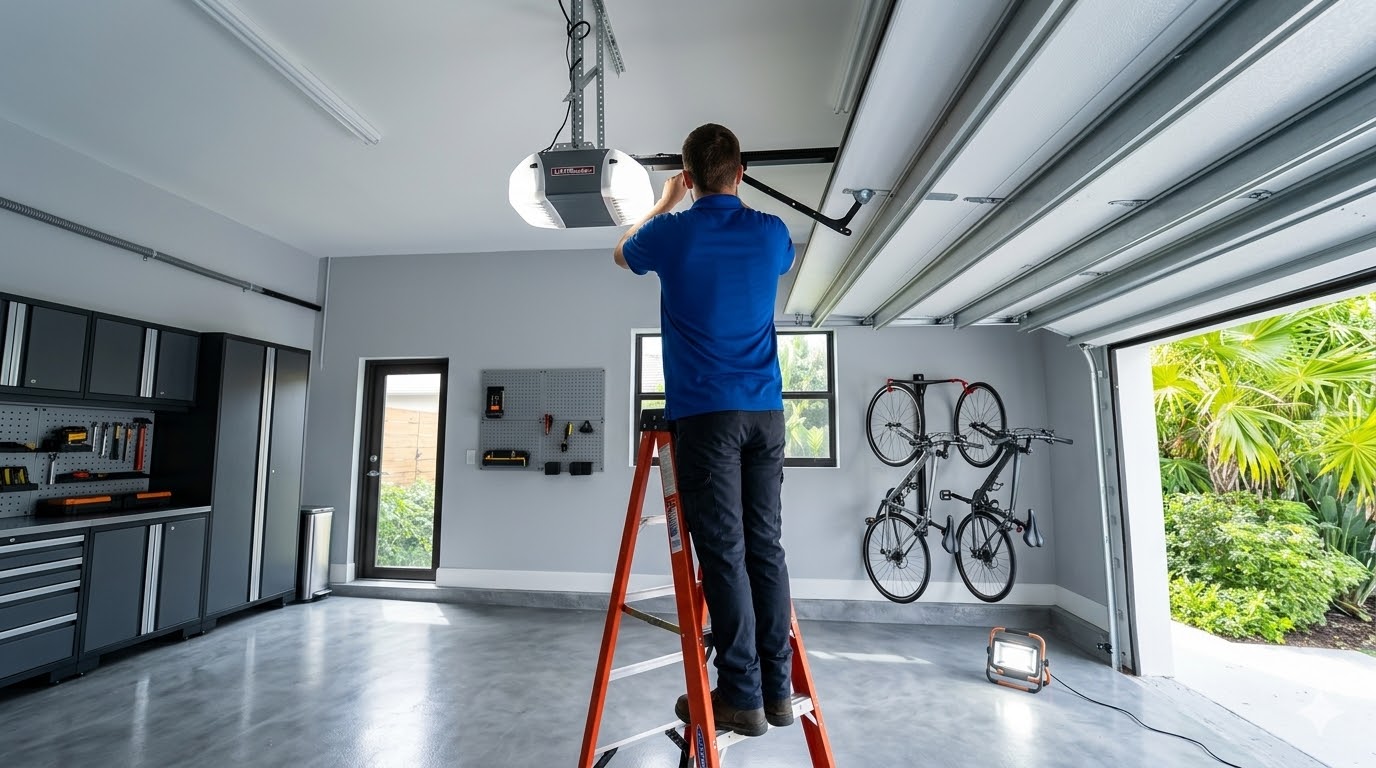

A garage door has dozens of moving metal parts: rollers spinning on bearings, hinges pivoting at every panel joint, a torsion spring winding and unwinding over the opening, and an opener pulling the whole assembly up and down. Every one of those parts wears faster when it runs dry. A few minutes with the right can of lubricant once or twice a year keeps the door quiet, takes load off the opener and slows the wear that eventually turns into a roller replacement or a spring call.
The catch is that most people grab the wrong product or put it in the wrong place. The household penetrating spray in the kitchen drawer is the most common mistake, and greasing the tracks is the second. This guide covers what to use, what to skip, exactly where the lubricant goes, how often to do it in Central Florida and which parts you should never touch.
One safety rule before you start: the torsion spring, the lift cables and the bottom brackets hold the full weight of the door under high tension. A light coat of lubricant on the spring coils is fine. Loosening, adjusting or prying on any of those parts is not a homeowner job.
What to Use: Silicone vs Lithium Grease
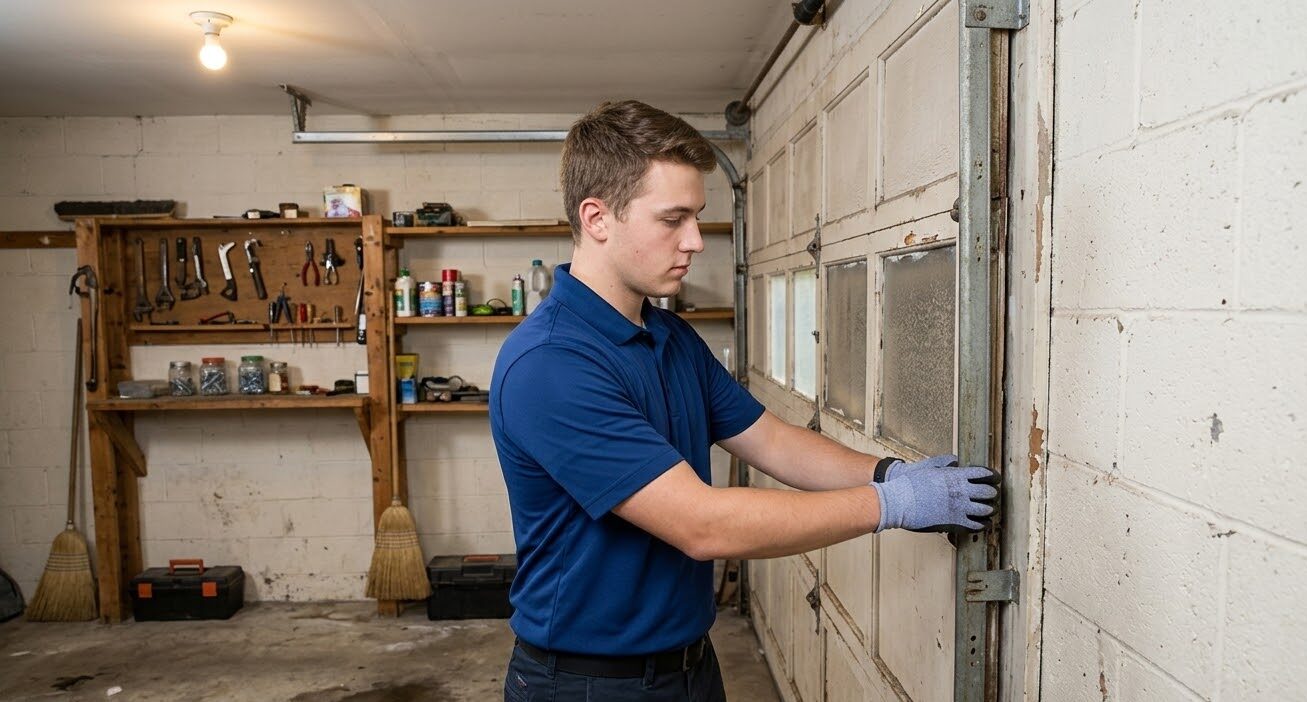
There are two product families that work well on a residential garage door, and both are sold labeled as garage door lubricant.
- Silicone-based spray: A thin, clean film that does not attract much dust or sand and does not gum up in heat. It is the easiest product for rollers, bearings and hinges, and Chamberlain, the maker of LiftMaster and Chamberlain openers, has long pointed homeowners to silicone or a dedicated garage door lubricant for these parts.
- White lithium grease (spray or tube): Thicker and longer lasting, and it clings to surfaces that move under load. Chamberlain's own maintenance guidance calls for a thin layer of white lithium grease on the opener rail where the trolley slides, on models that need rail lubrication. Spray versions also work on hinge pivots and spring coils, but apply them lightly, because thick grease collects grit.
- Dedicated garage door lubricant: Many brands sell a can labeled specifically for garage doors, usually a silicone or lithium blend with a straw applicator. If you only want one product, this is the simplest choice.
In Florida, silicone spray is the better everyday choice for the door itself. Summer garages get very hot, heavy grease softens and drips, and the sand and dust that blow into a garage stick to anything tacky. Keep lithium grease for the opener rail if your manual calls for it.
What Not to Use (Including WD-40)
- Classic WD-40 and other penetrating sprays: The original WD-40 formula is a water displacer and cleaner. It loosens rust and frees a stuck part, but it is not a long-term lubricant. It can wash out whatever grease is left in a bearing, and the squeak comes back within weeks. Use it to clean a rusty hinge if you need to, then follow with a real lubricant. The same company sells separate silicone and white lithium products that do work, so read the label, not the brand.
- Motor oil and household oil: Thin oil runs off, drips on the floor and on your car, and collects dirt.
- Heavy automotive or wheel-bearing grease: Too thick for hinges and rollers. It traps sand and turns into a gritty paste, which is a real cause of rollers skidding in the track.
- Anything on the tracks: The tracks should be clean and dry. Lubricant in the track makes rollers slide instead of roll and holds the dirt that wears them out.
Where to Apply It: Part by Part
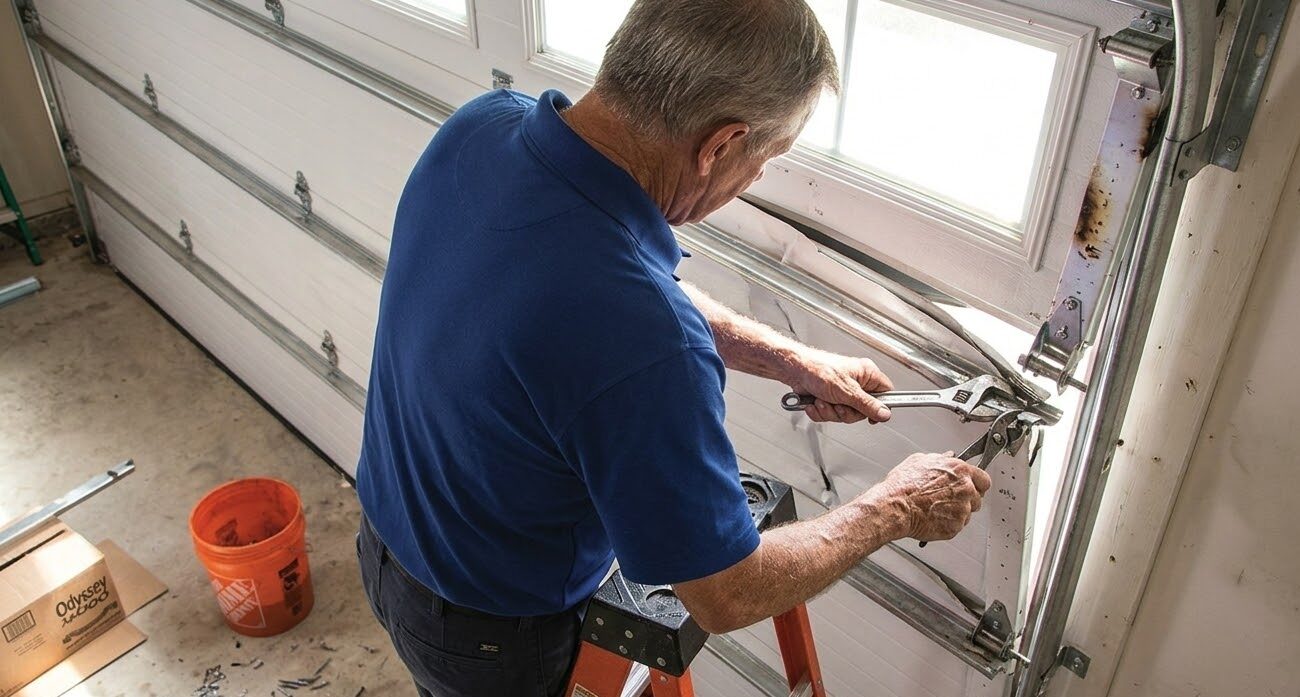
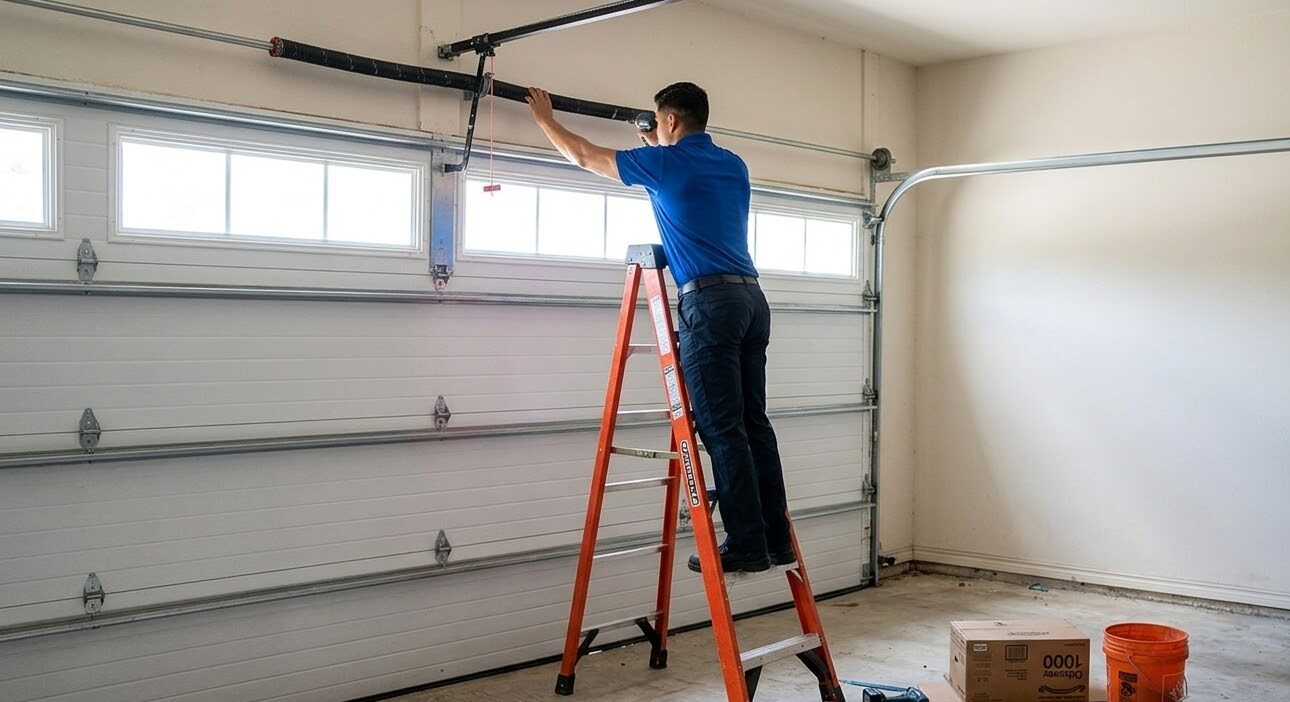
Close the door and unplug the opener or pull the emergency release so nobody runs the door while your hands are near it. Lay a rag or cardboard under the door to catch drips. Then work through the parts in this order.
- Rollers: Spray a short burst into the bearing at the center of each roller, where the stem meets the wheel. On steel rollers you can hit the bearing directly. On nylon rollers, aim only at the bearing and keep lubricant off the nylon wheel itself. Rollers with no bearing at all, a plain nylon or plastic wheel on a stem, gain little from lubricant and are usually the ones worth upgrading.
- Hinges: Each hinge between the panels has a pivot point. Spray the pivot where the two leaves meet. Steel hinges get lubricant; plastic hinges do not need it.
- Torsion spring: With the door closed, lightly spray along the length of the spring coils so the film reaches between them. This keeps rust off the wire and stops the coils from grinding against each other. Do not touch the winding cones or the set screws.
- Bearing plates and center bearing: At each end of the spring shaft there is a bearing plate, and many doors have a center bearing next to the spring. A short spray into each bearing.
- Lock and arm bar: If the door has a manual lock, a light spray into the mechanism keeps it from seizing.
- Opener rail: Only if the manual for your opener calls for it. Chamberlain's guidance for those models is to disconnect power, wipe off old grease and apply a thin layer of white lithium grease where the trolley moves, about every two to three years.
Once everything has a light coat, plug the opener back in and run the door up and down three or four times. That spreads the lubricant through the bearings and hinges. Then wipe off anything that dripped, especially on the roller stems and the face of the door, because excess lubricant is what grabs dust.
What Not to Lubricate
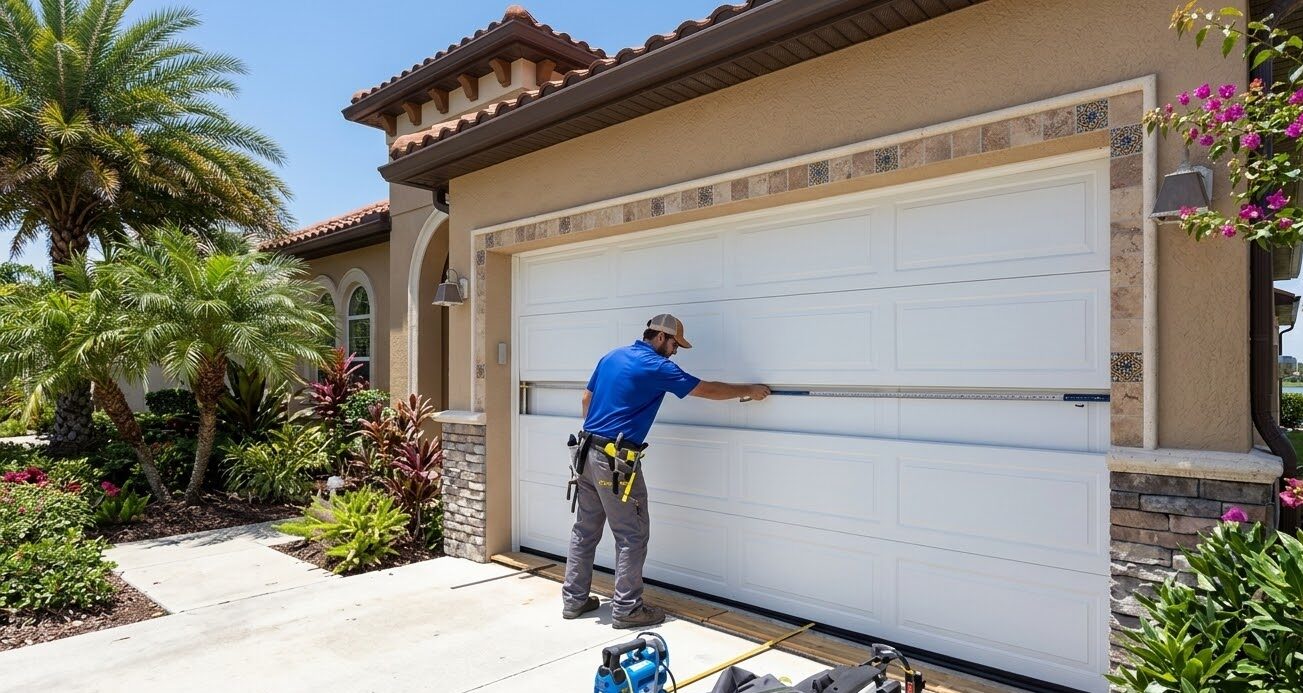
- The tracks: Wipe them out with a dry rag or a rag lightly dampened with a household cleaner to remove dirt, old grease and dead insects. Leave them dry.
- The lift cables: Never lubricate, pull or adjust the cables while the door is under tension. A frayed cable needs a technician.
- Belt-drive openers: The belt does not need lubrication.
- Nylon roller wheels and plastic hinges: Lubricant on plastic does nothing useful and attracts dirt.
- Weather seals: The bottom seal and side seals are rubber or vinyl. If they stick to the floor, clean them; a silicone protectant made for rubber is the only product that belongs there.
How Often to Lubricate a Garage Door in Central Florida

Chamberlain's general schedule lists lubricating the rollers, bearings and hinges once a year, with the opener rail every two to three years when the model needs it. That is a reasonable baseline for a mild climate. Polk County is not mild. Garages run very hot through the summer, humidity is high most of the year, afternoon storms bring moisture, and fine sand gets into everything. Heat dries the film faster and humidity brings surface rust to steel hardware.
For most Lakeland, Winter Haven and Bartow homes, twice a year is the better rhythm: once before the summer heat and rainy season, and once in the fall. Homes closer to the coast, or a door that opens and closes many times a day, may need it more often, and our guide on salt air corrosion on Florida garage doors covers why. A good habit is to pair lubrication with the rest of the routine in our Polk County garage door maintenance checklist.
Run the Safety Tests While You Are There

Lubrication is a good moment to do the two monthly safety checks the opener manufacturers recommend, because the door is already off and you are already looking at it.
- Reversal test: Put a 1.5 inch object, like a piece of 2x4 laid flat, on the floor in the door's path and close the door. It should reverse when it touches the object. If it does not, stop using the automatic close and have the opener force and limits adjusted.
- Photo eye test: While the door is closing, pass something through the beam between the two sensors near the floor. The door should stop and reverse. If it does not, the sensors may be dirty or out of alignment.
- Balance check: With the opener disconnected, lift the door by hand to about waist height and let go. A balanced door stays roughly in place. If it slams down or shoots up, the spring tension is off, and that is a job for garage door spring service, not for a wrench.
When Lubrication Does Not Fix the Noise
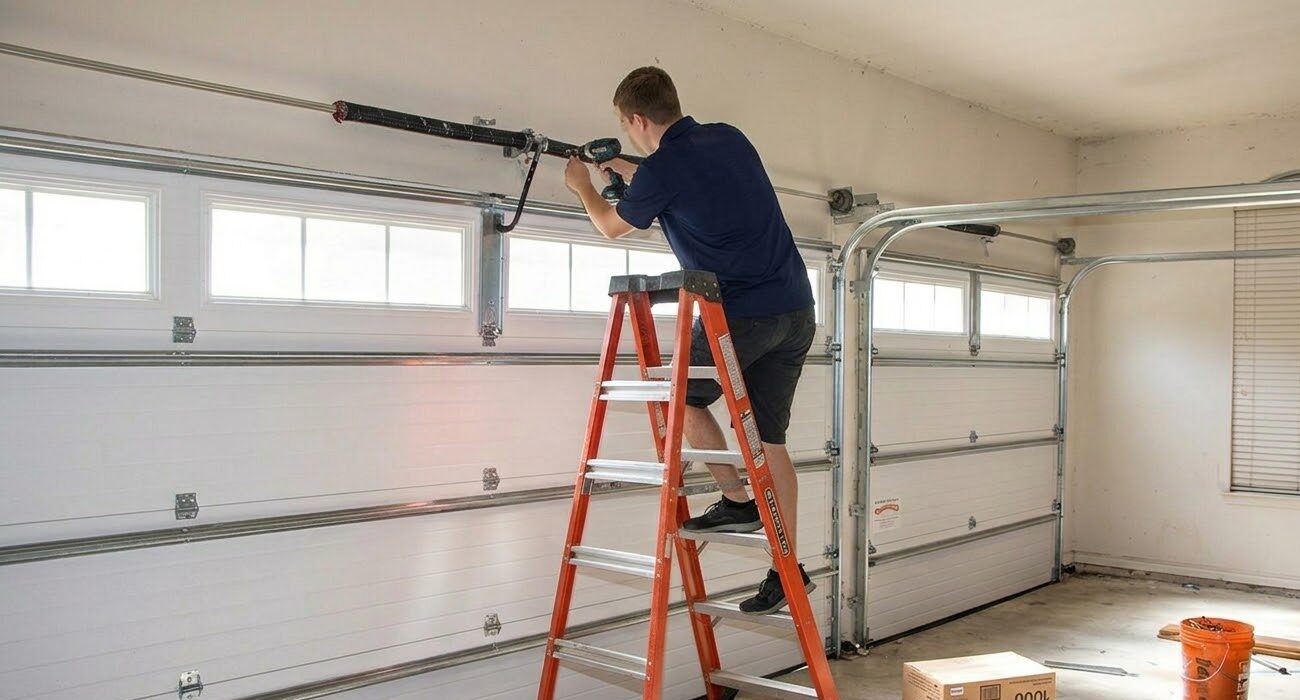
If the door still squeaks, grinds or shakes a few weeks after a proper lubrication, the lubricant is probably masking wear rather than solving a dry part. Common signs:
- Wobbling or cracked rollers: A roller that tilts in the track or has a flat spot needs roller replacement. Upgrading to nylon rollers with sealed bearings is the single biggest noise improvement on most doors.
- Cracked or loose hinges: A hinge with a worn pin or a crack around the screw holes will keep popping and squeaking. Hinge replacement is quick and inexpensive.
- Grinding in one spot: A dent or bend in the track, or a loose track bracket, will grind no matter how much you lubricate. That points to garage door track repair.
- A loud bang: Often a broken spring. Stop using the door and do not run the opener.
Our guide to why a garage door gets loud matches each sound to its cause if you want to narrow it down before calling.
DIY or a Tune-Up Visit?
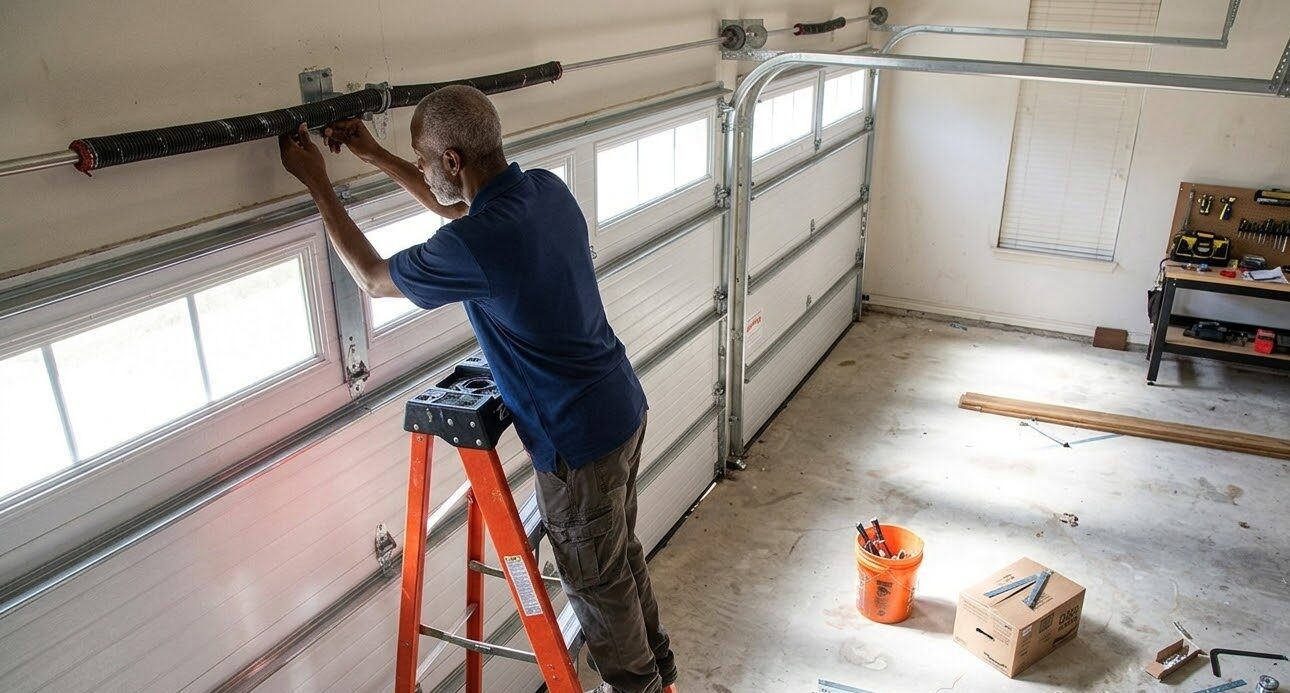
Lubricating a garage door is a real homeowner job. It takes 15 to 20 minutes, a can of the right product and a step ladder. Where a professional visit adds value is everything around it: checking the spring balance and cycle wear, inspecting the cables at the drums, tightening hardware that vibration has loosened, testing and adjusting the opener force and limits, and catching a worn roller before it jumps the track.
A garage door tune-up and maintenance visit covers all of that in one trip, and the garage door noise reduction service focuses on doors that are loud even after lubrication. Rocket Garage Door Services handles both across Polk County, including garage door service in Lakeland and Winter Haven.


