Two Authorities, and Only One of Them Is Negotiable

A garage door in a Florida deed-restricted community answers to two masters. The building code decides whether the door is legal. The homeowners association decides whether it is allowed to look the way you want. Those are separate reviews with separate consequences, and homeowners get in trouble by treating them as one.
The code side is not negotiable and no board can waive it. Your door has to carry a design pressure rating that meets the calculated pressure for that opening, and in the wind-borne debris region it also has to meet impact requirements. That determination comes from your site wind speed, exposure and opening size, and we walk through it in the Florida hurricane-rated garage door code guide.
The HOA side is negotiable, and it is also more limited than most boards behave as if it is. Florida statute puts real boundaries on what an association may enforce, how it must apply its own standards, and what it can charge you when it decides you violated them. Knowing those boundaries before you submit an architectural request is the difference between a two-week approval and a six-month argument.
What the Statute Actually Says About Board Authority

Section 720.3035 of the Florida Statutes is the governing provision for architectural control in homeowners associations, and its central rule is narrower than most people expect. The authority of an association, or of any architectural or similar committee, to review and approve the location, size, type or appearance of a structure or improvement on a parcel, or to enforce standards for external appearance, exists only to the extent that authority is specifically stated or reasonably inferred in the declaration of covenants or in published guidelines and standards authorized by the declaration.
Read that again, because it is the single most useful sentence a homeowner can know. A committee cannot invent a garage door standard. If the declaration and the published guidelines say nothing about garage door color, panel style or windows, the committee does not acquire that authority by preference or by tradition.
The statute also requires standards to be applied in a reasonable and equitable way. In practice that means a board that approved a neighbor's dark bronze door two years ago has a serious problem denying yours on aesthetic grounds today. Precedent inside the community is evidence, and it is worth documenting before you submit.
Your first move on any garage door project in a deed-restricted community is therefore documentary, not commercial. Pull the declaration and the current architectural guidelines and read the sections on exterior appearance, approved colors and materials. If it is not in there, it is not enforceable.
The Statute That Does Not Help You Here
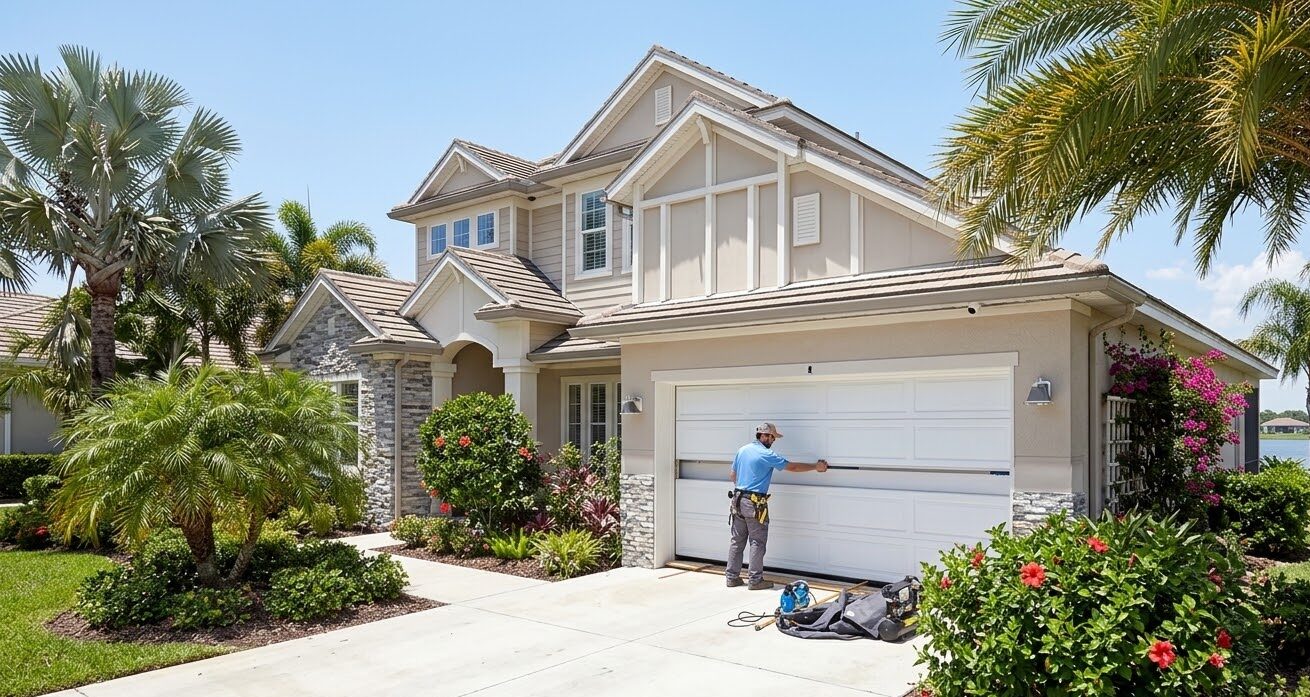
Homeowners often bring up Section 720.3045, passed in 2023, which bars associations from restricting the installation, display or storage of items on a parcel that are not visible from the parcel's frontage or from an adjacent parcel, including things like artificial turf, boats and recreational vehicles.
It is a genuinely useful statute, and it does not apply to your garage door. A garage door faces the street by definition. It is visible from the frontage, which places it squarely inside what the association may regulate if the declaration grants that authority.
The practical consequence is that garage door approval is a real review and not a formality you can argue your way past. Plan for it in your project timeline. What that statute does affect is the interior of the garage and what you keep in it, which is a separate conversation entirely.
The Three Things Boards Actually Regulate

Across Florida communities, garage door architectural standards almost always come down to three items. Everything else is detail.
- Color: The most commonly regulated element by a wide margin. Most guidelines either name an approved palette or require the door to match the house trim, the body color, or the front door.
- Panel style and material: Raised panel, flush, carriage house and modern full-view doors read very differently from the street. Many guidelines specify the acceptable style, and communities with a defined architectural theme are the strictest here.
- Windows: Whether the top section may have glass, and if so what pattern and glazing. Some guidelines allow windows, some prohibit them, and some allow them only if they match the window grid pattern on the house.
Three color families clear review most easily in Florida communities: white, a warm neutral in the almond and sandstone range, and a color drawn directly from the home's existing trim or body palette. That is not a legal rule, it is a pattern, and it holds because those choices align with how most guidelines are written in the first place.
Where homeowners run into denials is with high-contrast statement colors, wood-look finishes in communities with a uniform stucco palette, and full-view aluminum and glass doors in traditional neighborhoods. None of those are inherently prohibited. They simply need to be checked against the written guideline before you order, because a custom door is not returnable. Our custom garage door service starts with that guideline review for exactly this reason.
How to Get Approved the First Time
Architectural applications get denied for incomplete information far more often than for genuine aesthetic conflict. A complete submission is straightforward to assemble and it removes the committee's easiest reason to defer a decision.
- Manufacturer specification sheet: Model, panel style, and the exact color name from the manufacturer's palette rather than a generic description.
- A photograph of the current front elevation: The committee needs to see the door in the context of the house.
- A rendering or product photo of the proposed door: Most manufacturers publish visualizer images that are perfectly adequate.
- The window pattern, if applicable: Shown, not described.
- Contractor license and insurance information: Many communities require it as part of the application.
- Reference to the guideline section you are complying with: A single line citing the approved color list or style section makes approval easy to grant.
Two scheduling notes matter in Florida. First, committees often meet monthly, so a submission that misses a meeting date effectively costs a month. Second, storm season compresses everything, because after a wind event both the roofing and door trades and the review committees are handling volume. If your door needs replacing and you are not under an emergency, submitting in the dry season moves faster.
Never order a custom door before you have written approval in hand. Verbal approval from a board member is not approval, and a special-order door in the wrong color is a very expensive lesson.
What Happens if You Skip Approval: Fines Under HB 1203

House Bill 1203 took effect July 1, 2024, and it changed how Florida homeowners associations fine members under Chapter 720. The limits are specific and worth knowing before a dispute starts.
- Fine cap: A fine may not exceed $100 per violation against a member or a member's tenant, guest or invitee, unless the governing documents provide otherwise.
- Aggregate cap: The fine may not exceed $1,000 in the aggregate, again unless the governing documents provide otherwise.
- Lien threshold: A fine of less than $1,000 does not become a lien against the parcel.
- Hearing notice: Under Section 720.305, you are entitled to at least 14 days written notice before the hearing.
- Independent committee: The hearing is held before a committee independent of the board, not before the board itself, and the hearing must occur within 90 days of the notice.
Two cautions. The phrase unless the governing documents provide otherwise matters, because a declaration can set different amounts. And a fine is not the only remedy available to an association. A board can also pursue compliance through other means, including litigation, and the cost of that dispute usually exceeds the price difference between the door you wanted and the door the guideline allowed.
The straightforward conclusion is that the approval process is cheaper than the fight, even when you are right about the statute.
When the Building Code Overrides the Board
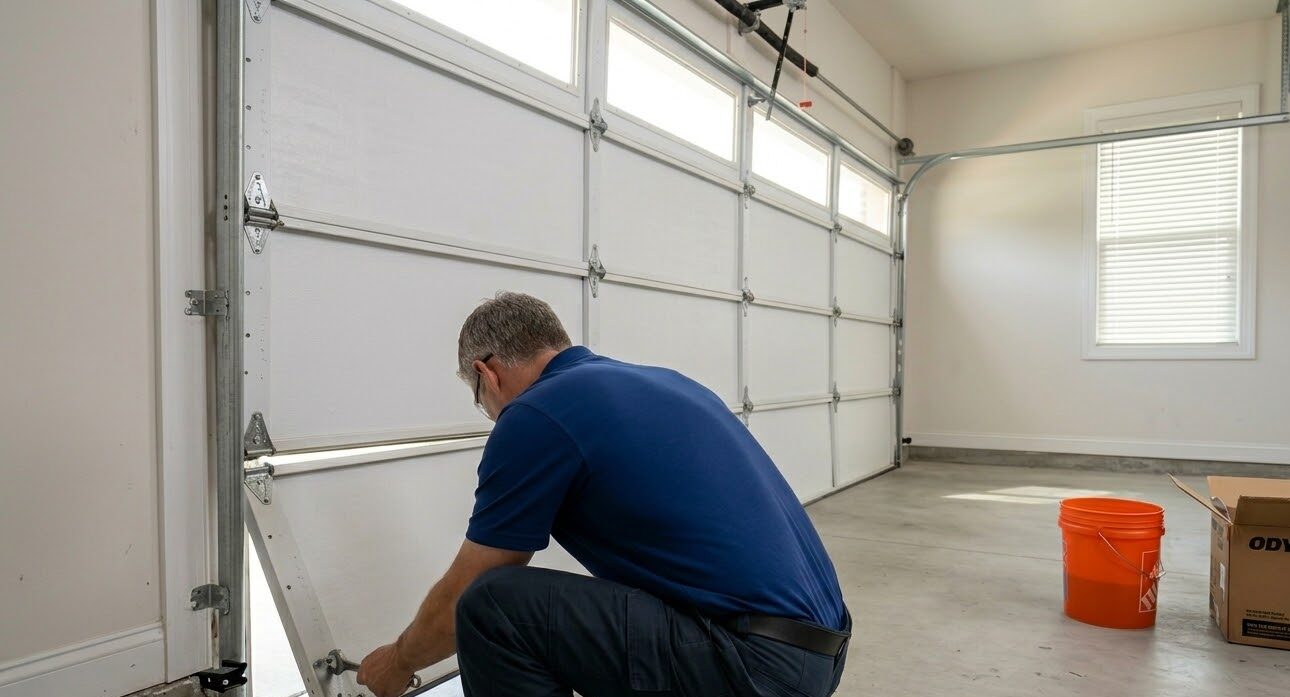
There is one category where the association simply does not get the final word. If your address requires a door with a specific design pressure rating, or falls in the wind-borne debris region and requires impact protection, no architectural guideline can require you to install a door that fails those requirements.
In practice the conflict is rarely head-on, because hurricane-rated doors are manufactured in the same colors and styles as standard doors. The conflict shows up in details: a full-view glass door that cannot achieve the required rating, a decorative hardware package that voids a rating, or a window insert that is not available in an impact-rated version.
The way to handle it is to bring the code requirement into the application from the start. Submitting a rated door with its specification sheet, alongside a note that the rating is a code requirement for the opening, converts what could have been an aesthetic argument into a compliance question. Committees approve those quickly, because they do not want to be on record denying a code-required product.
Permits are the other half. Garage door replacement generally requires a permit in Florida jurisdictions, and the permit and the HOA approval are separate processes that run in parallel. Neither substitutes for the other, and a licensed installer handles the permit side as part of the job.
Repairs, Paint and Partial Work
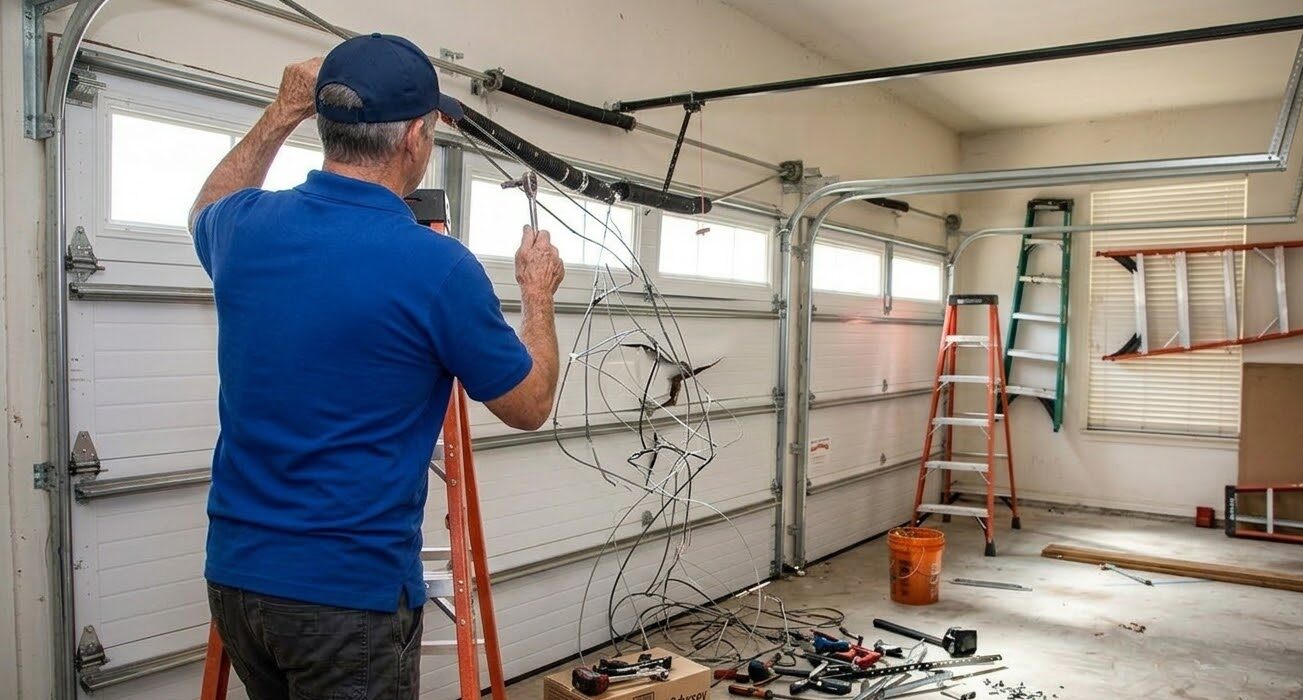
Not every garage door project triggers a full architectural review. Where the line sits depends on your declaration, but the practical pattern across Florida communities is consistent.
- Mechanical repair: Springs, cables, rollers, opener replacement and track work are almost never architectural matters, because nothing visible from the street changes.
- Repainting in the existing approved color: Usually treated as maintenance rather than a change, though some guidelines require notification anyway.
- Repainting in a different color: An architectural change requiring approval, even though no new door is installed.
- Adding or removing windows: Always an architectural change.
- Full door replacement: Always subject to review where the declaration grants authority over exterior appearance, even when you are installing an identical door.
That last case surprises people. Replacing a door with the same model in the same color still commonly requires a submission, because the association is approving the change event and not just the outcome. It is normally a fast approval, and it is worth the ten minutes to file. If the underlying problem is mechanical rather than cosmetic, start with the diagnosis instead: the signs that point to spring replacement cover the most common failure that gets mistaken for a door problem.
The Order That Saves You Money

Sequence the project this way and the friction largely disappears. Pull the declaration and the current architectural guidelines first. Confirm what the code requires for your specific opening second, since that constrains your product options. Select a door that satisfies both, assemble a complete architectural application, and submit it before ordering anything. Get written approval, then order, then permit and install.
Done in that order, the HOA is a two-week administrative step. Done backward, it is a special-order door sitting in a garage while a committee meets next month.
Rocket Garage Door Services installs and services doors across Polk County, including Lakeland, Winter Haven and Haines City, and a large share of those homes sit in deed-restricted communities. We provide the specification sheets and product images your committee needs as part of the quote. Call (863) 624-3191 or explore garage door installation to get started, and if you are still choosing a style, how to choose the right garage door in Florida is the place to begin.