A Loud Garage Door Is Telling You Something
Most garage doors do not go from quiet to loud overnight. The noise builds over months: a squeak that shows up in the morning, a grinding that gets worse in August, a bang at the end of every close that the family stops noticing. By the time someone asks why the garage door is so loud, the door has usually been asking for attention for a while.
The good news is that garage door noise is one of the most diagnosable problems in the house. Each part makes its own kind of sound when it wears, and if you listen for what the door is doing, you can usually narrow the cause down to two or three parts before you touch a tool. This guide walks through the common sounds, what causes each one, what a homeowner can safely fix and which noises mean you should stop using the door and call a technician.
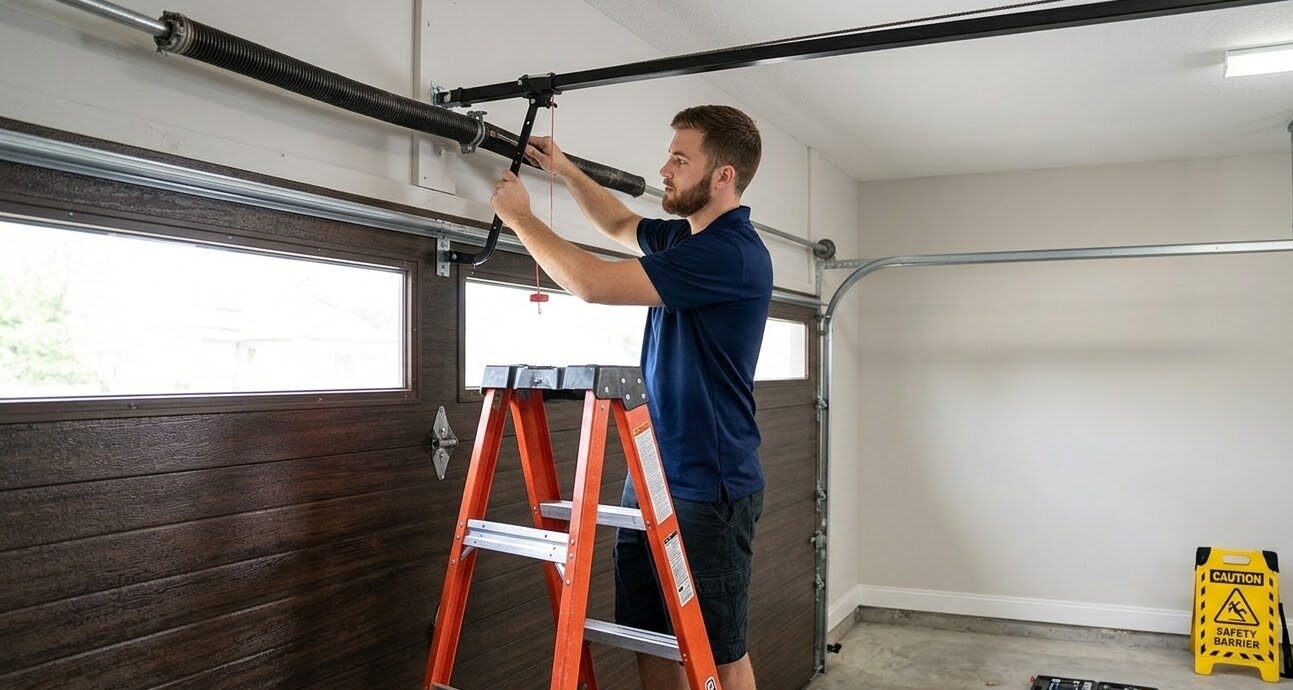
One rule before anything else: the torsion spring above the door, its cables and the bottom brackets hold the full weight of the door under high tension. Listen to them, look at them, but do not loosen, adjust or pry on them. Everything else in this guide is fair game for a careful homeowner.
Why Garage Doors Get Louder in Central Florida
A garage door in Polk County works in conditions that speed up every source of noise. Summer garages get very hot, and heat thins out grease and dries the factory lubricant on rollers and hinges faster than in a cooler climate. Humidity and the afternoon storms that run through the rainy season bring moisture, and moisture brings surface rust on steel rollers, hinges, springs and track hardware. Sandy soil and dust work their way into the track and roller bearings.
Then there is use. A family door opening and closing four times a day runs well over a thousand cycles a year, and every cycle flexes the hinges, spins the rollers and loads the spring. Parts that were quiet when the door was installed slowly loosen and wear. Noise is often the first sign, long before anything actually fails.
Squeaking or Squealing: Dry Rollers, Hinges and Springs
A high-pitched squeak that follows the door as it moves is the most common complaint and usually the easiest to fix. It comes from metal rubbing on metal without lubricant, most often in three places:
- Roller bearings: the small bearings inside each roller dry out, and the roller drags instead of spinning. You will hear the squeak move along the track with the door.
- Hinges: the hinges between door sections pivot every time the door curves around the track. Dry hinge pins squeak at the same spot in each cycle, usually as the door bends at the top.
- Torsion spring: a dry spring can creak or squeal as it winds and unwinds. Coils rubbing on each other without lubricant also wear faster.
The fix is a light coat of a garage door lubricant made for the job, usually a white lithium grease or a silicone-based spray, applied to the roller bearings, the hinge pivots and along the spring coils. Do not grease the tracks themselves. Grease in the track collects dirt and sand and makes the rollers skid instead of roll. And general-purpose penetrating sprays clean more than they lubricate, so the squeak returns quickly. We cover the full routine in our garage door maintenance checklist for Polk County.
If the squeak comes back within a few weeks of lubricating, the bearing inside the roller or the hinge pin is likely worn, and lubricant is only masking it.
Grinding or Scraping: Worn Rollers and Track Problems
A rough grinding or scraping sound means something is no longer rolling smoothly. The usual causes:
- Worn steel rollers: basic steel rollers without sealed bearings are the noisiest type even when new, and as the bearings wear they grind and wobble in the track.
- Cracked or flat-spotted nylon rollers: nylon rollers are quiet, but cheap ones without bearings wear flat spots, especially in a hot garage, and start to thump and scrape.
- Bent or misaligned track: a car bumper, a lawn mower or a loose mounting bracket can push a track slightly out of line. The rollers then rub the side of the track instead of riding in the channel.
- Debris in the track: sand, leaves and small stones in the bottom of the vertical track cause a scraping sound near the floor.
Cleaning the track with a dry cloth and checking that the mounting bolts are tight is a safe homeowner task. Straightening a bent track, re-aligning it or replacing rollers on the bottom section is not, because the bottom roller brackets connect to the cables under spring tension. Our garage door roller replacement service swaps worn rollers for sealed-bearing nylon rollers and checks track alignment in the same visit.
Rattling and Vibration: Loose Hardware
A rattling door is usually a loose door. Every cycle vibrates the nuts and bolts that hold the hinges, track brackets and opener rail in place, and over time some of them back off. The door then shakes in the track and the opener rail buzzes against its mounting.
With the door closed and the opener unplugged, check the bolts on the hinges and on the track brackets that hold the track to the wall. Snug them with a socket wrench, but do not overtighten, because the bolts thread into the thin steel of the door skin and can strip. Leave the bottom brackets and anything connected to the cables alone.
If tightening the hardware does not stop the rattle, the hinges themselves may be cracked or worn at the pivot. Worn hinges let the sections move too much and often show up as a clunk at the same point in every cycle. Replacing them is a straightforward job for a technician through our garage door hinge replacement service.
Banging or Popping: Springs and Balance
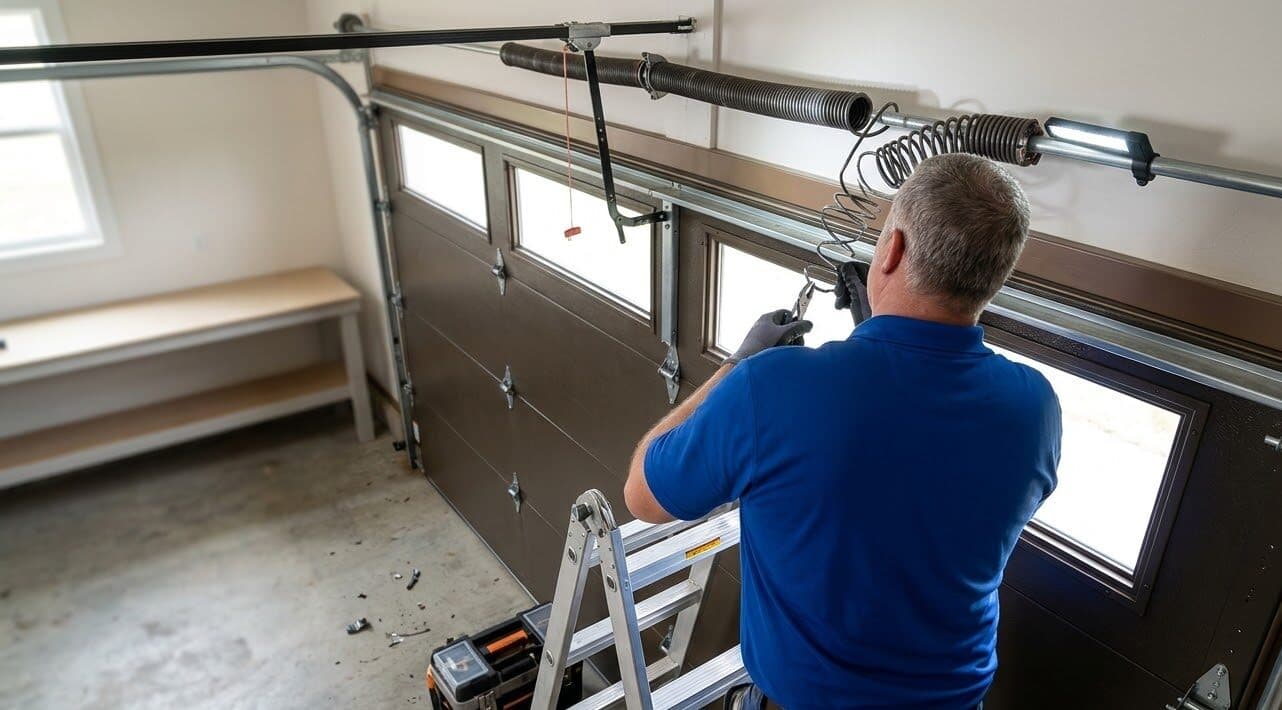
This is the category to take seriously. A loud bang from the garage, especially when nobody was using the door, is very often a broken torsion spring. Springs are rated for a set number of cycles, and a standard torsion spring is commonly rated around 10,000 cycles. When one breaks, the stored energy releases all at once and sounds like a gunshot or a heavy object falling. You will usually see a gap of a few inches in the spring coil above the door.
A popping or snapping sound during operation can mean a spring is near the end of its life, a cable is fraying or the door is out of balance. An unbalanced door makes the opener strain and jerk, which adds noise and wears the opener gears. A simple test: with the door closed, pull the emergency release, then lift the door by hand to about waist height and let go. A balanced door stays roughly in place. A door that drops or shoots up has a spring problem.
If you hear a bang or see a gap in the spring, stop using the door and do not try to open it with the opener. The opener is not built to lift the full weight of the door. Our guide to the signs your garage door spring needs replacement covers what to look for, and our garage door spring replacement service handles the repair safely with the right tools.
Humming, Clicking or Chattering: The Opener
Sometimes the door itself is quiet and the noise comes from the motor unit on the ceiling. Each opener type has its own sound:
- Chain drive: naturally louder, with a metallic rattle as the chain moves along the rail. A chain that slaps or clanks has stretched and needs tension adjustment.
- Belt drive: the quietest common type. A belt opener that suddenly gets loud often has a worn belt or a loose rail.
- Screw drive: makes a steady grinding hum, and gets louder as the screw dries out or wears.
A motor that hums but does not move the door can point to a stripped drive gear, a failing capacitor or a door that is too heavy because of a spring problem. Repeated clicking with no movement is often electrical, such as the logic board or a relay. We explain how the drive types compare in our guide to chain, belt and screw drive openers, and our garage door opener repair service diagnoses motor noise before anyone suggests replacing the whole unit.
A Quick Sound Guide: What You Hear and What to Do
- Squeak that moves with the door: dry rollers or hinges. Lubricate bearings and hinge pivots. DIY.
- Squeak that returns within weeks: worn roller bearings or hinge pins. Replace parts. Technician for the bottom rollers.
- Grinding or scraping: worn rollers, debris or a bent track. Clean the track yourself, call for alignment and roller work.
- Rattling: loose hinge or bracket bolts. Snug them carefully. DIY.
- Clunk at the same spot every cycle: worn hinge or a roller jumping in the track. Technician.
- Loud bang: likely a broken spring. Stop using the door. Technician.
- Popping, jerking or uneven movement: spring, cable or balance problem. Technician.
- Chain slap or clank: chain tension. Adjust per the opener manual or have it serviced.
- Motor hums but door does not move: gear, capacitor or door balance. Technician.
How to Make a Garage Door Quieter for Good
Lubricating and tightening fix most noise for a while. If you want a door that stays quiet, these upgrades make the biggest difference:
- Sealed-bearing nylon rollers: the single most effective upgrade for most doors. Nylon wheels on sealed ball bearings roll far more quietly than basic steel rollers, and manufacturers advertise large noise reductions. They also hold up better against Florida humidity because the bearing is protected from moisture and grit.
- A belt drive opener: if your chain drive is the main source of noise, especially with a bedroom above or next to the garage, a belt drive opener is the quiet option.
- Anti-vibration mounting: rubber isolation pads between the opener and its ceiling brackets keep motor vibration from traveling into the framing and the room above.
- Replacing worn hinges: fresh hinges stop the clunks and keep the sections from shifting.
- A professional balance and tune-up: a properly balanced door is lighter on the opener, smoother and quieter.
Our garage door noise reduction service combines these into one visit: the technician identifies the source, replaces worn rollers and hinges, lubricates the right parts, checks the spring balance and isolates the opener. For doors that just need routine care, a garage door tune-up once a year keeps the noise from coming back.
What Not to Do When Your Garage Door Is Loud
- Do not grease the tracks: grease turns sand into grinding paste and makes rollers slide instead of roll.
- Do not ignore a sudden change: a door that was quiet yesterday and bangs today is reporting a failure, not wear.
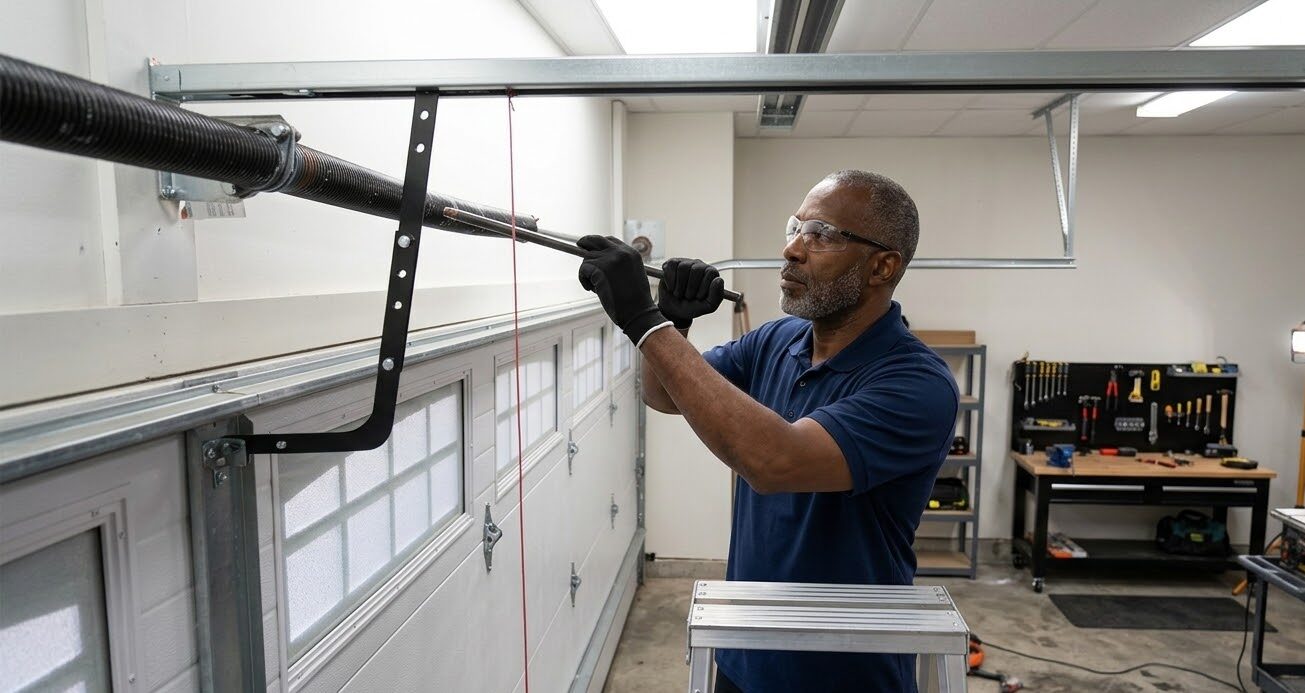
- Do not adjust the springs or cables: torsion springs store enough energy to cause serious injuries. Spring and cable work is for trained technicians with winding bars and the right parts.
- Do not keep running the opener on an unbalanced door: the opener ends up lifting weight the spring should carry, and gears and motors fail early.
- Do not paint over rust on moving parts: rust on rollers, hinges and springs is a sign the part is wearing, and paint can gum up the moving surfaces.
When to Call a Technician in Polk County
Call a professional if the noise is a bang, a pop or a grind you cannot trace to dry parts, if the door moves unevenly or jerks, if a cable looks frayed, if a roller has come out of the track or if lubricating and tightening did not help. A noisy door that keeps running often becomes an emergency later, usually at the worst time, with the car inside.
Rocket Garage Door Services handles noisy doors across Polk County, including garage door repair in Lakeland, garage door repair in Winter Haven and homes in Haines City. If your door has started squeaking, grinding or banging, call (863) 624-3191 and we will find the source and quiet it down.