Stop Checking the Sensors. They Do Not Control the Up Direction.
Since January 1, 1993, federal regulation has required every residential garage door opener sold in the United States to include an entrapment protection system, and UL 325 defines what that protection has to do. In practice that is the pair of photo eyes mounted no more than six inches above the floor on each side of the opening.
Read what that system is for. It is a secondary safety reversal system, designed so that a descending door reverses instead of closing on a child, a pet, or a bicycle. It is a protection against a door coming down. It is not a permission system for a door going up.
This matters because it eliminates the single most commonly suggested cause before you waste an afternoon on it. If your door will not open, the lens can be filthy, the bracket can be knocked sideways, and the indicator light can be off, and none of it is why. Sensor problems are a closing story, and we covered that whole diagnosis separately in garage door will not close: 7 fixes to try first.
What is left when you take the sensors off the table is a much shorter list, and it splits cleanly into three families: the door is too heavy for the opener, which means a spring or a cable; the opener cannot transmit force to the door, which means a drivetrain part; or the opener is not getting a command or getting power at all.
Three Questions That Sort Almost Every No-Open Call
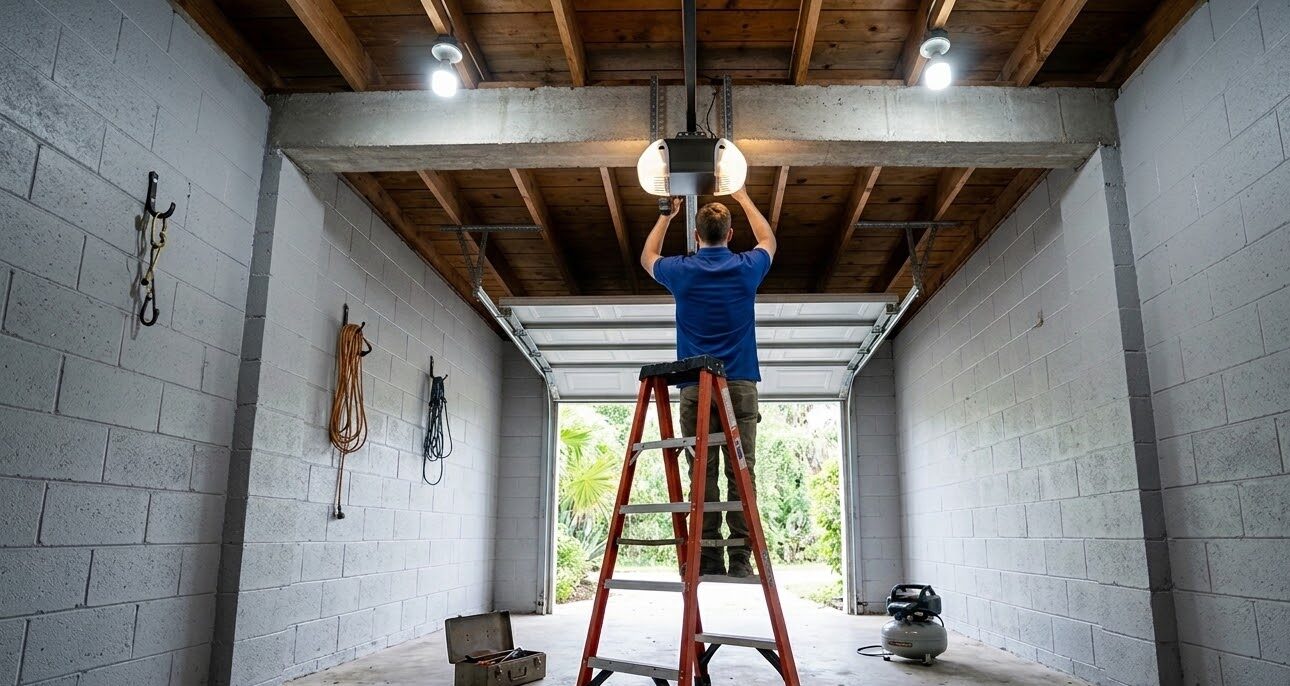
Stand in the garage, press the wall button, and answer these in order. You do not need tools.
- Question 1: Does the opener make any noise at all? No sound and no light means you are in the power family. A hum, a click, or a full motor run means the opener is alive and you move to question two.
- Question 2: Does the chain, belt, or screw actually move? Motor running with nothing moving is a drivetrain failure inside the opener head. Drivetrain moving with the door standing still means the trolley is disconnected from the door. Drivetrain moving with the door trying and failing to lift means the door is too heavy, which is question three.
- Question 3: With the door closed, pull the emergency release and lift it by hand. A properly balanced door of any size should lift with two hands and moderate effort, and should hold roughly in place when you stop at waist height. If it feels like lifting a refrigerator, or it drops the instant you let go, the spring system is the problem and the opener was never at fault.
Those three answers cover the overwhelming majority of no-open calls. The rest of this article is what each branch means and what it costs.
The Manual Lift Test, and the Safety Rule That Comes With It
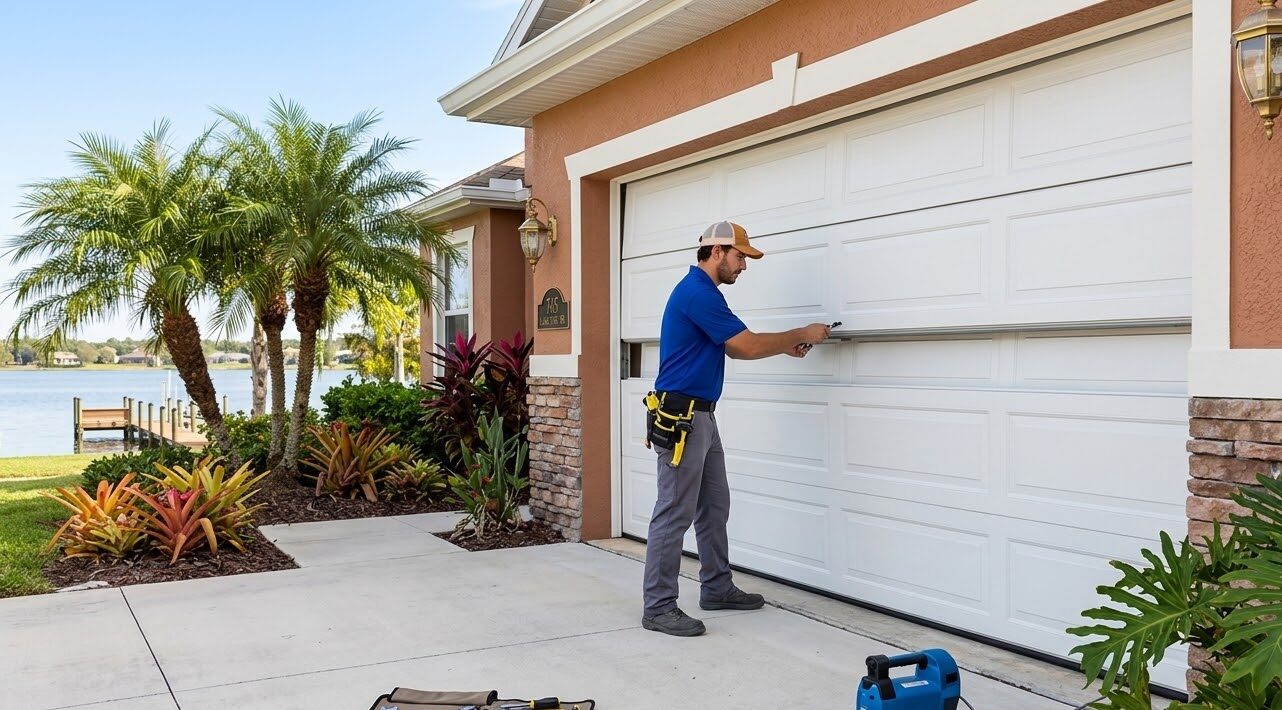
The manual test is the most useful thing a homeowner can do, and it is also the step where people get hurt, so the rule is worth stating plainly.
Pull the red emergency release cord only with the door fully closed. Never pull it with the door partly or fully open. The reason is direct: the release disconnects the door from the opener, and the only thing holding a raised door up at that point is the spring system. If the spring is the thing that failed, a door that was hanging in the track comes down under its own weight, which for a typical insulated double door is in the range of a few hundred pounds falling the height of the opening.
With the door down, pull the cord, then lift from the bottom edge with both hands and a straight back. What you are feeling for is whether the counterbalance is doing its job. A correctly balanced door is heavy but manageable and stays put when you stop. A door with a broken spring feels like the full weight of the door, because it is.
If it will not budge, stop there and leave it closed. You have your answer and further attempts do not improve it.
Cause 1: A Broken Spring, Which Is Most of Them
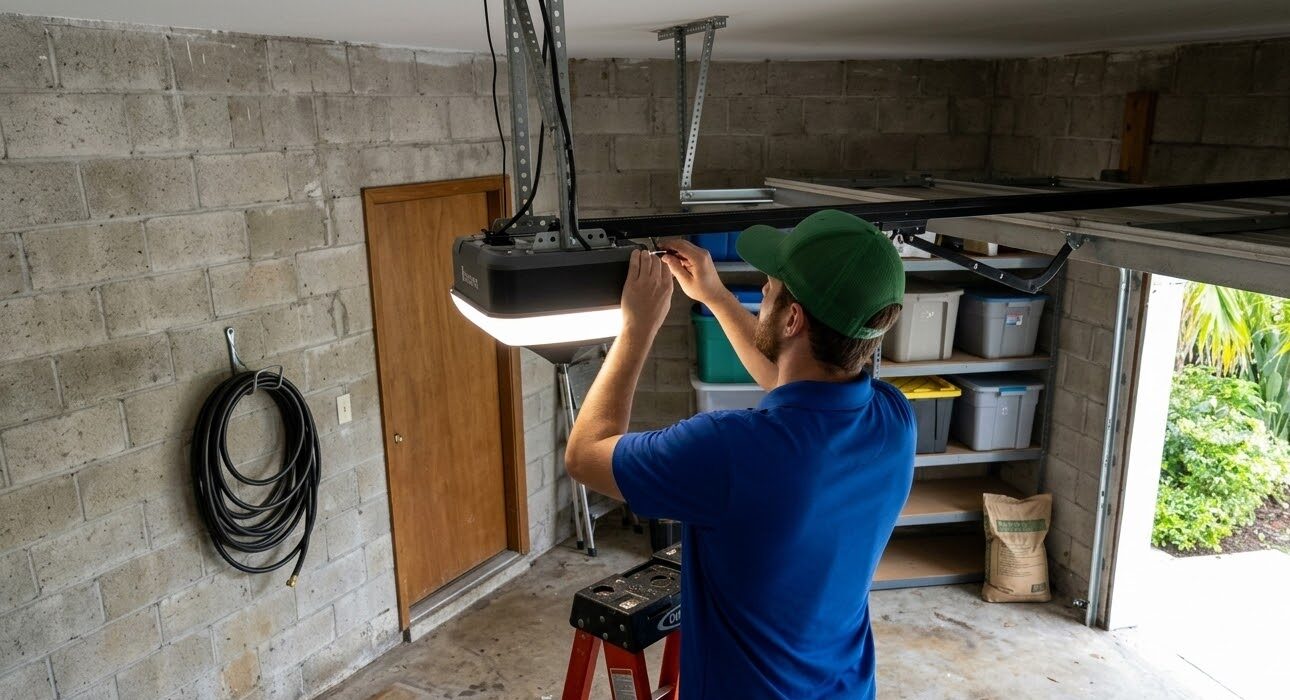
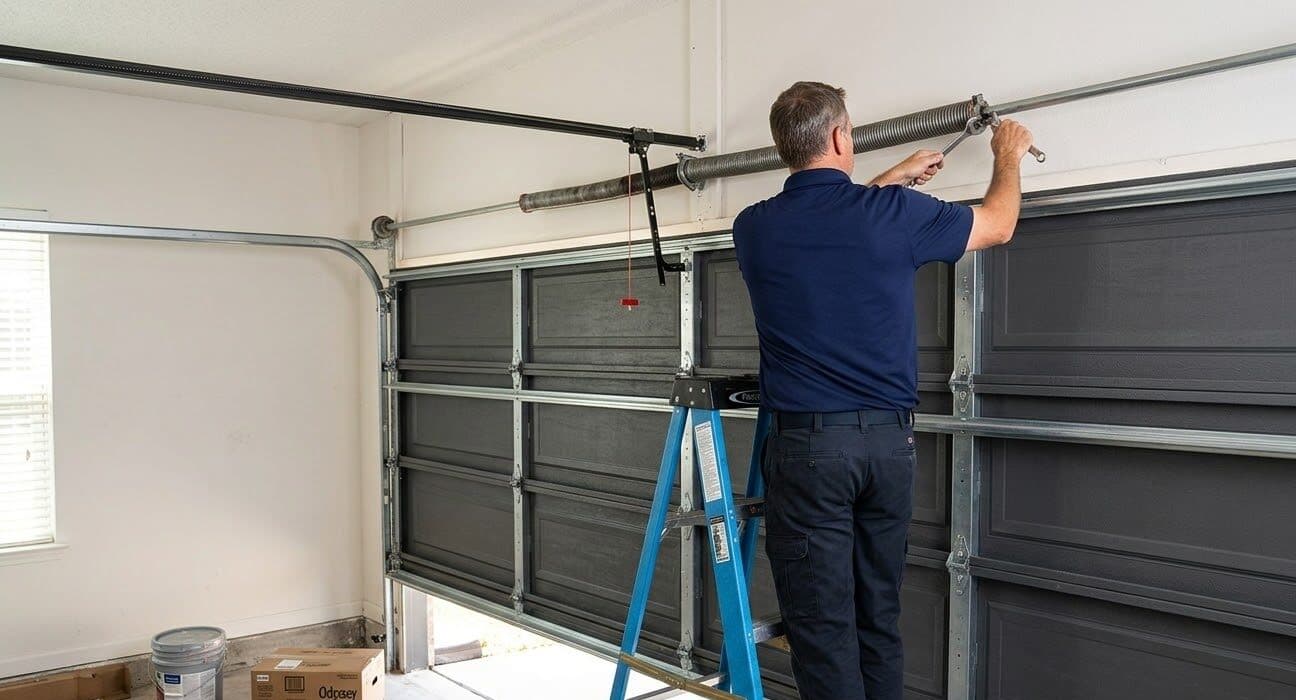
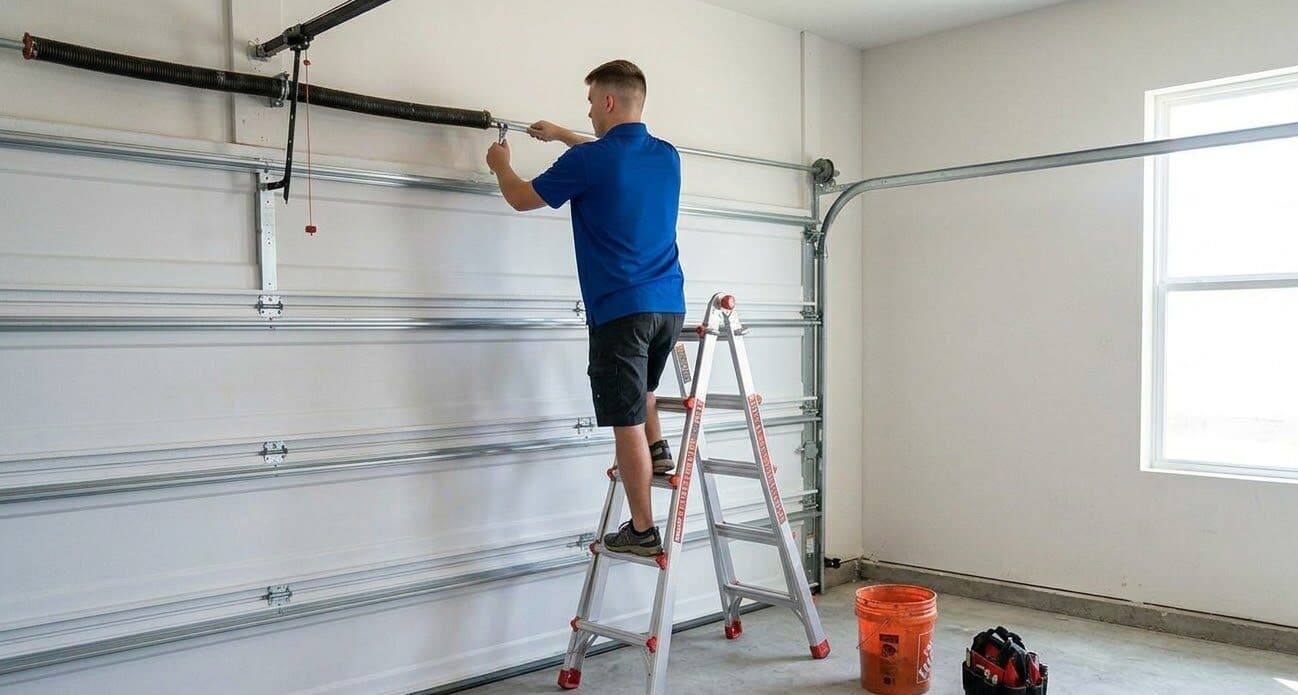
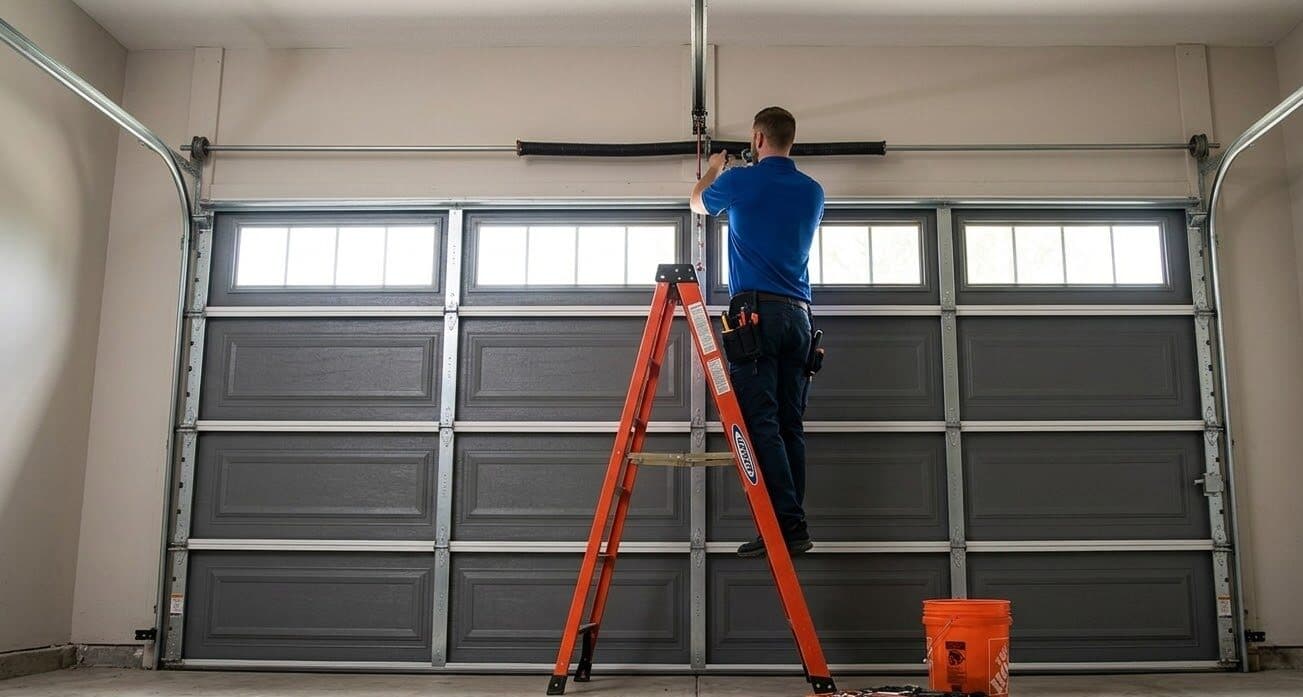
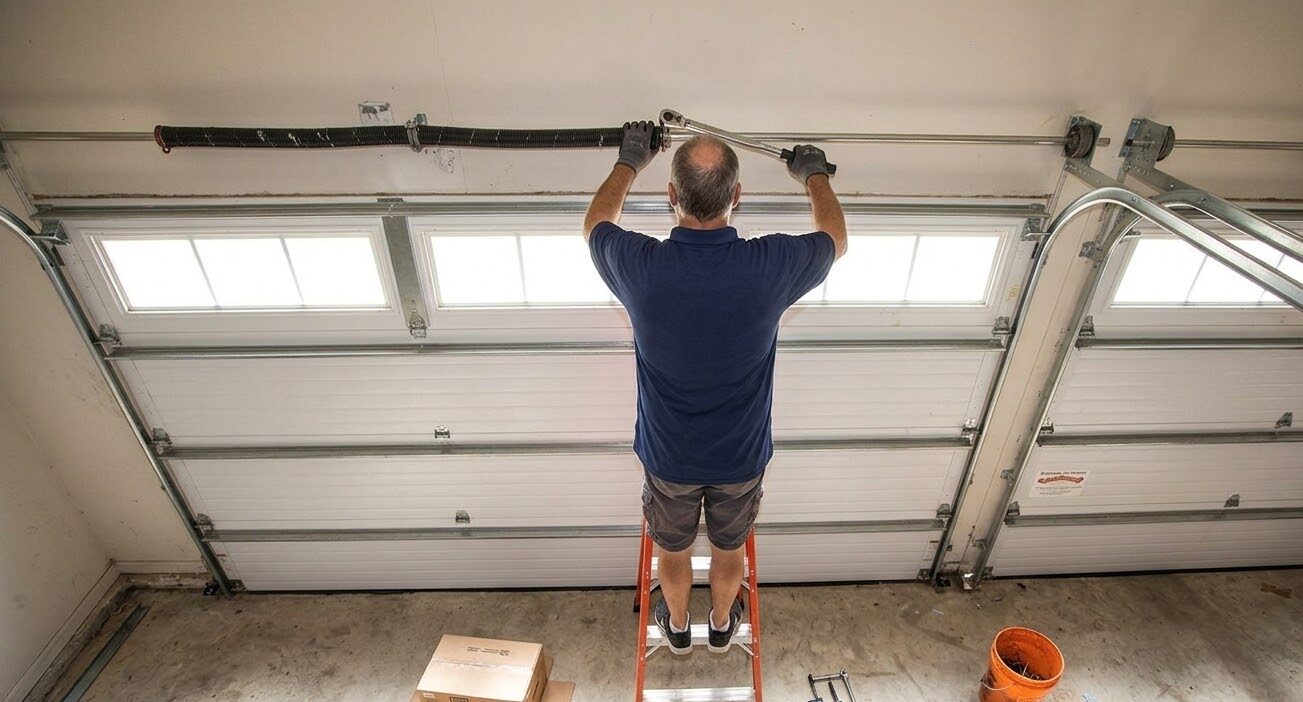
The most common reason a garage door will not open has nothing to do with the opener. The opener on a residential door is a small motor whose job is to nudge a balanced door along, not to lift it. The weight is carried by the torsion springs above the opening or the extension springs along the tracks. When a spring breaks, the opener is suddenly being asked to lift the entire door by itself, which it is not built to do and will not do.
The signatures are recognizable:
- A loud bang, often overnight: A torsion spring releasing stored energy sounds like a gunshot or a heavy object hitting the floor. Many homeowners hear it in the night and find the door dead in the morning without connecting the two.
- A visible gap in the coil: Look at the spring on the shaft above the door opening. An intact torsion spring is a continuous tight coil. A broken one has a clear separation of a few inches, usually with the two ends slightly splayed.
- The door lifts a few inches and stops: The opener starts, the door breaks free of the floor, then force protection trips and it reverses or stalls.
- One side sits higher than the other: More often a cable issue than a spring issue, but it belongs in the same family and the same response.
The math on why this happens when it does is worth knowing. A standard torsion spring is rated at 10,000 cycles, where one cycle is the door going up once and down once. A typical household runs two to three cycles a day, roughly 1,000 a year, which puts a standard spring somewhere around seven to ten years. A busy family running eight to twelve cycles a day accumulates 3,000 to 4,000 cycles a year and uses up the same spring in about three. That is the entire explanation for why two identical doors installed the same week fail four years apart. High cycle springs rated at 20,000 to 50,000 cycles exist and cost modestly more, which is the upgrade worth asking about if your garage is the door the family actually uses.
This is not a DIY repair under any circumstances. A torsion spring holds enough stored energy to break bones, and winding one requires the correct bars and technique. It is also the repair where doing it in pairs matters: if one spring of a two-spring system broke at 10,000 cycles, the other one is at 10,000 cycles too, and replacing only the broken one buys you a second service call. We handle this through garage door spring replacement, and the warning signs that show up before the break are covered in signs your garage door spring needs replacement.
Cause 2: The Opener Runs and Nothing Moves
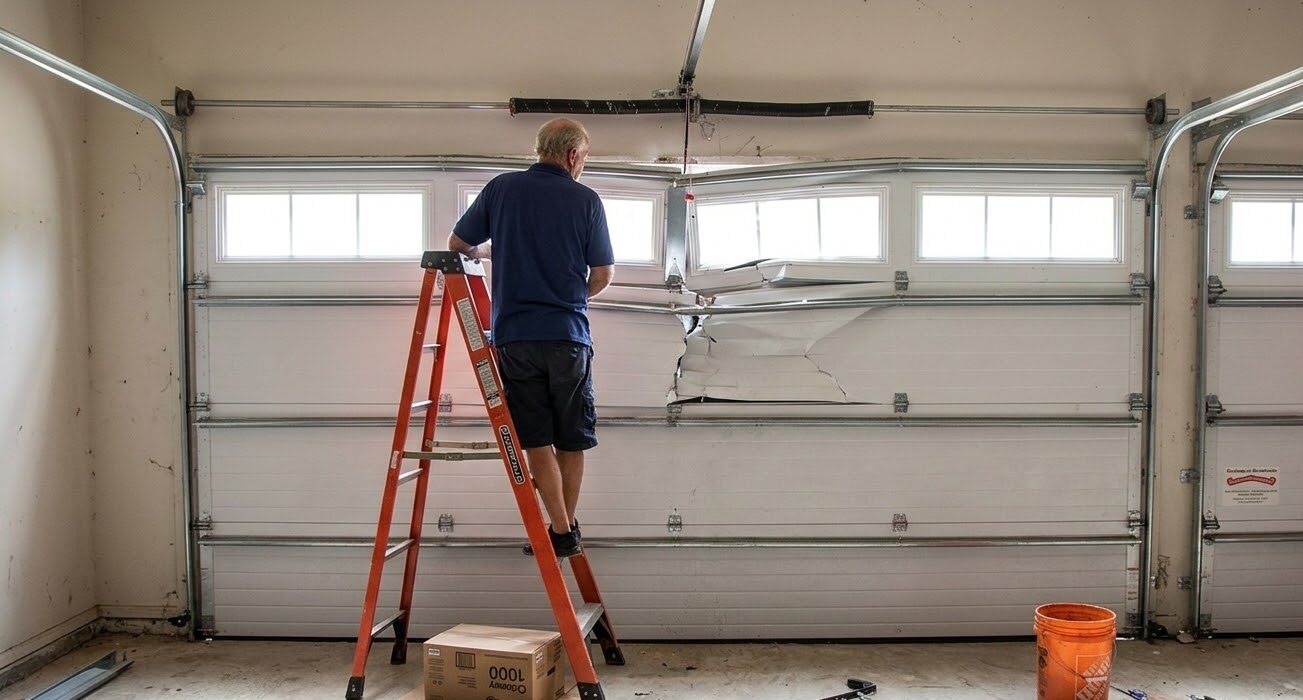
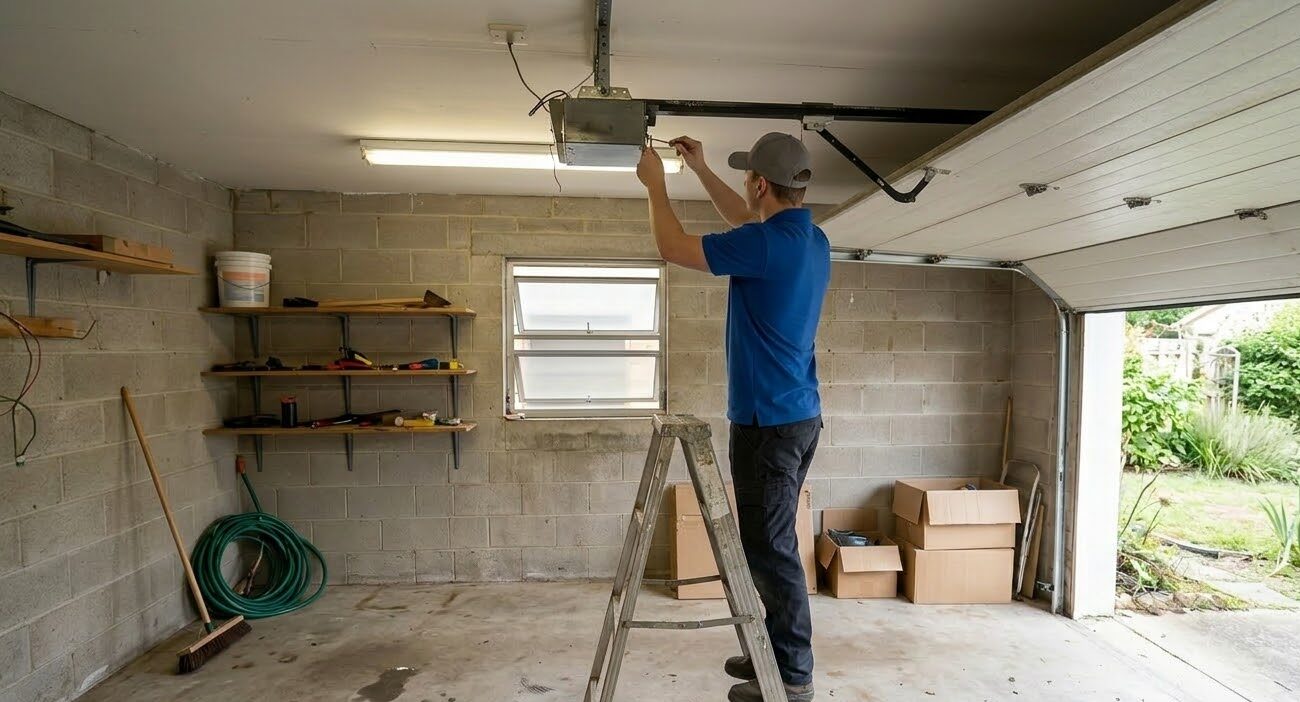
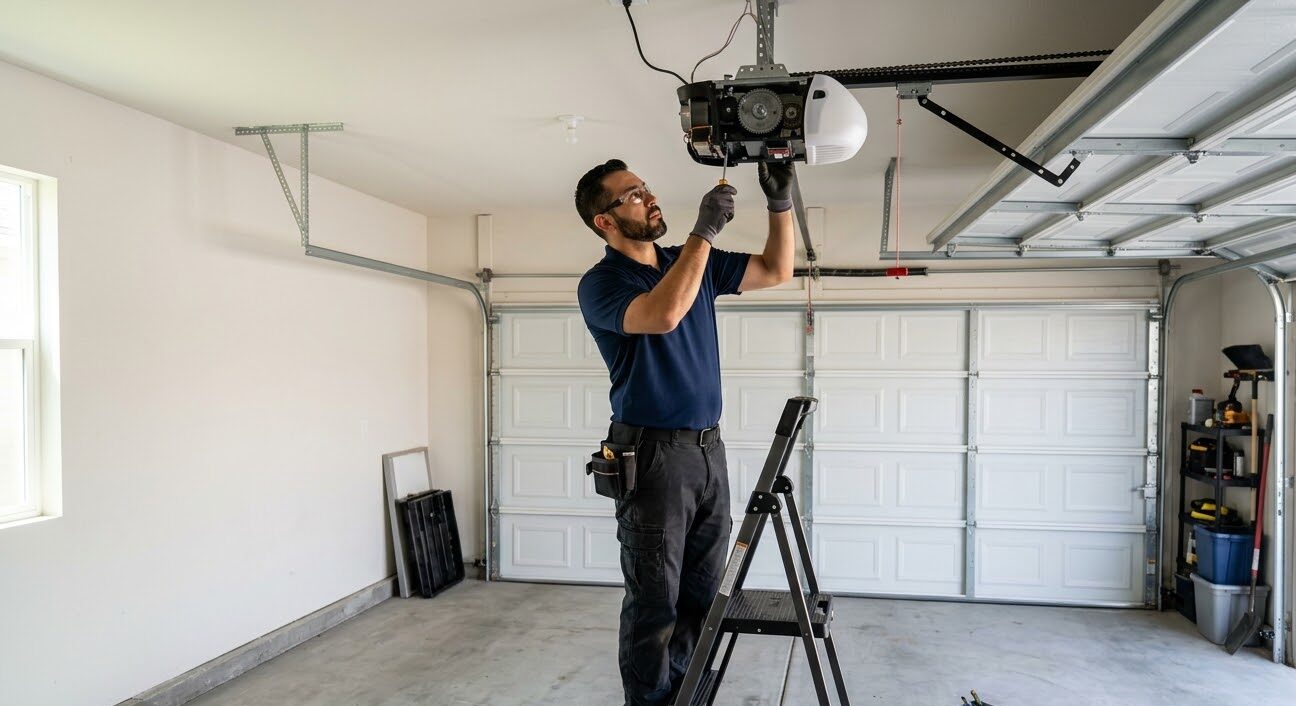
If the motor runs normally, or runs with a grinding or whirring noise, and the chain or belt does not move at all, the problem is inside the opener head and it is almost always the main drive gear.
The mechanism is simple. The motor turns a small steel worm gear on its output shaft, and that worm gear drives a larger plastic gear seated on the drive sprocket shaft. The plastic gear turns the sprocket, the sprocket moves the chain or belt, and that pulls the trolley and the door. When the plastic gear strips, the motor spins freely and the sprocket does not turn.
The gear is plastic on purpose. It is designed to be the sacrificial part, the weak link that fails before the motor windings, the circuit board, or the door itself takes damage. That is why a stripped gear is often a symptom rather than the disease: a door getting heavier over time, from a tired spring or dry rollers, grinds that gear down faster than normal use ever would. Replacing the gear without checking the door balance means replacing it again.
The confirmation takes ten seconds. Look on the floor directly under the opener head for plastic shavings, white, gray, or beige, sometimes as fine as sawdust. That is close to conclusive.
The other version of this branch is much happier. If the chain or belt moves but the door does not, somebody pulled the emergency release and the trolley never got reconnected. It is a common outcome after a power outage when a household disconnects the door to open it by hand and then forgets. Reconnecting is usually a matter of returning the door to the closed position and running the opener until the trolley carriage re-latches, though the exact procedure varies by model. If the trolley itself is cracked, it needs replacing rather than re-latching. Both the gear and sprocket work and the trolley work sit under gear and sprocket replacement and garage door opener repair.
Cause 3: A Cable Off the Drum or a Broken Cable
The lift cables run from the bottom bracket of the door up to a drum at each end of the torsion shaft. If one cable breaks or jumps off its drum, that corner of the door stops being lifted, the door cocks in the tracks, and the opener stalls against the bind.
You can identify it from across the garage. One side of the door sits visibly higher than the other, the door looks crooked in the opening, or you can see slack cable hanging near a drum while the other side is taut. Frayed strands near the bottom bracket, which is where salt-laden air and standing water do their work, are the early warning.
Treat a cable failure exactly like a spring failure: leave the door closed and do not operate the opener. Running the motor against a door that is binding in the track is how a cable problem becomes a bent track, a damaged panel, and a door off its rollers, which turns a modest repair into a long one. It also gets people hurt, because the cables are under the same spring tension that makes springs dangerous. This is garage door cable replacement work, and if the door has already come out of the track it needs track repair at the same time.
Cause 4: Power, and the Three Places It Hides
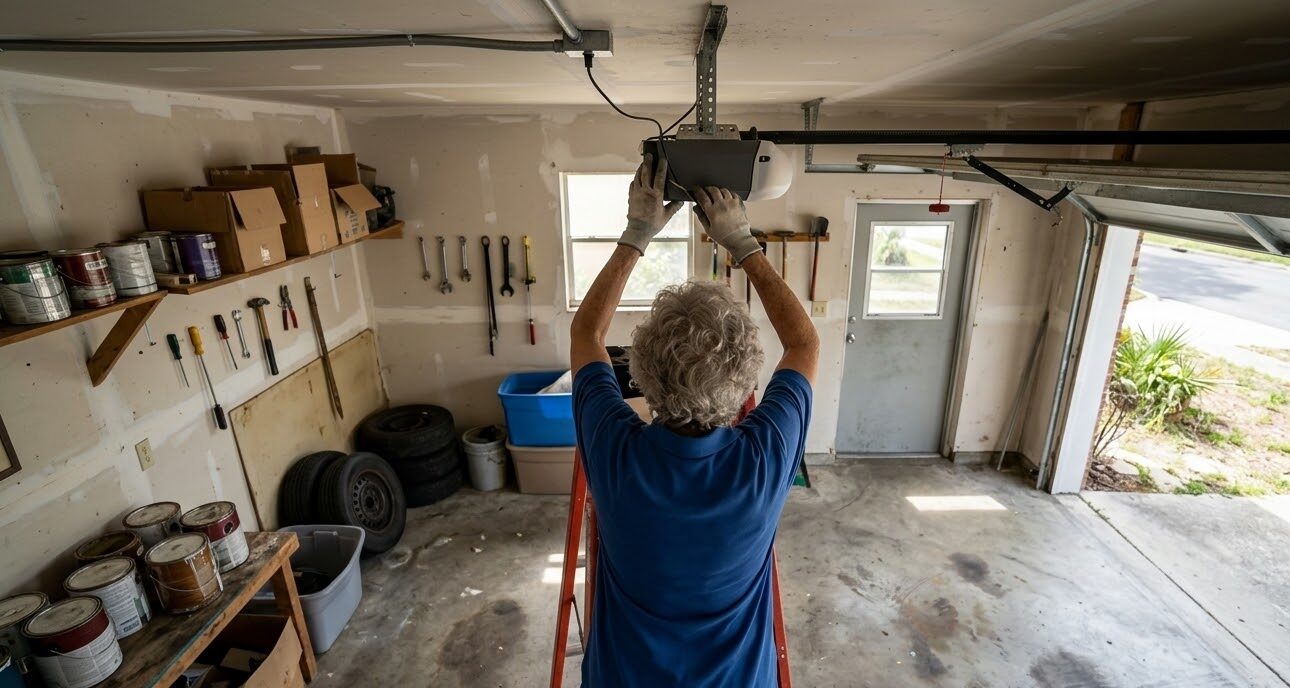
If nothing happens at all, no light, no hum, no click, work the power path from the wall toward the opener before you assume anything expensive.
- The outlet: Garage ceiling receptacles are frequently on a GFCI circuit that starts somewhere else entirely, often at a bathroom or an exterior outlet. A tripped GFCI in another room kills the opener with no other symptom. Plug a phone charger or a lamp into the opener outlet to test it directly.
- The breaker: Check the panel, and check it by looking rather than by memory, because a partially tripped breaker does not always sit in an obvious position.
- The opener itself: If the outlet is live and the opener is dead, the logic board or the transformer may have failed, which is common after a nearby lightning strike or a surge during a storm, and Polk County provides plenty of both.
Two power situations that are specific to here. First, battery backup. If your opener has a backup battery and you are on it, most units beep periodically and run the door slower than normal. A backup battery that has reached the end of its life will leave the opener dead even when line power is restored on some models. Second, the vacation or lock button on the wall console. Pressing and holding it disables remote operation entirely, and on many models the wall button still works, which produces a very confusing set of symptoms for a household that does not know the feature exists.
Cause 5: The Remote Works and the Wall Button Does Not, or the Reverse
This one is diagnostic gold because it separates the radio system from everything mechanical in a single test.
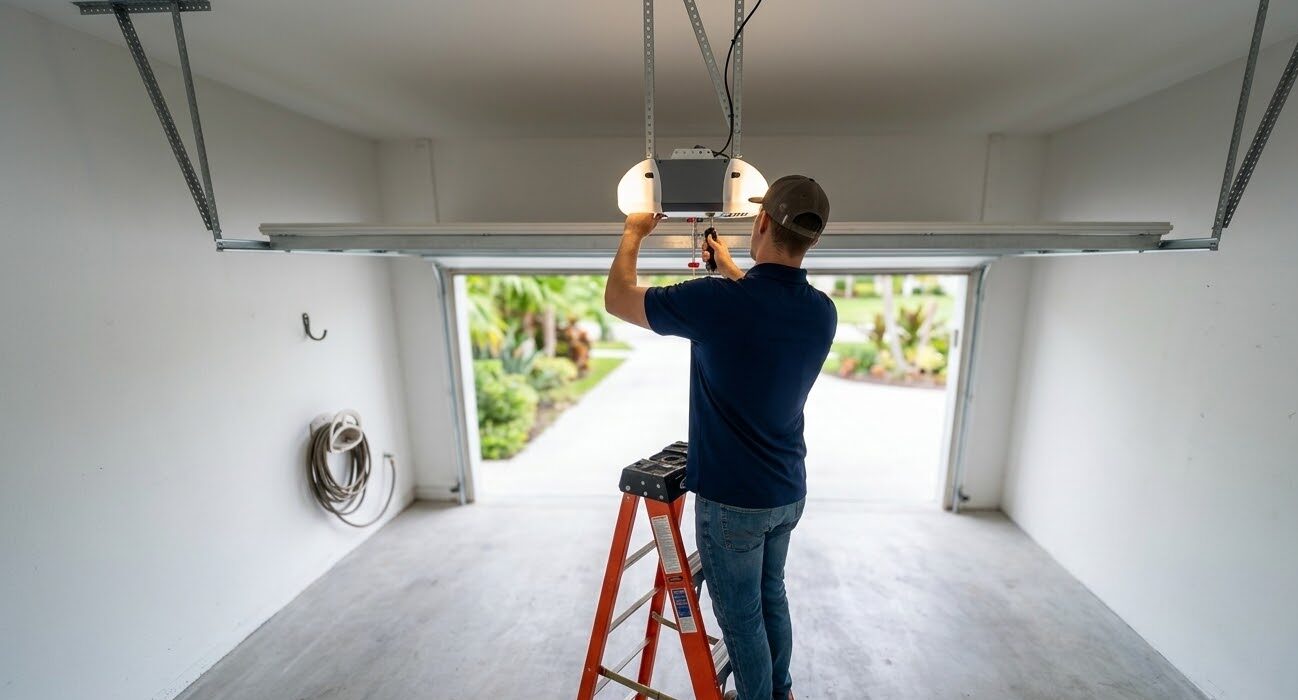
If the wall button opens the door and the remote does not, nothing is wrong with the door. You have a radio problem: a dead remote battery, a remote that lost its programming, or radio interference. Start with the battery, then relearn the remote to the opener using the learn button on the motor head.
If the remote works and the wall button does not, the issue is in the low voltage wiring between the console and the opener, or in the console itself. Florida humidity corrodes low voltage terminals over time, and a wire staple driven slightly too deep during construction takes years to cut through insulation and short.
If neither works but the opener has power and its light comes on, the logic board is the likely culprit. Remote programming and control problems are routine work and are covered under opener remote programming.
Cause 6: The Door Is Simply Locked
It is worth checking before anything else because it costs nothing and it happens more than anyone admits. Many doors have a manual slide lock or a T-handle lock through the track, installed before the opener was ever added, and a bar thrown into the track will stop the door dead while the opener strains against it. Look at both vertical tracks about waist height for a sliding bar engaged into a slot.
The related failure is the opener forcing against an engaged lock for a few seconds every time somebody pressed the button. That is exactly the load that strips a drive gear, which means a locked door left unnoticed for a week can produce a real repair on top of a free one.
Cause 7: Up Travel Limit and Up Force
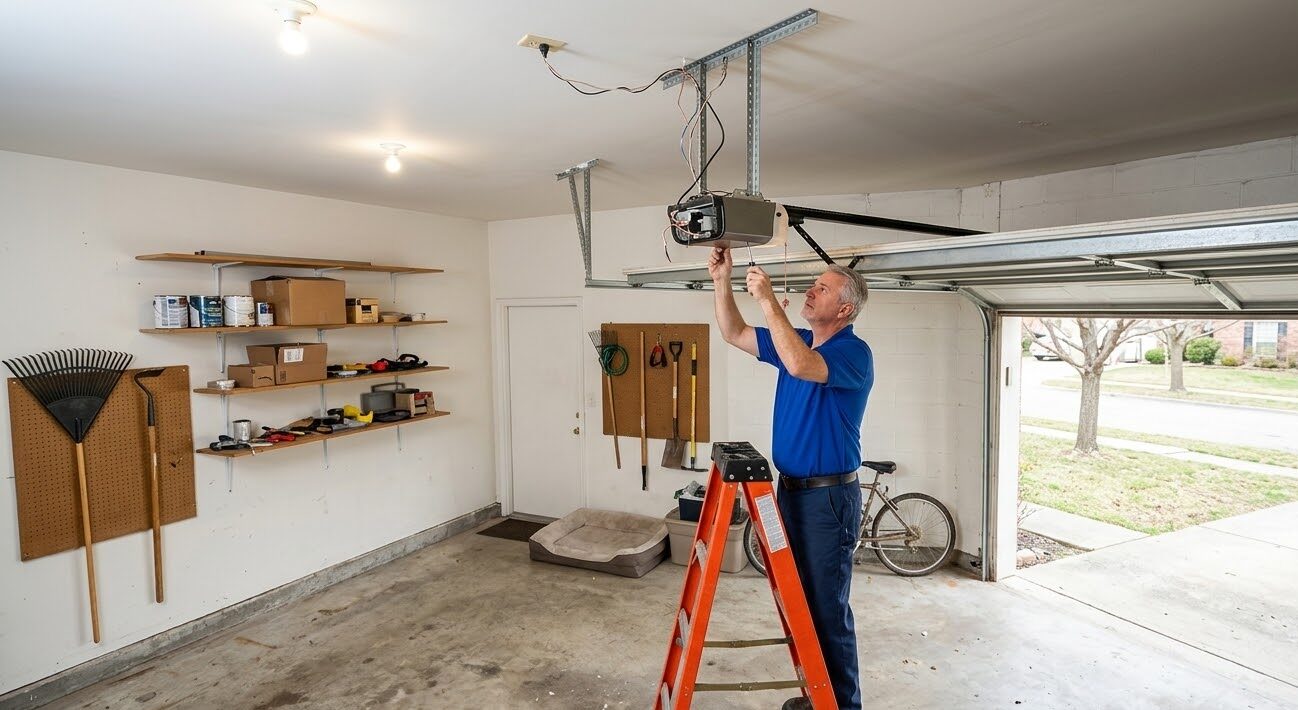
If the door opens partway and stops or reverses, and the manual lift test says the balance is fine, you are looking at the opener's travel and force settings rather than a broken part.
Every opener has an up limit that tells it where fully open is and a force setting that determines how much resistance it tolerates before deciding something is wrong. Both drift, and both get knocked out by a power event. Set the up force too low and the normal friction of an aging door reads as an obstruction. Set it too high and you defeat a safety function, which is why this is not a turn-it-until-it-works adjustment.
The important caveat: increasing the up force to overcome a door that has gotten heavy is treating a symptom and hiding a spring problem behind a setting. Adjust the limits and force only after the balance test passes. We do this as a calibrated service under opener limits and force programming precisely because the safe range matters.
The Florida Versions of This Problem

Most no-open troubleshooting is written for climates we do not have, so here is what actually drives these failures in Polk County.
- The January morning spike is real, and it is not really about the cold. Spring steel contracts in cold air, which makes an aging spring more brittle and adds tension at the worst moment. Northern shops see this from December through February. Here we get it compressed into the handful of mornings a year when a front drops us into the thirties. What breaks on those mornings is almost always a spring that had already spent its cycle life, and the cold snap simply collected the bill. If your springs are past seven years, the first cold morning of the year is the day to expect it.
- Humidity is the slower killer. Our springs live in a mild climate that should let them reach the top of their cycle rating, and the reason many do not is corrosion. Surface rust on the coil increases friction between the coils and creates stress risers where cracks start. A light annual lubrication of the spring with a proper garage door lubricant, not household oil and never grease, is the cheapest life extension available.
- After a wind event, do not force it. A door that took wind load can be bowed or pushed out of plane even when it looks straight from the driveway, and the tracks can be tweaked. Running the opener against a bowed door damages panels and rollers. If the door will not open after a storm, that is an inspection first, not a button press.
- After an outage, check the trolley before you call. The most common no-open call in the days after a storm is a door that was disconnected to be opened by hand and never reconnected. It takes a minute and costs nothing.
- Lovebugs, pollen, and spiders are a closing problem, not an opening one. They block the photo eye lens, and the photo eyes only govern closing. If somebody tells you to clean the sensors on a door that will not open, they are not diagnosing, they are reciting.
What Never to DIY

- Torsion or extension springs: Stored energy sufficient to cause serious injury, and correct winding requires the right bars and technique. There is no safe improvised version of this.
- Lift cables: Under the same spring tension, and a cable released incorrectly whips.
- A door that has come off the track: The door is no longer constrained and the counterbalance is no longer acting where it was designed to act.
- A bowed or impacted door after wind: It needs to be assessed before it is operated, not operated to see what happens.
- Raising the up force to make a heavy door move: This overrides a safety function to hide a mechanical failure, and the mechanical failure does not go away.
Everything else on this page, the outlet check, the lock bar, the remote battery, the trolley reconnection, and the manual balance test with the door closed, is genuinely homeowner work and worth doing before you call anyone.
What It Costs and How Fast It Moves
Rough shape of the outcomes, so you know what you are looking at before the truck arrives. The free fixes are the lock bar, the tripped GFCI, the vacation button, and the disconnected trolley, and between them they account for a meaningful share of calls that never needed to be calls. Remote batteries and reprogramming are near-free. A drive gear kit is an inexpensive part and a moderate labor job, and it is usually worth doing on an opener under about ten years old. Spring replacement is the most common real repair in this category and should be quoted in pairs. Cables are similar in scope and often get done alongside springs because the labor overlaps.
The turnaround matters more than the price for most households, because a door that will not open usually means a car that cannot leave. Same day is the normal expectation for this failure, and after hours coverage exists for the version that happens at six in the morning through emergency garage door service.
The other conversation worth having while a technician is on site: whether the opener is worth repairing at all. If the drive gear has stripped on a unit that is well past a decade old, has no rolling code security, and has no battery backup, the repair money is often better applied to the replacement. We laid that decision out with numbers in garage door opener repair versus replace.
The Short Version
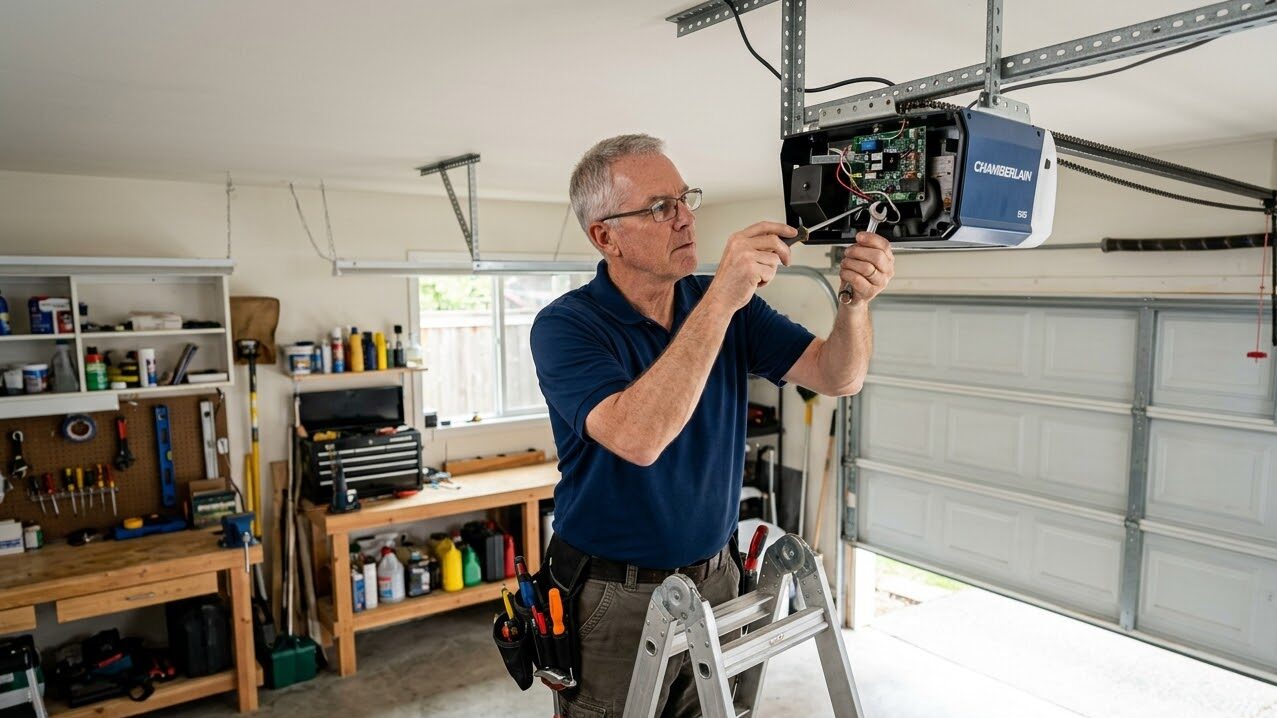
Ignore the safety sensors. They are an entrapment protection system for a door coming down, required on every residential opener sold in the U.S. since January 1993 and mounted within six inches of the floor for that reason. They have no authority over the up direction.
Answer three questions instead. Does the opener make noise? No sound means power: outlet, GFCI in another room, breaker, backup battery, or the vacation lock. Does the chain or belt move? Motor running with a still sprocket means a stripped plastic drive gear, and plastic shavings under the opener confirm it. Drivetrain moving with the door still means a disconnected trolley. And can you lift the door by hand with the release pulled, door closed only, never open? If it feels like the full weight of the door, that is a spring.
Springs are most of these calls, and the arithmetic explains it: a standard spring is rated for 10,000 cycles, two to three cycles a day puts that around seven to ten years, and eight to twelve cycles a day uses it up in about three. Replace them in pairs, and ask about high cycle springs if this is the door your family actually uses.
Do not touch springs, cables, a door off the track, or a door that took wind load, and do not raise the up force to make a heavy door move. If you have run the list and the door is still closed, call Rocket Garage Door Services at (863) 624-3191. We work throughout Polk County, from Lakeland to Winter Haven, and the annual check that prevents most of this is a garage door safety inspection.